Sterile substrate layering
Use a base of well-rotted hardwood chips or beech/oak leaf litter, then add a thin top layer that has been pasteurized (heated to 160–170°F for 30 min) to reduce competing fungi before introducing Mycena rosea spawn.

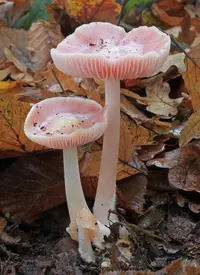
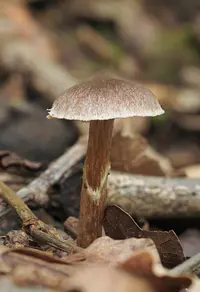
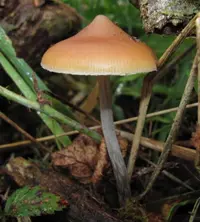
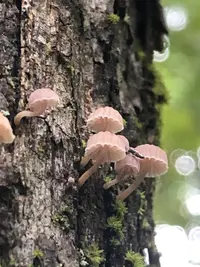
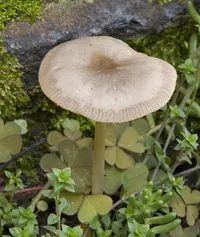
Rosy bonnet (Mycena rosea) is a small woodland mushroom, not a true houseplant. It produces delicate, bell-shaped caps in soft pink shades on thin, fragile stems. Caps often appear slightly translucent and grow in scattered groups, creating a subtle carpet on leaf litter. This fungus typically fruits in autumn in temperate forests, especially in Europe, near broadleaf trees. It is not practical to grow indoors, since it needs natural woodland conditions, cool moist air, and decaying organic matter. For those who wish to care for Rosy Bonnet in cultivation, success is limited and usually requires advanced fungal culture skills rather than standard plant care methods.

Care Difficulty
Hard Care

Light Preference
Shade

Water Requirements
Keep Soil Moist

Temperature Preference
Cool Climate

Hardiness Zone
Unknown

Soil Texture
Loamy, Silty, Organic-rich

Soil pH
Strongly acidic (4.5–5.5), Acidic (5.5–6.5)

Soil Drainage
Moist but well-drained

Fertilization
Minimal (feed rarely)
Scan your plant to receive care tips personalized for your specific plant
Available on iOS and Android
This woodland mushroom prefers low, filtered light that mimics a shaded forest floor.
This fungus depends on consistently moist, not waterlogged, organic substrate to fruit well.
This species fruits best in cool, mild conditions typical of temperate forests.
This wood-loving fungus needs consistently moist, humid conditions to fruit well.
This saprophytic fungus fruits best in loose, organic-rich substrate rather than typical potting soil.
This species is only moderately suitable for container growing and requires very specific conditions to succeed.
This woodland fungus does not benefit from direct fertilization, as Mycena rosea relies on natural forest litter and soil biology for nutrients.
Pruning is not applicable to Mycena rosea, since it is a small, short-lived mushroom that completes its life cycle without structural maintenance.
This mushroom is not suited to normal repotting, as it grows in soil or leaf litter rather than as a container plant.
Propagation of this species is specialized and usually left to mycologists, since it relies on spores and complex soil relationships.
No specific winter care is needed for this wild fungus, which appears seasonally and naturally tolerates typical woodland conditions.

Plant Health Check
Not sure what's wrong with your plant? Check your plant's health inside the app.
The pink bonnet closely resembles some toxic pink species such as Entoloma and certain other Mycena, so field guides emphasize its look‑alikes and caution against eating any pink, bell‑capped mushrooms unless identified by an expert.
Some species in the genus Mycena are weakly bioluminescent, and although Mycena rosea itself is not considered noticeably glowing, its close relationship to glow‑in‑the‑dark fungi makes it interesting in studies of fungal light production.
This species occurs mainly in temperate beech and mixed hardwood forests on leaf litter and decaying wood, where it helps break down tough plant material and contributes to nutrient recycling in the forest floor.
This mushroom is considered inedible and potentially poisonous. It contains toxic compounds that can cause gastrointestinal upset and neurological symptoms. It should never be collected for food or tasted, even in small amounts.
Keep your plants happy and healthy with plant identification, disease detection, and easy care guidance.