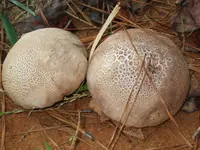
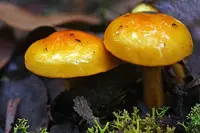
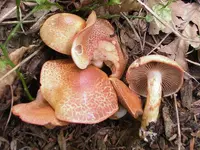
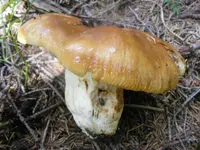
red edge bonnet Care (Mycena rubromarginata)

red edge bonnet

About red edge bonnet

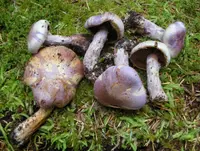
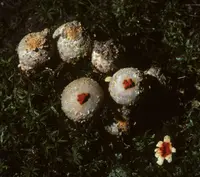
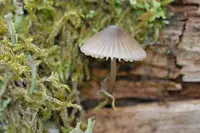
The red edge bonnet, Mycena rubromarginata, is a small woodland fungus rather than a typical houseplant. It forms delicate, bell-shaped caps with a distinct reddish margin on fine, slender stems. Caps often appear in small groups on decaying wood, leaf litter, or mossy ground.

This species occurs mainly in temperate forests of Europe and North America, where it helps decompose organic matter. It is not commonly cultivated, and attempts to care for red edge bonnet at home are usually challenging because it depends on specific forest substrates and moisture conditions. In nature, it favors cool, shaded, damp habitats with abundant rotting wood or dense litter.

Main Plant Requirements

Care Difficulty

Hard Care

Light Preference

Shade

Water Requirements

Keep Soil Moist

Temperature Preference

Cool Climate

Hardiness Zone

Unknown

Soil Texture

Loamy, Peaty, Organic-rich

Soil pH

Strongly acidic (4.5–5.5), Acidic (5.5–6.5)

Soil Drainage

Moist but well-drained

Fertilization

Minimal (feed rarely)

Get Personalized Care Plan

Scan your plant to receive care tips personalized for your specific plant

Available on iOS and Android

How to Care for the red edge bonnet

This small woodland fungus prefers low, filtered light conditions under trees or shrubs.

  • Provide bright shade or dappled light, such as under deciduous trees with 1–3 hours of weak morning sun and no harsh afternoon sun.
  • Mycena rubromarginata fruits best in consistently shaded, humid spots; avoid sites with more than 3–4 hours of direct sun per day.
  • In summer, protect from strong sun that dries the substrate; in winter, bare branches still allow enough scattered light for the red edge bonnet.

This species needs consistently moist, not waterlogged, organic material to fruit reliably.

  • Aim for evenly damp leaf litter or decaying wood, letting only the top 1–2 cm start to feel slightly dry before light re-wetting if managed in a garden setting.
  • Ensure excellent drainage so water does not pool; standing water around fruiting bodies encourages rot and bacterial growth.
  • If caps shrivel, edges curl, or substrate becomes dusty and hard, it is too dry; if mushrooms collapse, darken, and smell sour, conditions are too wet.

This woodland mushroom favors cool to mild temperatures with moderate seasonal variation.

  • Optimal fruiting occurs around 50–65°F (10–18°C), typical of cool, damp forest floors in spring and autumn.
  • It tolerates brief drops near 32°F (0°C) but persistent hard frost or frozen substrate will halt growth and damage fruiting bodies.
  • Prolonged heat above 77–82°F (25–28°C) with low humidity suppresses Mycena rubromarginata; maintain shade and moisture in hotter periods to moderate surface temperatures.

This fungus needs consistently moist, humid conditions that mimic a damp forest floor.

  • Aim for 70–90% humidity around developing fruiting bodies by maintaining constantly moist, not waterlogged, substrate.
  • It tolerates brief dips to 50–60% humidity, but caps dry, curl, and crack if air stays drier.
  • Increase humidity by using a closed, ventilated terrarium-style container, frequent fine misting, and moist leaf litter over the substrate.

This saprotrophic fungus fruits best on a loose, organic, consistently damp substrate rather than conventional potting soil.

  • Use finely shredded hardwood leaves, decayed wood chips, and a small amount of peat or coco coir to create a soft, spongy medium.
  • Ensure rapid drainage so water moves through in seconds while the substrate remains evenly moist, never waterlogged or compacted.
  • Keep pH slightly acidic, around 5.0–6.0, avoiding alkaline materials like lime or heavy wood ash that suppress growth.
  • Improve aeration by mixing in coarse bark pieces and gently fluffing the top layer without compressing developing Mycena rubromarginata mycelium.

This species is only moderately suitable for container growing because it prefers natural forest-floor conditions.

  • Use a broad, shallow tray or box that allows a wide spread of substrate, which supports more even moisture and fruiting distribution.
  • Drill extra side ventilation holes above the substrate line to balance fresh air exchange with humidity retention.
  • Choose a non-transparent container or cover the sides to keep the substrate dark, which encourages more reliable mushroom formation.

This fungus gains nutrients from decaying wood or leaf litter and is not improved by added fertilizer.

Mycena rubromarginata does not require pruning in the usual horticultural sense.

This small saprotrophic mushroom is not suited to standard repotting and is best left in its natural substrate.

  • If grown for study, maintain it on sterile agar or a wood-based substrate rather than in a conventional potting mix.
  • Avoid disturbing colonized logs or leaf litter, since breaking the mycelium network can reduce or stop fruiting.
  • If substrate must be moved, transfer a generous section of colonized material intact and keep moisture conditions stable.
  • Handle all moves outside peak fruiting to reduce stress on the fungal mycelium.

Propagation of Mycena rubromarginata is specialized and not typically attempted by home growers.

This woodland fungus is naturally adapted to cool, temperate climates and needs no special winter care in the ground or forest litter.

Care Tips

Sterile Substrate Setup

Use pressure-sterilized hardwood sawdust or fine woodchips in small, shallow trays, and only introduce spawn once the substrate is fully cooled and handled with alcohol-cleaned tools to reduce contamination risk when growing red edge bonnet.

Cool Night Cycling

Provide a consistent day–night temperature swing of about 5–10°F lower at night to stimulate more reliable fruiting and maintain characteristic coloration on the cap margins.

Diffuse Light Management

Position culture containers where they receive very low, diffuse light (such as near but not directly in front of a shaded window) and rotate trays weekly so primordia develop evenly instead of leaning toward a single light source.

High-Airflow Fruiting

Once pins appear, increase gentle fresh air exchange with a small fan set to indirect, low speed and briefly open fruiting containers 2–3 times per day to reduce carbon dioxide buildup that can cause long, weak stems.

Targeted Hydration Mist

Mist the inner walls of the fruiting chamber or container, not directly onto the caps, so humidity stays high while surfaces of the mushrooms stay relatively dry and less prone to bacterial spotting or collapse.

Common Pests and Diseases

Fungal parasitism

This disease occurs when other microscopic fungi colonize the caps and gills, competing for nutrients and deforming the fruiting bodies. Symptoms include patchy discoloration, fuzzy or powdery growth on the cap surface, and rapid collapse of mushrooms.

Solution

Remove and discard affected mushrooms as soon as abnormal moldy patches or unusual surface growth appear, and avoid disturbing them to limit spore spread. Improve air movement around the fruiting site, avoid overhead watering, and reduce organic debris density so fruiting bodies dry faster between wet periods.

Mycophagous mites

These insects are tiny arthropods that feed on fungal tissue, especially gills and young caps, leading to pitting, scarring, and distorted growth. Symptoms include fine speckling, surface roughness, and sometimes a dustlike movement on close inspection.

Solution

Gently remove and discard heavily damaged mushrooms and any nearby decaying organic material where mites hide. If fruiting is occurring in a controlled container or terrarium, reduce excess moisture, increase ventilation, and rinse surfaces and non-woody substrates with clean water to physically remove mites, repeating as needed.

Slugs and snails

These pests consume soft mushroom tissue, often overnight, leaving irregular holes and slime trails on caps and stems. Symptoms include missing sections of fruiting bodies, ragged edges, and glossy mucous residue on nearby leaf litter or wood.

Solution

Hand-remove slugs and snails in the evening or early morning and avoid overwatering the surrounding area, which attracts them. In outdoor settings, use simple barriers such as rough mineral grit or copper tape around small cultivation zones and remove dense ground cover that provides hiding spots close to the mushrooms.

Bacterial blotch

This disease is caused by opportunistic bacteria that colonize wet mushroom surfaces, producing greasy spots and soft, water-soaked areas. Symptoms include yellow-brown to dark lesions on caps, surface sliminess, and rapid tissue breakdown in persistently wet conditions.

Solution

Discard affected mushrooms promptly and avoid allowing water to stand on cap surfaces by reducing misting and improving drainage in the fruiting area. Increase airflow, limit handling of wet mushrooms, and keep surrounding organic debris loosely arranged so it can dry between rains or waterings, which reduces bacterial spread.

Interesting Facts

Distinctive red gill edges

This species is identified in the field by its sharply defined red to crimson margins along the gills, a reliable macroscopic character that separates it from many similar small brown Mycena species.

Dark-staining stem base

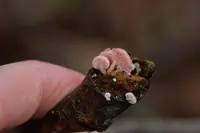
The stem base often darkens or stains when handled or with age, providing an additional identification clue alongside the red gill edges and small, bell-shaped cap.

Forest floor specialist

It typically grows on decaying leaf litter and woody debris in coniferous and mixed forests, contributing to decomposition and nutrient cycling in cool, moist woodland ecosystems.

Botan icon

Did you know?

Molecular and morphological studies indicate that what has historically been called Mycena rubromarginata may represent a complex of closely related, red-edged taxa, so modern mycologists often rely on microscopic features and DNA sequencing to confirm identifications in this group.

FAQs about red edge bonnet

This small mushroom is not considered edible and should be treated as inedible. It is easily confused with other tiny, potentially toxic species. For safety, avoid consuming it and do not use it in foraging recipes.

Grow Healthy Plants with Botan Care

Keep your plants happy and healthy with plant identification, disease detection, and easy care guidance.

Botan plant care app — identify plants on mobile

Explore More Plants