Bleeding Bonnet Care (Mycena sanguinolenta)

Bleeding Bonnet

About Bleeding Bonnet

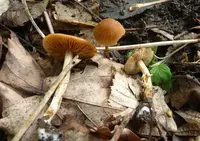
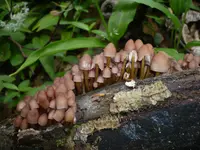
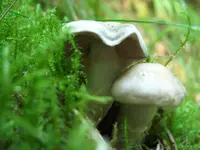
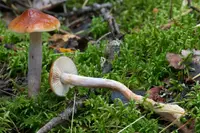
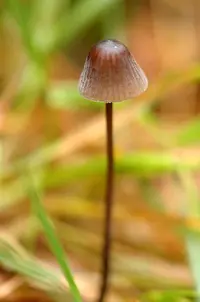
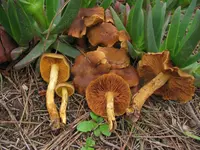
Bleeding bonnet, Mycena sanguinolenta, is a small saprophytic mushroom that lives on decaying conifer needles and woody debris rather than in soil like garden plants. It forms delicate, bell-shaped caps in pinkish to reddish tones, with thin stems that exude a dark red juice when damaged.

This species occurs mainly in cool, moist coniferous forests across parts of North America and Europe, appearing in scattered groups on the forest floor. It is considered challenging to cultivate at home because it depends on very specific forest litter and humidity conditions.

Those interested in how to care for Bleeding Bonnet should know it is best appreciated in its natural habitat, where stable shade, moisture, and undisturbed organic matter support its growth.

Main Plant Requirements

Care Difficulty

Hard Care

Light Preference

Shade

Water Requirements

Keep Soil Moist

Temperature Preference

Cool Climate

Hardiness Zone

Unknown

Soil Texture

Loamy, Peaty, Organic-rich

Soil pH

Strongly acidic (4.5–5.5), Acidic (5.5–6.5)

Soil Drainage

Moist but well-drained

Fertilization

Minimal (feed rarely)

Get Personalized Care Plan

Scan your plant to receive care tips personalized for your specific plant

Available on iOS and Android

How to Care for the Bleeding Bonnet

This small woodland fungus thrives in cool, shaded forest conditions with very limited direct sun.

  • Provide dappled or fully shaded light under trees, logs, or dense groundcover; avoid more than 0.5–1 hour of weak early-morning sun.
  • Site Bleeding Bonnet where taller vegetation filters light; continuous indirect forest shade supports moist substrates and stable fruiting.
  • In summer, protect from midday and afternoon sun, which quickly dries leaf litter; in late autumn, slightly more open shade is acceptable as temperatures drop.

This fungus depends on consistently moist, but not waterlogged, forest litter or humus rather than direct watering.

  • Aim for leaf litter or moss that feels evenly damp 1–2 cm down; if the surface becomes crisp, conditions are too dry for stable Mycena sanguinolenta fruiting.
  • Ensure excess rain can drain away through loose litter, decaying wood, or well-structured humus to avoid stagnant, sour-smelling, anaerobic patches.
  • During hot, dry spells, gently moisten the surrounding substrate in the evening, then allow slight surface drying between applications to limit mold and algal films.

This species favors cool, moist woodland temperatures and declines in prolonged heat or hard frost.

  • Optimal fruiting usually occurs around 45–65°F (7–18°C); mild, stable conditions help maintain moist substrates and steady emergence.
  • The mycelium typically survives brief drops near 25–28°F (-4 to -2°C), but repeated hard freezes without insulating leaf litter reduce activity.
  • Above about 75°F (24°C), fruiting bodies often abort or dry rapidly, so deep shade, mulch, and consistent moisture are important during warm periods.

This forest fungus prefers consistently moist, high-humidity conditions around 70–90% for reliable fruiting.

  • Very dry air and substrate quickly desiccate caps and stems, so avoid prolonged humidity below 50%.
  • Shriveling caps, cracked margins, and rapid collapse of fruiting bodies indicate humidity stress.
  • Use a closed terrarium or covered tub with ample fresh air exchange to maintain humidity, and lightly mist surfaces rather than spraying the mushrooms directly.

This species fruits best on loose, organic-rich forest litter rather than standard potting soil.

  • Provide a substrate of shredded hardwood leaves, fine bark, and well-rotted wood, mimicking a damp forest floor.
  • Keep the substrate loose and airy so mycelium can spread; avoid compacted or clay-based materials that restrict gas exchange.
  • Maintain constant, even moisture without waterlogging; free water in the substrate suppresses fruiting and encourages bacterial growth.
  • Aim for slightly acidic conditions around pH 5.0–6.0, adding leaf mold or peat moss if the mix is too neutral or alkaline.

This fungus can be grown in containers mainly as a culture project, not as a typical ornamental plant.

  • Use a shallow, wide container to maximize surface area of the substrate where fruiting bodies can develop.
  • Choose an opaque or dark-sided container to protect the mycelium from light and help stabilize internal moisture levels.
  • Drill small, distributed air holes above substrate level and cover with fine mesh to balance humidity with gas exchange while limiting contamination.

Mycena sanguinolenta is a woodland fungus that relies on decaying organic matter and normally does not benefit from added fertilizer.

Mycena sanguinolenta does not require pruning because mushroom fruiting bodies are temporary and decompose naturally.

This fungus is best left in its natural substrate, so transplanting attempts are usually unsuccessful and not recommended.

  • Mycelium, the main fungal body, forms complex networks in soil or decaying wood that do not tolerate disturbance.
  • Moving colonized substrate often disrupts moisture balance and microbial partners needed for fruiting.
  • If grown experimentally in a container, replace the entire substrate block rather than handling individual mushrooms.
  • Maintain stable moisture and shade around any colonized material to reduce stress after disturbance.

Propagation of Mycena sanguinolenta is specialized and rarely attempted by typical home growers.

This woodland fungus is naturally adapted to local climate cycles and does not need targeted winter care in gardens or forests.

Care Tips

Use pure substrates

Fruit bodies develop more reliably on clean, single-material substrates such as well-soaked, pasteurized conifer sawdust or fine wood chips, which reduces contamination and gives more predictable results than mixed garden soil.

Control microbial competition

Before inoculation, briefly pasteurize or steam-treat the substrate (60–80°C for 30–60 minutes) so competing fungi and bacteria are suppressed and the mycelium can colonize quickly.

Maintain thin layers

Spread the inoculated substrate in a shallow layer (1–3 cm) rather than a deep bin, since thin layers give better gas exchange and more uniform moisture, which encourages even pin and cap formation.

Use gentle misting

Provide fine, indirect mist above the culture and let droplets fall rather than spraying directly on caps, which helps maintain surface moisture without damaging the delicate fruit bodies.

Stage light exposure

Keep colonizing containers mostly dark, then introduce low, diffuse light only once mycelium is established, using a simple on–off daily schedule to signal fruiting while avoiding heat buildup from strong lamps during caring for Bleeding Bonnet.

Common Pests and Diseases

Mycena gnat larvae

This pest lives in and around decaying wood or leaf litter where the fungus fruits and can tunnel through young fruiting bodies. Symptoms include deformed, hollow, or collapsing caps and stems, often with tiny entry holes.

Solution

Remove and discard heavily infested substrates and fruiting bodies, then refresh the fruiting medium with clean, well-pasteurized wood-based material. Keep the fruiting area covered with fine mesh, reduce standing moisture, and use yellow sticky traps nearby to reduce adult gnat populations around Mycena sanguinolenta culture setups.

Springtails

These insects commonly colonize the moist, organic substrates used for this fungus and may graze lightly on developing pins. Symptoms include slowed or uneven fruiting and visible tiny jumping insects on the substrate surface.

Solution

Allow the surface of the substrate to dry slightly between misting while maintaining overall humidity, and physically remove dense clusters with a soft brush or damp cloth. In closed or terrarium-style setups, improve ventilation, avoid overfeeding with rich organic debris, and use a fine top layer of pasteurized sand or vermiculite to discourage heavy springtail buildup.

Mucor mold

This disease appears as fast-growing, fluffy gray or white patches that overrun the substrate and can smother or outcompete developing mushrooms. Symptoms include stalled pin formation and rapid loss of distinct Mycena structures in contaminated zones.

Solution

Promptly cut out and discard contaminated substrate sections and any affected fruiting bodies, then reduce free water and increase gentle airflow around the culture. Use only well-pasteurized or sterilized substrate, clean tools and containers carefully, and avoid overcrowding to minimize future Mucor outbreaks when growing Bleeding Bonnet.

Interesting Facts

Blood-like latex

When the gills or stem are damaged, this fungus exudes a dark red, blood-like latex that slowly seeps out, a key field feature used to separate it from similar small Mycena species.

Conifer litter specialist

This species is strongly associated with coniferous forests in temperate regions and typically fruits on well-decayed conifer needles and small woody debris rather than on broadleaf litter.

Microscopic identification traits

Its spores are smooth, amyloid (staining blue-black in iodine-based reagents), and ellipsoid, and the cheilocystidia (specialized gill-edge cells) have distinctive projections, which mycologists use to confirm identity under the microscope.

Botan icon

Did you know?

In fresh specimens, the flesh and exuded red latex of this mushroom can show a clear color change to brown when exposed to the air, a rapid oxidation reaction that field mycologists use as an additional confirmation character.

FAQs about Bleeding Bonnet

This fungus performs best outdoors, directly in the ground or natural substrates like decaying conifer litter. Indoor cultivation is difficult because it needs stable moisture, cool air, and specific wood or needle-rich materials to form fruiting bodies.

Grow Healthy Plants with Botan Care

Keep your plants happy and healthy with plant identification, disease detection, and easy care guidance.

Botan plant care app — identify plants on mobile

Explore More Plants