Sterile substrate setup
Prepare small trays or shallow containers with pasteurized hardwood sawdust or finely shredded leaf litter so the mycelium can colonize a clean, low‑competition substrate before exposure to outdoor microbes.

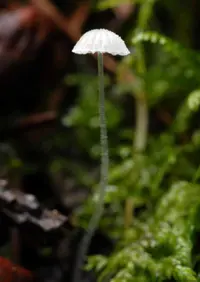
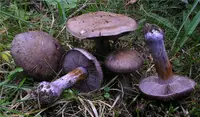
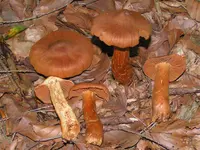
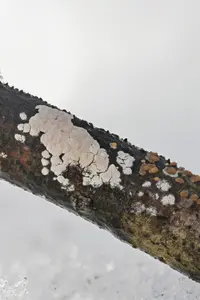
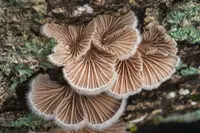
The frosty bonnet, Mycena tenerrima, is a tiny saprophytic mushroom that grows on dead leaves, twigs, and other forest litter. It is not a houseplant in the usual sense but sometimes interests terrarium and vivarium keepers.
This species forms delicate, pale caps with fine, slender stems that often appear in loose clusters. The overall look is fragile, almost translucent, which matches its very short-lived fruiting bodies.
Mycena tenerrima occurs mainly in temperate woodlands across Europe and parts of North America, especially in cool, moist habitats. It is sensitive to drying out and disturbance, which makes long-term cultivation challenging, so anyone wanting to learn how to care for frosty bonnet should understand it behaves more like a temporary woodland guest than a stable ornamental.

Care Difficulty
Hard Care

Light Preference
Shade

Water Requirements
Keep Soil Moist

Temperature Preference
Cool Climate

Hardiness Zone
Unknown

Soil Texture
Loamy, Silty, Organic-rich

Soil pH
Acidic (5.5–6.5)

Soil Drainage
Moist but well-drained

Fertilization
Minimal (feed rarely)
Scan your plant to receive care tips personalized for your specific plant
Available on iOS and Android
This delicate fungus prefers low, filtered light similar to a shaded woodland floor.
This species thrives on consistently moist, not waterlogged, decomposing wood or leaf litter.
This fungus prefers cool to mild conditions typical of shaded forest floors.
This tiny fungus needs consistently moist, humid air to fruit well.
Mycena tenerrima develops best on loose, consistently moist, organic-rich substrate rather than typical potting soil.
This species can be grown in shallow containers mainly as a micro-habitat for observing its fruiting bodies.
This tiny saprophytic fungus usually thrives without added fertilizer when grown on nutrient-rich, decaying organic matter.
Mycena tenerrima needs no deliberate pruning, as fruiting bodies are short-lived and naturally replaced.
Cultivation of this delicate saprophytic fungus in containers is uncommon, so focus on providing fresh, suitable substrate rather than classic repotting.
Mycena tenerrima care focuses on encouraging natural spore dispersal and mycelium spread rather than controlled propagation.
This small woodland fungus is naturally cold tolerant and usually needs no special winter care in temperate climates.

Plant Health Check
Not sure what's wrong with your plant? Check your plant's health inside the app.
This fungus produces some of the tiniest mushroom caps in its genus, often only 1–3 mm wide, making individual fruiting bodies easy to overlook on leaf litter or moss.
Fresh caps appear as if dusted with fine frost or sugar due to minute, reflective surface cells that scatter light, which inspired the common name frosty bonnet.
It typically fruits on decaying leaves, small plant debris, and moss rather than on solid wood, contributing to the breakdown and recycling of very fine organic material in forest floors and lawns.

In mild, damp climates, this species can appear in large, scattered swarms across mossy lawns or shaded garden beds, so a close inspection of a seemingly plain green patch can reveal dozens of tiny, translucent bonnets forming a miniature fungal landscape.
This fungus develops quickly once conditions are right. Tiny caps can appear within days after rain on decaying plant material, mature, then collapse soon after. It does not build up persistent structures or long-term size like typical garden plants.
Keep your plants happy and healthy with plant identification, disease detection, and easy care guidance.