Moisture-Level Zoning
In larger beds, plant in shallow depressions or along the lower edge of a slope so the soil stays evenly moist without waterlogging, which is especially helpful when growing bay forget-me-not in mixed borders.

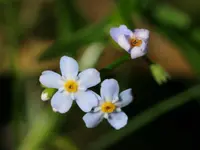
Bay forget-me-not, Myosotis laxa, is a small, moisture-loving perennial often found along stream banks, ponds, and wet meadows in cooler regions. It forms loose clumps of slender stems with small, sky-blue flowers and a yellow eye. The plant has a delicate, airy look but self-seeds readily, so it can create natural drifts in suitable conditions. It prefers consistently moist soil and light shade to partial sun, which reflects its natural wetland habitat. With the right site and soil moisture, it is relatively straightforward to care for bay forget-me-not in temperate gardens.

Care Difficulty
Easy Care

Light Preference
Partial Shade

Water Requirements
Aquatic

Temperature Preference
Cool Climate

Hardiness Zone
3–8

Soil Texture
Loamy, Silty, Organic-rich

Soil pH
Acidic (5.5–6.5), Slightly acidic (6.5–7.0)

Soil Drainage
Waterlogged tolerant

Fertilization
Minimal (feed rarely)
Scan your plant to receive care tips personalized for your specific plant
Available on iOS and Android
Myosotis laxa prefers cool, soft light that mimics open woodland or streamside conditions.
This species thrives in consistently moist soil and tolerates brief saturation better than drying out.
This cool-season plant prefers mild temperatures and tolerates cold better than heat.
This species grows best in moderately moist air but usually adapts to typical outdoor humidity.
This species prefers consistently moist, light soil that does not stay waterlogged.
This species can be grown in containers if moisture and drainage are carefully balanced.
Myosotis laxa is a light feeder that benefits from modest nutrition during active growth.
Pruning Myosotis laxa is simple and focuses on keeping plants tidy and flowering well.
This species is usually grown in beds or naturalized areas, so focus on careful transplanting rather than frequent repotting.
Myosotis laxa is commonly renewed from seed and sometimes by division in informal plantings.
Myosotis laxa is generally cold hardy in temperate climates and usually needs minimal winter care.

Plant Health Check
Not sure what's wrong with your plant? Check your plant's health inside the app.
This species is naturally adapted to wet habitats and often grows at the edges of ponds, slow streams, marshes, and wet ditches, with its lower stems sometimes partially submerged in water.
Its slender, weak stems can form loose, floating mats on the water surface, allowing the plant to spread along shorelines and into shallow water without needing strong upright support.
The pale blue flowers are only a few millimeters across yet still show the classic five-lobed corolla and yellow to whitish eye that help pollinators recognize them as nectar sources even at very small size.

Myosotis laxa is considered native across much of the cooler Northern Hemisphere, including both North America and Eurasia, making it one of the few forget-me-not species with a naturally transcontinental range linked to postglacial freshwater habitats.
Poor flowering often results from too much shade, nutrient-poor or very dry soil, or plants that are overcrowded and aging. Deadhead spent flowers and thin congested clumps to redirect energy into new buds and extend the blooming period.
Keep your plants happy and healthy with plant identification, disease detection, and easy care guidance.