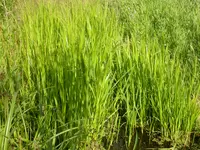
curled pondweed Care (Potamogeton crispus)

Also known as: curly-leaf pondweed, curly pondweed, Crisp-leaved Pondweed, Crisped Pondweed, Wavy-Leaved Pondweed
curled pondweed

About curled pondweed

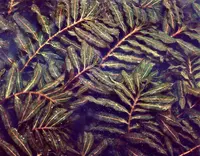
Curled pondweed (Potamogeton crispus) is a submerged freshwater aquatic plant commonly found in ponds, lakes, and slow-moving rivers. It forms dense underwater stands that can spread quickly. The plant has long, flat stems with narrow, wavy-edged leaves that stay underwater, giving it a crisp, ruffled look. It often remains green under ice, which helps it establish early in spring. Native to Eurasia but naturalized in North America, it adapts easily to many cool, nutrient-rich waters. Its rapid growth and tolerance of varied conditions make it easy to establish but sometimes invasive, so care for curled pondweed should include regular monitoring and control.

Main Plant Requirements

Care Difficulty

Easy Care

Light Preference

Full Sun

Water Requirements

Aquatic

Temperature Preference

Cold Hardy

Hardiness Zone

4–9

Soil Texture

Silty, Loamy, Organic-rich

Soil pH

Slightly acidic (6.5–7.0), Neutral (7.0)

Soil Drainage

Waterlogged tolerant

Fertilization

Minimal (feed rarely)

Get Personalized Care Plan

Scan your plant to receive care tips personalized for your specific plant

Available on iOS and Android

How to Care for the curled pondweed

This submerged aquatic plant relies on stable, moderate light reaching the water column for healthy growth.

  • Provide 4–6 hours of indirect or filtered sun reaching the pond surface; bright, open shade or light dappled tree cover suits curled pondweed well.
  • Allow morning sun and protect from intense afternoon sun in shallow or clear water, which can overheat and promote algae overgrowth.
  • In summer, monitor for excessive algae or leaf bleaching as a sign of too much light; in winter, growth slows naturally as day length and light intensity drop.

Potamogeton crispus is a true aquatic species that depends on consistently submerged, relatively still or slow-moving water.

  • Ensure the plant remains fully underwater at all times; water depth of 30–150 cm with stable levels supports strong growth and reduces stress.
  • Watch leaf color and vigor rather than a schedule: pale, stunted shoots can indicate nutrient-poor or very low-flow water, while rotting foliage suggests stagnant, low-oxygen conditions.
  • Avoid sudden large water-level or quality changes; when refreshing ponds, replace no more than 20–30% of the volume at once to prevent shock.

This hardy aquatic plant tolerates a wide temperature range but grows best in cool to mild water.

  • Aim for water temperatures around 59–77°F (15–25°C) for active growth, with strongest performance often in the cooler part of this range.
  • The plant withstands cold down to near-freezing water, about 32–41°F (0–5°C), but growth slows or stops while overwintering structures persist.
  • In hot weather above 82–86°F (28–30°C), monitor for stress such as dieback or increased algae; provide shade or deeper water zones to buffer heat.

This aquatic species relies on water immersion rather than air humidity, so ambient humidity is usually not a concern.

  • Maintain water humidity effectively by keeping leaves fully submerged in water that stays within 50–80% relative humidity at the surface zone.
  • Dry household air is rarely harmful if the water column is stable and does not allow excessive evaporation exposing foliage.
  • Humidity stress shows as drying or browning tips on exposed leaves; add water to cover foliage and use a lid or cover to reduce surface evaporation.

Potamogeton crispus anchors in soft, submerged sediment rather than conventional potting soil.

  • Provide a fine-textured, silty or sandy-loam aquatic substrate rich in organic matter so roots can penetrate easily under water.
  • Aim for slow-draining, slightly compacted material under water, but avoid dense clay that traps gases and prevents oxygen from reaching roots.
  • Use a mix of washed sand, aquatic topsoil, and a small amount of decomposed organic matter, keeping nutrients moderate to prevent algae blooms.
  • Avoid limestone gravel or strongly alkaline substrates above pH 8.0, which can impair nutrient uptake and lead to weak, pale growth.

This species can be grown in containers if the vessel functions as a small still-water body.

  • Choose a wide, 25–40 cm deep tub to allow horizontal spread of rhizomes while keeping stems fully submerged.
  • Use a heavy, non-buoyant container material like ceramic or thick plastic so the unit stays stable under water pressure outdoors.
  • Place a 5–10 cm layer of substrate in the bottom and cap lightly with sand or fine gravel to keep soil from clouding the water.

Potamogeton crispus usually grows well in nutrient-balanced ponds and needs only light supplemental fertilization in managed systems.

  • Use a dilute balanced aquatic fertilizer (for example 5-5-5 NPK) rather than heavy compost or slow-release pellets in small ponds or tanks.
  • Apply at low strength, about 1/4–1/2 the label dose, to avoid algae blooms and oxygen depletion.
  • Feed sparingly during active growth in spring–early summer if water tests show low nutrients or leaves pale.
  • Stop feeding curled pondweed in late summer–fall so the plant can enter dormancy without excess soft growth.

Pruning helps keep Potamogeton crispus from overcrowding other aquatic plants and maintains good water flow.

  • Trim back long, tangled, or crowded stems during late spring–summer using clean aquatic scissors or shears.
  • Remove dead, decaying, or damaged foliage to maintain water quality and reduce rot and algae issues.
  • Thin dense patches by cutting whole stems near the base, which opens space for wildlife movement and light penetration.
  • Avoid cutting all growth at once; leave healthy stems to maintain photosynthesis and habitat structure.

This aquatic species is usually established directly in ponds or submerged containers and only needs transplanting when growth becomes too dense or unbalanced.

  • Transplant in spring–early summer when water temperatures are stable and plants resume active growth.
  • Lift and divide clumps when stems crowd, shade other plants, or spread beyond the intended area.
  • Replant sections into aquatic baskets or pond soil, gently spreading roots and weighting them so they anchor without damage.
  • Minimize root stress by keeping plants submerged during handling and returning them quickly to similar depth and light conditions.

Potamogeton crispus is commonly propagated by vegetative fragments and turions rather than by seed in managed ponds.

  • Take healthy stem sections with several leaf whorls in spring and place them horizontally in shallow, still, well-lit water.
  • Ensure fragments stay submerged and in contact with a thin layer of pond soil or sand to encourage root formation.
  • Use turions, the small overwintering buds, by positioning them on soft substrate where they can sink and root.
  • Maintain good water clarity and moderate nutrients during rooting to reduce algae competition and improve establishment.

In most temperate climates this hardy aquatic plant overwinters in place and needs little targeted winter care.

  • Potamogeton crispus tolerates typical pond icing as long as the water body does not freeze solid to the bottom.
  • In container ponds, move baskets to the deepest, unfrozen zone or a cool indoor tank to prevent root freezing.
  • Avoid drastic autumn cutbacks; leave some foliage and turions so the plant can regrow strongly in spring.

Care Tips

Control Spread

Use weighted, perforated planting baskets to confine roots and make it easier to remove excess biomass before it overruns small ponds or tanks.

Seasonal Thinning

In late spring, cut and remove up to 50–70% of the top growth before it dies back naturally to reduce organic debris, algae-promoting decay, and oxygen drops in the water.

Oxygen Level Monitoring

Check dissolved oxygen with a simple test kit, and if levels fall below 5 mg/L, increase aeration or reduce plant mass to keep fish and invertebrates safe.

Prevent Nutrient Shock

When moving plants from nutrient-poor to nutrient-rich water, thin the clump and introduce only a portion at first to avoid explosive growth and sudden water quality changes.

Quarantine New Stock

Keep new plants in a separate tub for 10–14 days, inspect for snails and invasive hitchhikers, and rinse thoroughly before adding to display ponds or aquaria as part of responsible caring for curled pondweed.

Common Pests and Diseases

Leaf-mining midges

This pest creates winding, translucent tunnels within submerged leaves, leading to weakened, browned foliage that breaks down more quickly in the water. Symptoms include reduced plant vigor and increased leaf fragmentation, especially in still or slow-moving water bodies.

Solution

Reduce dense mats of foliage by thinning to lower habitat suitability, and encourage water movement where possible. In small ponds, remove and discard heavily mined leaves and plant fragments to interrupt the midge life cycle, and avoid introducing contaminated plant material when growing curled pondweed in new water features.

Aquatic snails

These insects are not involved; rather, small aquatic snails graze on young shoots and leaf surfaces, leaving irregular holes and shredded tissue on tender submerged leaves. Symptoms include slowed regrowth after cutting and visibly chewed leaf margins, particularly on new growth.

Solution

Physically remove excess snails by hand or with traps, and avoid overfeeding fish or adding excess organic matter that supports snail populations. In managed ponds, encourage natural predators such as certain fish species, and regularly harvest dense stands of pondweed to reduce snail habitat and egg-laying sites.

Leaf spot fungi

This disease causes small, dark, sometimes concentric spots on the submerged leaves, which can expand and lead to premature leaf decay. Symptoms include thinning stands, increased leaf breakage, and more plant debris accumulating in the water column.

Solution

Improve water circulation and reduce nutrient enrichment to limit fungal development, and mechanically thin overly dense stands to lower humidity around leaves. Remove and dispose of decaying plant material and sediments that trap organic debris, which helps reduce fungal spore loads over time.

Epiphytic algae overgrowth

This disease is not pathogenic but acts as a biological stressor when filamentous or slimy algae colonize leaf surfaces, blocking light and interfering with gas exchange. Symptoms include dull, fuzzy, or heavily coated leaves and reduced growth even in apparently well-lit conditions.

Solution

Lower excess nutrients by limiting fertilizer runoff and organic waste, and increase water movement or partial shading to discourage algal dominance. Manually remove heavily coated shoots, perform regular partial water changes in ornamental ponds, and maintain balanced fish and plant populations to stabilize nutrient levels.

Interesting Facts

Winter-growing strategy

This species often grows most actively in late winter and early spring, allowing it to exploit cool water and low competition before many native aquatic plants start their main growth phase.

Turbid water tolerance

Curled pondweed can thrive in turbid, nutrient-rich lakes and slow rivers where light penetration is reduced, which helps it colonize disturbed or eutrophic freshwater habitats.

Vegetative spread by turions

Instead of relying mainly on seeds, this plant forms hard, bud-like structures called turions that break off, sink, and later sprout, making Potamogeton crispus care challenging in water bodies where eradication is attempted.

Botan icon

Did you know?

In many temperate lakes, this species completes much of its life cycle and begins to senesce by early summer, leaving large amounts of decomposing plant material that can significantly alter oxygen levels and nutrient dynamics in the water column.

FAQs about curled pondweed

Growth is usually fast in cool, nutrient-rich, still or slow-moving water. In spring it can form dense stands within a few weeks. Warmer summer water and lower nutrients slow extension and encourage dieback of older shoots.

Grow Healthy Plants with Botan Care

Keep your plants happy and healthy with plant identification, disease detection, and easy care guidance.

Botan plant care app — identify plants on mobile

Explore More Plants