true forget-me-not Care (Myosotis scorpioides)

Also known as: water forget-me-not, Marsh Forget-Me-Not
true forget-me-not

About true forget-me-not

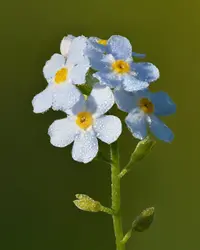
True forget-me-not, Myosotis scorpioides, is a low, spreading perennial often grown near ponds, streams, or in consistently damp garden soil. It forms soft green mats with many small sky-blue flowers that usually have yellow centers.

In nature it occurs across Europe and parts of Asia and has naturalized in North America, especially in cool, moist habitats. It self-seeds freely, which can make it long-lived in suitable conditions but also somewhat persistent.

Gardeners who want to care for true forget-me-not should know it prefers cool temperatures, constant moisture, and fertile, humus-rich soil, and it tolerates light shade to sun in cooler climates.

Main Plant Requirements

Care Difficulty

Moderate Care

Light Preference

Partial Shade

Water Requirements

Aquatic

Temperature Preference

Cool Climate

Hardiness Zone

3–8

Soil Texture

Loamy, Silty, Organic-rich

Soil pH

Acidic (5.5–6.5), Slightly acidic (6.5–7.0)

Soil Drainage

Waterlogged tolerant

Fertilization

Minimal (feed rarely)

Get Personalized Care Plan

Scan your plant to receive care tips personalized for your specific plant

Available on iOS and Android

How to Care for the true forget-me-not

This moisture-loving perennial prefers cool, gentle light rather than intense sun exposure.

  • Provide 3–5 hours of direct morning sun with light shade or dappled light from late morning onward to prevent leaf scorch.
  • Allow partial shade, especially in hotter regions, where true forget-me-not flowers and foliage stay healthier with filtered light most of the day.
  • In summer, protect from strong afternoon sun; in cooler months, slightly more direct light is acceptable as long as soil stays consistently moist.

This species naturally grows at water edges and needs consistently moist conditions.

  • Keep soil evenly moist and never let it dry out completely; the surface may just start to lose gloss before watering again, especially in fast-draining sites.
  • In garden beds, use mulch 3–5 cm deep to slow evaporation, and ensure the soil does not become stagnant or foul-smelling, which signals waterlogging.
  • During hot, windy periods, increase watering frequency and watch for wilting, crisp leaf edges, or reduced flowering as signs that Myosotis scorpioides needs more moisture.

This plant prefers cool to mild conditions and tolerates cold better than heat.

  • Aim for active growth in 50–70°F (10–21°C); flowering is usually strongest in the cooler part of this range.
  • Plants can tolerate light frosts down to about 25°F (-4°C), especially when established, but repeated hard freezes may damage new growth.
  • In summer, growth declines when temperatures often exceed 80°F (27°C); provide extra shade and constant moisture during heat waves to reduce stress.

This species prefers consistently moist air but adapts to typical outdoor humidity in most temperate regions.

  • Aim for 50–80% humidity, especially in warm weather near water features or damp borders.
  • It tolerates brief drier air but may show stress as browning leaf edges and reduced flowering.
  • Increase humidity outdoors by grouping plants near ponds, bog gardens, or regularly damp mulched areas when growing true forget-me-not.

Myosotis scorpioides thrives in saturated, oxygenated soil that mimics shallow pond margins or boggy ground.

  • Use a fine-textured, organic-rich loam or clay-loam that holds water yet does not become anaerobic, with at least 30–50% compost.
  • Aim for slow-draining conditions; soil should stay constantly wet to shallowly flooded, never allowed to dry out between waterings.
  • A slightly acidic to neutral pH around 6.0–7.2 supports nutrient availability and reduces micronutrient lockout.
  • For containers, mix loam, compost, and a small amount of sand to stabilize structure while still maintaining heavy moisture retention.

This species can be grown in containers, especially for water gardens, pond edges, or wet balcony planters.

  • Choose a wide, relatively shallow container to allow creeping stems to spread while keeping roots close to the saturated surface layer.
  • Use a heavy ceramic or thick plastic pot that will not tip when soil is waterlogged and that slows evaporation.
  • Set the container in a tray or pond shelf so the lower drainage holes stay just at or slightly below water level for constant saturation.

This moisture-loving perennial benefits from light feeding but performs adequately in reasonably fertile soil.

  • Use a balanced, water-soluble fertilizer (around 10-10-10) at 1/2 strength for caring for true forget-me-not in containers or poor soils.
  • Feed every 4–6 weeks during spring and early summer while growth and flowering are active.
  • Skip fertilizer in naturally rich, silty, or organically amended beds, especially near ponds or streams.
  • Stop feeding in late summer and avoid fertilizing in winter dormancy to prevent weak, lush growth.

Myosotis scorpioides responds well to light, timely pruning that keeps plants compact and flowering.

  • In late spring to early summer, shear back spent flower stems to encourage a neater mound and some rebloom.
  • Remove dead, damaged, or disease-marked foliage as needed using clean, sharp scissors or hand pruners.
  • Thin crowded patches by cutting out weak or sprawling stems to maintain airflow and reduce mildew risk.
  • At season’s end, cut plants low to tidy beds and limit excessive self-seeding if spread is a concern.

This species is usually grown in the ground or pond margins, with transplanting more common than repotting.

  • Move plants in early spring or early fall, when temperatures are mild and soil stays evenly moist.
  • Transplant if clumps become overcrowded, growth weakens, or stems flop due to competition for light and nutrients.
  • Lift clumps gently, keep roots wet, and replant at the same depth into soft, humus-rich, moist soil or shallow water.
  • Water thoroughly after planting, shade lightly for a few days, and avoid disturbing roots until new growth resumes.

This plant is commonly propagated from seed and by division of established clumps.

  • Sow fresh seeds of Myosotis scorpioides in late summer or early fall on moist, fine-textured soil; press in lightly without deep covering.
  • Keep seed trays or beds evenly damp and cool; germination usually occurs within a few weeks under 60–68°F conditions.
  • Divide older clumps in early spring, separating rooted sections and replanting them immediately into wet soil or shallow water.
  • Space new plants modestly, as natural self-seeding and spreading stems will often fill gaps over time.

This hardy perennial usually needs minimal winter care in most temperate climates.

  • Established plants tolerate light to moderate frost, especially when roots remain in consistently moist soil.
  • Apply a thin mulch layer around crowns in late fall in colder regions to buffer freeze–thaw cycles.
  • In containers, move pots to a sheltered, frost-free but cool spot and keep the substrate just barely moist.

Care Tips

Shallow Water Trays

For container plants, stand pots in a wide, shallow tray of water 1–3 cm deep during active growth to mimic boggy conditions, but refresh the water at least weekly to prevent stagnation and mosquito breeding.

Streambank Stabilizing

When planting along ponds or streams, set young plants slightly above the final waterline and space them 15–25 cm apart so their roots knit together and help stabilize soft, eroding banks.

Self-Seed Management

If you want controlled spread, leave flowers on until most have faded, then shear the plants and collect or compost the seed heads before they fully dry and drop into surrounding beds or water.

Division In Muddy Sites

Divide clumps in early spring or early fall by lifting small sections with plenty of wet soil attached and replanting them quickly at the same depth so the fine roots do not dry out.

Aquatic Basket Use

In ponds or water features, plant into mesh aquatic baskets filled with loam-based soil and sink them at the edge; this limits aggressive spreading and lets you lift whole clumps easily for thinning or relocation when caring for true forget-me-not.

Common Pests and Diseases

Powdery mildew

This disease appears as white to gray powdery patches on leaves and stems, often in dense plantings with poor air circulation. Symptoms include distorted growth and premature leaf yellowing or browning.

Solution

Remove heavily infected leaves to reduce spore load and thin crowded clumps to improve airflow and light penetration. Avoid overhead watering, water at soil level in the morning, and if needed apply a sulfur or potassium bicarbonate fungicide labeled for ornamentals, following the product directions carefully.

Downy mildew

This disease causes yellow, pale, or translucent blotches on upper leaf surfaces with a gray to purplish downy growth underneath, especially in cool, damp conditions. Symptoms include leaf drop and general decline in vigor.

Solution

Promptly remove and discard affected leaves and reduce leaf wetness by watering at the base and avoiding prolonged overhead irrigation. Improve spacing and airflow, and in persistent cases use a phosphonate or copper-based fungicide labeled for downy mildew on ornamentals, rotating products to limit resistance.

Leaf spot

This disease produces small brown, tan, or dark purple spots on leaves that may enlarge, merge, and cause tissue to dry and tear. Symptoms include thinning foliage and reduced flowering when infection is severe.

Solution

Prune and dispose of spotted leaves and plant debris to reduce pathogen carryover, and avoid splashing water from soil onto foliage. Maintain good spacing, and in severe cases apply a chlorothalonil or copper-based fungicide labeled for leaf spots, repeating only as directed on the label.

Aphids

These insects cluster on tender stems, buds, and the undersides of leaves, sucking sap and excreting sticky honeydew. Symptoms include curled or distorted new growth and increased risk of sooty mold on the foliage.

Solution

Dislodge colonies with a strong stream of water and pinch off heavily infested shoot tips if feasible. For ongoing infestations, use insecticidal soap or a horticultural oil thoroughly coating the insects, and encourage natural predators such as lady beetles by avoiding broad-spectrum insecticides nearby.

Spider mites

This pest thrives in hot, dry conditions and feeds on leaf undersides, causing fine speckling and a dull, grayish cast to foliage. Symptoms include delicate webbing between stems and leaves and gradual leaf drying or drop.

Solution

Increase humidity around the plants and regularly hose down foliage, focusing on leaf undersides to knock mites off. For persistent problems, apply horticultural oil or insecticidal soap at 5–7 day intervals until new growth appears clean, making sure the spray reaches all webbed areas.

Interesting Facts

Semi-aquatic habitat specialist

This species naturally grows along streams, ponds, and ditches and can root in saturated mud or shallow water, which is unusual among true forget-me-nots.

Hydrochory seed dispersal

Its small nutlets are often carried away by flowing water (a process called hydrochory), helping the plant colonize new wet banks and slow-moving waterways.

Oxygen-rich root zone

Like many wetland plants, it forms specialized air spaces in its tissues that help move oxygen from the leaves to the roots, allowing survival in low-oxygen, waterlogged soils.

Botan icon

Did you know?

Myosotis scorpioides is considered invasive in several parts of North America, where escaped garden plants spread along waterways and outcompete native wetland species, leading to active management and removal programs in sensitive habitats.

FAQs about true forget-me-not

This species spreads readily by self-seeding and creeping stems, especially in consistently moist or boggy soil. In suitable conditions it can form dense patches, so periodic thinning and deadheading help keep it within desired bounds.

Grow Healthy Plants with Botan Care

Keep your plants happy and healthy with plant identification, disease detection, and easy care guidance.

Botan plant care app — identify plants on mobile

Explore More Plants