California bayberry Care (Myrica californica)

Also known as: California wax myrtle, Pacific wax myrtle
California bayberry

About California bayberry

California bayberry, Myrica californica, is an evergreen shrub to small tree valued for dense foliage and adaptability. It is often used as a hedge, screen, or coastal windbreak.

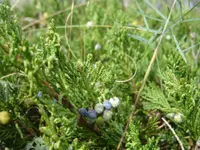
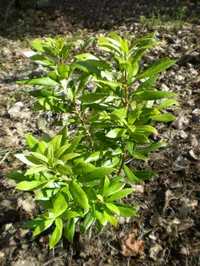
Plants carry narrow, glossy green leaves and small, inconspicuous flowers, followed by waxy berries that attract wildlife. The overall look is tidy and upright when regularly pruned.

This species is native to the Pacific Coast of North America, especially coastal California and Oregon, where it grows on dunes, bluffs, and moist slopes. Its tolerance of wind, salt, and varied soils makes it relatively easy to care for California bayberry in many garden settings.

It generally prefers sun to light shade and moderately moist, well-drained soil, but once established it copes well with short dry periods.

Main Plant Requirements

Care Difficulty

Easy Care

Light Preference

Full Sun

Water Requirements

Moderate Water

Temperature Preference

Warm Climate

Hardiness Zone

7–10

Soil Texture

Sandy, Loamy, Clay

Soil pH

Acidic (5.5–6.5), Slightly acidic (6.5–7.0)

Soil Drainage

Moist but well-drained

Fertilization

Minimal (feed rarely)

Get Personalized Care Plan

Scan your plant to receive care tips personalized for your specific plant

Available on iOS and Android

How to Care for the California bayberry

This evergreen shrub thrives in coastal light conditions and adapts well to varied exposures.

  • Provide 4–6 hours of direct sun daily, ideally with morning sun and light afternoon shade, especially inland.
  • Tolerates bright partial shade; in hotter regions, filtered light or dappled shade prevents leaf scorch and excessive drying.
  • In summer, monitor new growth for leaf yellowing or sparse foliage as a sign of insufficient light; in winter, ensure it is not shaded by buildings or trees all day.

Myrica californica prefers consistently moist but not saturated soil once established.

  • In the ground, water deeply when the top 5–7 cm of soil feels dry, allowing water to soak 20–30 cm down to encourage deep roots.
  • Reduce frequency in cool or rainy seasons, and increase during hot, dry, or windy weather, especially for young shrubs in their first 1–2 years.
  • Watch for yellowing, soft leaves and soggy soil as signs of overwatering; crisp leaf edges and slow growth usually indicate underwatering or poor soil moisture retention.

This coastal shrub is adapted to mild climates with moderate temperature swings.

  • Best growth occurs around 55–75°F (13–24°C), where stems extend steadily and foliage remains dense and glossy.
  • Established plants tolerate brief drops to about 15–20°F (-9 to -6°C); young plants are more vulnerable and benefit from mulch over the root zone in cold snaps.
  • Handles summer heat to about 90–95°F (32–35°C) if soil moisture is maintained; extended hotter periods may cause leaf tip burn and slower growth.

Humidity is rarely a concern for Myrica californica, which is adapted to dry coastal air.

Myrica californica grows best in light, well-structured soil that drains freely yet retains some moisture.

  • Use a sandy or sandy-loam base with 20–30% compost to provide structure and moderate water retention.
  • Ensure drainage is rapid; avoid compacted or heavy clay that stays wet for more than 24 hours after rain or watering.
  • Aim for slightly acidic to neutral pH around 6.0–7.0, avoiding strongly alkaline substrates that can limit nutrient uptake.
  • Improve aeration and drainage in marginal sites by incorporating coarse sand or fine bark chips throughout the top 20–30 cm.

This species can be grown in containers if the pot is large and stable enough for its vigorous root system.

  • Choose a deep, heavy container to counteract wind and canopy weight, reducing the risk of tipping.
  • Fill the pot with a fast-draining, sandy mix and elevate it slightly so drainage holes never sit in pooled water.
  • Position containers where they receive good air movement around the root zone to prevent heat buildup in the pot wall.

This coastal evergreen shrub needs only light feeding in most garden soils.

  • Apply a thin layer of compost or well-rotted manure around the root zone once in spring for Myrica californica.
  • In poorer soils, use a balanced slow-release fertilizer (around 10-10-10) at half strength at the start of the growing season.
  • Avoid midsummer and late-fall feeding to prevent soft, frost-sensitive growth.
  • Water thoroughly after any fertilizer application to help nutrients move into the root zone.

Myrica californica responds well to thoughtful pruning that maintains a dense, healthy structure.

  • Carry out main pruning in late winter or very early spring before new growth starts.
  • Remove dead, damaged, crossing, or inward-growing branches with clean, sharp bypass pruners or loppers.
  • Thin crowded interior shoots to improve light and air movement, reducing disease risk.
  • Shorten long shoots to shape hedges or screens, keeping cuts just above an outward-facing bud.

This shrub is usually grown in the ground and is moved mainly when establishing hedges or screens.

  • Transplant in late winter to early spring while the plant is still relatively dormant for lower stress.
  • Look for roots circling the container, tight root balls, or slowed growth in potted plants as signs it needs a larger pot or ground planting.
  • Water deeply the day before moving, handle the root ball gently, and keep as much soil intact as possible.
  • After transplanting, water thoroughly, mulch 5–8 cm around (not against) the stem, and shade temporarily in hot, windy conditions.

This species is commonly propagated by semi-hardwood cuttings or seeds under controlled conditions.

  • Take semi-hardwood cuttings in late summer, 8–12 cm long, from healthy, non-flowering shoots.
  • Remove lower leaves, dip the base in rooting hormone, and insert into a moist, free-draining mix under high humidity and bright, indirect light.
  • Sow fresh seed in fall in trays outdoors or in a cold frame; natural winter chilling improves germination.
  • Keep both cuttings and seedling media evenly moist, not waterlogged, to prevent rot and support steady root development.

This coastal evergreen is moderately cold hardy and usually needs little winter care in mild climates.

  • Tolerates light frosts once established but may suffer foliage scorch in prolonged freezes below about 15–20°F.
  • Apply a 5–8 cm mulch layer over the root zone in late fall, keeping it slightly away from the stems.
  • In colder regions, grow Myrica californica in containers so plants can be moved to a sheltered, unheated but frost-free spot.

Care Tips

Wind-tolerant shaping

In windy sites, selectively thin long, whippy shoots each spring so air passes through the canopy, which reduces windthrow, branch breakage, and salt burn on exposed plants.

Hedge density control

For a dense privacy screen, lightly shear new growth 2–3 times from late spring to midsummer, but periodically cut a few stems back by 1/3 their length to maintain interior foliage and avoid a bare, woody center.

Salt-spray management

In coastal locations, hose foliage with fresh water after major salt-laden storms to wash off deposits that can scorch leaves and reduce photosynthesis.

Root-zone protection

Maintain a 5–8 cm organic mulch layer out to the drip line, but keep it 5–8 cm away from the trunk to stabilize soil moisture, moderate soil temperature, and protect the shallow, fibrous roots from heat and foot traffic.

Wildlife-friendly use

If birds are part of the landscape plan, allow some berries to remain on the shrub through winter and avoid pruning heavily in late summer so wildlife has both cover and food while still growing California bayberry as an effective screen.

Common Pests and Diseases

Soft scale

This pest feeds on stems and leaves, causing yellowing, leaf drop, and sticky honeydew that can lead to sooty mold. Infestations often start on sheltered inner branches of dense hedges.

Solution

Prune and thin dense growth to improve light and airflow, then wipe or gently scrub accessible stems with a soft cloth or brush and mild soapy water. For heavier infestations, spray horticultural oil thoroughly over branches during mild weather, repeating as needed to break the life cycle.

Spider mites

These insects thrive on bayberry in hot, dry, sheltered sites, causing stippled, dull foliage and fine webbing between leaves and twigs. Symptoms include premature leaf drop and an overall dusty, tired look to the shrub.

Solution

Increase humidity around the plant and hose down foliage with a strong but controlled stream of water, focusing on leaf undersides. If needed, apply insecticidal soap or a labeled miticide, repeating at 7–10 day intervals while monitoring for returning mites.

Leaf spot

This disease causes scattered brown or purplish spots on leaves, sometimes with yellow halos and premature leaf drop. Symptoms include thinning foliage, especially in the lower, shaded parts of the shrub where leaves stay wet longer.

Solution

Remove and discard affected leaves on and under the plant, and avoid overhead watering late in the day so foliage dries quickly. Improve spacing and airflow; in severe, recurring cases, a labeled fungicide for ornamental shrubs can be applied at the first sign of new spotting as part of Myrica californica care instructions.

Sooty mold

This disease develops on the sugary honeydew excreted by sap-feeding insects such as scale, leaving black, powdery coatings on leaves and stems. Symptoms include reduced photosynthesis, dull foliage, and a dirty appearance on hedges near patios or driveways.

Solution

Address the underlying honeydew-producing insects first by managing scale or other sap feeders. Once those are controlled, gently wash affected foliage with water and a small amount of mild soap, and prune heavily coated twigs to restore clean, healthy growth.

Interesting Facts

Evergreen nitrogen fixer

This coastal shrub stays evergreen year-round and forms root nodules with nitrogen-fixing bacteria, allowing it to thrive in nutrient-poor sandy soils and help improve soil fertility around it.

Specialized waxy berries

Its small purple berries are coated in a natural wax once used locally to make candles and soaps, and they provide food for birds that have adapted to digest the fatty, waxy coating.

Salt and wind tolerant

The thick, leathery leaves and dense branching give this species a high tolerance to salt spray and coastal winds, which is why it naturally forms windbreak thickets along the Pacific coast.

Botan icon

Did you know?

California bayberry can resprout vigorously from its root crown after fire, allowing populations to recover quickly and stabilize coastal slopes in fire-prone landscapes.

FAQs about California bayberry

This shrub is evergreen, keeping foliage year-round in mild climates. Leaves may thin slightly during cold or drought, but it does not go fully bare. Evergreen structure makes it useful for privacy screening and windbreaks in many landscapes.

Grow Healthy Plants with Botan Care

Keep your plants happy and healthy with plant identification, disease detection, and easy care guidance.


Botan plant care app — identify plants on mobile

Explore More Plants