Leatherleaf Viburnum Care (Viburnum rhytidophyllum)

Also known as: leatherleaf arrowwood, Wrinkled Viburnum
Leatherleaf Viburnum

About Leatherleaf Viburnum

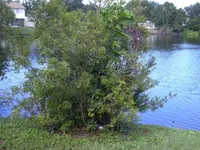
Leatherleaf viburnum, Viburnum rhytidophyllum, is an evergreen to semi-evergreen shrub valued for its tough, leathery foliage and strong architectural form. It typically forms a dense, upright to spreading shrub that works well as a background plant, screen, or informal hedge.

In its native range in central and western China, it grows on woodland edges and slopes, which helps explain its tolerance of partial shade and varied soils. The plant is generally considered easy to grow, with good cold hardiness and resistance to many common pests and diseases.

For those learning how to care for Leatherleaf Viburnum, it prefers moderately moist, well-drained soil and performs best in full sun to light shade in sheltered sites.

Main Plant Requirements

Care Difficulty

Easy Care

Light Preference

Partial Sun

Water Requirements

Moderate Water

Temperature Preference

Cold Hardy

Hardiness Zone

5–8

Soil Texture

Loamy, Clay, Organic-rich

Soil pH

Acidic (5.5–6.5), Slightly acidic (6.5–7.0)

Soil Drainage

Moist but well-drained

Fertilization

Minimal (feed rarely)

Get Personalized Care Plan

Scan your plant to receive care tips personalized for your specific plant

Available on iOS and Android

How to Care for the Leatherleaf Viburnum

This evergreen shrub prefers bright conditions with some protection from harsh afternoon sun.

  • Provide 4–6 hours of direct morning sun with light afternoon shade; dappled light under high trees suits Leatherleaf Viburnum well.
  • Plant in a site that avoids intense, reflected afternoon sun, which can scorch leaves and cause premature leaf drop, especially in hot summers.
  • In cooler climates, full sun all day is tolerated, but in warmer zones aim for eastern exposure or filtered light during summer to reduce stress.

This shrub prefers evenly moist, well-drained soil rather than frequent, shallow watering.

  • Allow the top 3–5 cm of soil to dry before deep watering, ensuring moisture reaches the root zone rather than just the surface.
  • Increase watering during the first 1–2 growing seasons and in hot, dry spells; reduce frequency in cool, rainy weather and winter dormancy.
  • Watch foliage for cues: drooping, dull leaves and dry soil suggest underwatering, while yellowing leaves, soft stems, or soggy soil indicate poor drainage or overwatering in Viburnum rhytidophyllum.

This broadleaf evergreen shrub is hardy and tolerates a wide range of outdoor temperatures.

  • Ideal growing temperatures are about 60–75°F (16–24°C) during the main growing season, with natural outdoor fluctuations well tolerated.
  • The shrub is cold-hardy and can survive brief drops near 0°F (−18°C) once established, but young plants benefit from mulch to buffer root-zone temperature.
  • Heat tolerance is good up to about 90°F (32°C) if soil moisture is maintained; prolonged heat with dry soil can scorch foliage, especially in full afternoon sun.

This shrub handles a wide humidity range and usually does not need special humidity management outdoors.

  • Tolerates 30–70% humidity without issue when roots are well watered.
  • Dry air is rarely a problem; leaf scorch usually indicates drought or strong sun rather than low humidity.
  • In unusually hot, very dry conditions, light mulching and deep watering protect foliage better than misting.

This shrub grows best in deep, moist, well-drained mineral soil with added organic matter.

  • Use a loamy structure with moderate clay, sand, and silt, enriched with compost or leaf mold to support steady growth.
  • Ensure drainage by avoiding compacted ground; amend heavy clay with coarse sand and fine bark to improve aeration and water movement.
  • Aim for slightly acidic to neutral pH, around 6.0–7.0, which supports nutrient uptake in Viburnum rhytidophyllum.
  • Avoid waterlogged, shallow, or extremely sandy sites; standing water or very fast-drying soil stresses roots and reduces vigor.

This species can be grown in large containers for several years if the pot is chosen and managed carefully.

  • Select a heavy, wide-based pot to counter the shrub’s tall, top-heavy canopy and prevent tipping in wind.
  • Use a deep container that allows a broad root zone so the plant can access enough moisture between waterings.
  • Choose a pot material that moderates moisture swings, such as thick-walled ceramic, to reduce rapid drying of the root ball.

Viburnum rhytidophyllum benefits from modest feeding to support steady growth and flowering in average garden soil.

  • Apply a balanced slow-release fertilizer (e.g., 10-10-10) once in early spring at label rates, worked lightly into the soil surface.
  • Supplement with a thin layer of compost around the root zone to improve soil structure and microbial activity.
  • During active growth, avoid additional high-strength fertilizers; use any liquid feed at 1/2 strength only if foliage appears pale.
  • In winter dormancy, do not apply fertilizer; caring for Leatherleaf Viburnum then focuses on moisture management, not feeding.

Pruning Viburnum rhytidophyllum helps maintain shape, clearance, and healthy flowering wood.

  • Carry out main pruning just after flowering so the plant can set buds for the next season.
  • Remove dead, diseased, or damaged branches first, cutting back to healthy wood with clean, sharp bypass pruners.
  • Thin crowded interior stems to improve light and air, which reduces fungal problems and encourages stronger new growth.
  • Lightly shorten overly long shoots to maintain the desired outline, avoiding heavy cuts into very old, thick stems.

This shrub is usually grown in the ground, so care focuses on transplanting young plants rather than frequent repotting.

  • Plan to transplant in early spring or early fall, when temperatures are mild and moisture is more consistent.
  • Look for signs such as roots circling the container, slow top growth, or the root ball drying out quickly before moving a plant.
  • Dig a wide planting hole, loosen circling roots gently, and set the shrub at the same soil depth as in the pot.
  • Water deeply after planting, then keep soil evenly moist for several weeks to limit transplant shock and support root establishment.

Viburnum rhytidophyllum is most commonly propagated from semi-ripe cuttings or by simple layering for reliable results.

  • Take semi-ripe cuttings in mid to late summer, using 8–10 cm tip pieces with 2–3 leaf nodes.
  • Remove lower leaves, dip the base in rooting hormone, and place in a free-draining mix under high humidity and bright, indirect light.
  • For layering, bend a low, flexible stem to the soil, slightly wound the underside, pin it down, and cover with soil.
  • Seeds are slow and variable; they need a period of cold stratification, so they are mainly used by specialist growers.

This evergreen shrub is fairly cold hardy but benefits from simple winter care in colder regions.

  • Tolerates frost in many temperate climates but may experience leaf scorch in exposed, windy sites.
  • Apply a 5–8 cm mulch layer around the root zone in late fall, keeping it slightly back from the trunk.
  • In very cold or windy areas, use a windbreak or breathable burlap screen to reduce desiccation of evergreen foliage.
  • Container-grown plants in colder zones should be moved to a sheltered, unheated but frost-free or slightly protected location.

Care Tips

Windbreak placement

Site plants where fences, walls, or taller shrubs break strong winter winds, since drying winds cause more foliage damage than cold alone and can desiccate the leathery leaves.

Layering for propagation

In late spring, bend a low flexible branch to the soil, pin it down, cover a 10–15 cm section with soil, and cut it from the mother plant once roots form to create a genetically identical, well-adapted new shrub.

Snow load management

After heavy, wet snow, gently brush accumulation off the arching branches with a broom to prevent splitting or permanent splaying of the framework.

Targeted rejuvenation cuts

Every 2–3 years, remove 1–3 of the oldest stems at ground level rather than tip-pruning all over, which maintains a dense habit and encourages vigorous new basal shoots.

Preventing root disturbance

Avoid deep cultivation or frequent replanting of perennials directly under the canopy, since repeated root disturbance stresses the shrub and can reduce flowering when growing Leatherleaf Viburnum.

Common Pests and Diseases

Viburnum leaf beetle

This pest feeds heavily on leaves in both larval and adult stages, skeletonizing foliage and leaving only midribs and larger veins. Symptoms include brown, tattered leaves and progressive defoliation from the bottom of the shrub upward.

Solution

Prune and destroy egg-laden twigs in late winter before they hatch, focusing on pencil-thick stems with rows of small pits. If larvae are present in spring, spray foliage thoroughly with insecticidal soap or a spinosad-based product, and dispose of heavily infested leaves to reduce populations in following years.

Mite damage

These pests are tiny sap-feeding arachnids that cause stippling, bronzing, and a dull, grayish cast to the leathery leaves. Symptoms include fine webbing on the undersides of leaves and increased damage during hot, dry weather.

Solution

Rinse foliage with a firm stream of water, especially the leaf undersides, 2–3 times per week to knock mites off. If populations remain high, apply horticultural oil or insecticidal soap, improving air movement and avoiding drought stress to make the plant less favorable to mites.

Powdery mildew

This disease produces a white or gray powdery coating on upper leaf surfaces, often starting in shaded or crowded parts of the shrub. Symptoms include distorted new growth and premature leaf drop when infections are heavy.

Solution

Improve air circulation by thinning crowded stems and avoid overhead watering late in the day. Remove and discard heavily infected leaves, and apply a labeled fungicide such as sulfur or a potassium bicarbonate product at the first sign of mildew to protect new foliage, following package directions carefully.

Bacterial leaf spot

This disease causes angular, water-soaked spots that turn dark brown to black and may be surrounded by a yellow halo on the leathery leaves. Symptoms include spotting that can merge into larger dead patches, sometimes leading to early leaf drop in humid conditions.

Solution

Remove and discard affected leaves and prune out badly infected shoots, disinfecting pruning tools between cuts with 70% alcohol. Reduce leaf wetness by watering at soil level, increase airflow, and in recurrent cases consider using a copper-based bactericide early in the season, applied carefully to avoid leaf burn.

Botryosphaeria canker

This disease infects stressed stems and branches, leading to sunken, dark cankers, wilted shoots, and dieback of sections of the shrub. Symptoms include tan to brown discolored wood under the bark and branch tips that fail to leaf out or collapse midseason.

Solution

Prune out infected branches several inches below visible symptoms and destroy the debris, disinfecting pruning tools between cuts. Reduce plant stress by providing consistent moisture, mulching the root zone, and avoiding unnecessary wounding, which are key elements of effective Viburnum rhytidophyllum care instructions.

Interesting Facts

Deeply wrinkled foliage

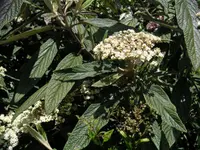
This species has thick, leathery leaves with a strongly wrinkled (rugose) surface and dense hairs on the underside, an adaptation that reduces water loss and protects leaf tissue from cold, drying winds.

Semi-evergreen in cold

In mild climates it behaves as an evergreen shrub, but in colder regions it often becomes semi-evergreen, dropping part of its foliage after hard frosts while retaining some leaves through winter.

Shade-tolerant woodland shrub

In its native central and western China, this species naturally grows in woodland and forest margins, which explains its good tolerance of partial shade in cultivation and informs practical Viburnum rhytidophyllum care instructions in gardens and landscapes.

Botan icon

Did you know?

The species epithet rhytidophyllum comes from Greek roots meaning wrinkled leaf, directly referring to the plant’s distinctive corrugated foliage that makes it easy to recognize among other viburnums.

FAQs about Leatherleaf Viburnum

This shrub is evergreen to semi-evergreen in many mild climates. In colder regions it may drop some leaves in winter, but typically retains enough foliage to function as a year-round screening and structure plant.

Grow Healthy Plants with Botan Care

Keep your plants happy and healthy with plant identification, disease detection, and easy care guidance.

Botan plant care app — identify plants on mobile

Explore More Plants