Firewise placement
Site plants at least 10–15 ft from buildings and prune lower branches to reduce flammability, since this species can accumulate dry, resinous material that increases fire risk.

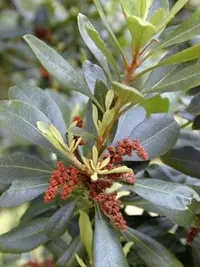
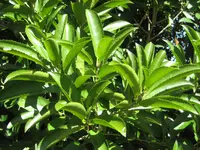
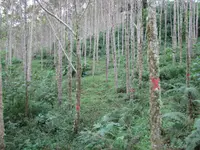
Myrica faya, commonly called faya or firetree, is an evergreen shrub or small tree from volcanic islands in the Macaronesian region, especially the Azores and Madeira. It often forms dense thickets with smooth gray bark, narrow glossy leaves, and small berry-like fruits that attract birds.
In suitable climates it grows vigorously and can spread quickly, which makes it tough but sometimes invasive outdoors. It prefers mild, frost-free conditions, well-drained acidic soils, and regular moisture, and it tolerates coastal exposure. These traits make it relatively resilient once established, but also mean gardeners should plan placement carefully.
Because it fixes nitrogen in the soil, it can thrive on poorer sites and alter local ecosystems. Understanding this behavior is important if you want to care for faya responsibly in the landscape.

Care Difficulty
Moderate Care

Light Preference
Full Sun

Water Requirements
Moderate Water

Temperature Preference
Warm Climate

Hardiness Zone
9–11

Soil Texture
Sandy, Loamy, Organic-rich

Soil pH
Acidic (5.5–6.5), Slightly acidic (6.5–7.0)

Soil Drainage
Well-drained

Fertilization
Minimal (feed rarely)
Scan your plant to receive care tips personalized for your specific plant
Available on iOS and Android
This subtropical shrub prefers consistent bright light for balanced growth and fruiting.
This species prefers evenly moist but not saturated soil, especially while establishing.
This shrub thrives in mild, frost-free climates with stable temperatures.
This species handles a fairly wide humidity range but benefits from moderately moist air in hot, dry climates.
Myrica faya prefers light, acidic, well-drained soil that still retains some moisture.
This species can be grown in containers, especially in its early years or where in-ground planting is restricted.
This species is adapted to low-fertility soils, so feeding should stay light and conservative when caring for faya.
Myrica faya benefits from modest structural pruning to maintain a stable, manageable form.
This species is usually grown in the ground, so focus on careful transplanting of young plants rather than frequent repotting.
Myrica faya is usually propagated from seeds, with semi-ripe cuttings as an additional option for growers with some experience.
This subtropical species dislikes hard freezes, so winter protection is needed in most temperate climates.

Plant Health Check
Not sure what's wrong with your plant? Check your plant's health inside the app.
This species forms a symbiosis with specialized root bacteria that convert atmospheric nitrogen into plant-available forms, allowing it to thrive on poor volcanic and degraded soils in its native Macaronesian ranges.
Introduced to Hawaii in the 19th century, this tree became a highly invasive species that alters nutrient cycles, displaces native vegetation, and contributes to changes in fire regimes in upland ecosystems.
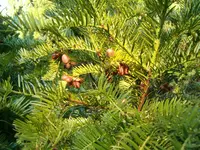
Its dark, fleshy drupes are a key food source for many birds, which spread the seeds over long distances and help explain how the species expanded rapidly in regions where it was introduced.

Genetic and historical evidence indicates that populations in Madeira and the Canary Islands likely served as the primary source for introductions to Hawaii, making this island tree one of the better-studied examples of how long-distance human transport can drive rapid woody plant invasions across ocean basins.
This species spreads readily by both seed and root suckers, especially in mild, moist climates. In suitable regions it can become invasive, so monitor seedlings, remove unwanted shoots, and avoid planting near natural areas or sensitive habitats.
Keep your plants happy and healthy with plant identification, disease detection, and easy care guidance.