Minute Pouncewort Care (Myriocoleopsis minutissima)

About Minute Pouncewort

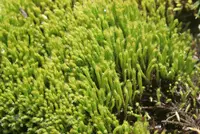
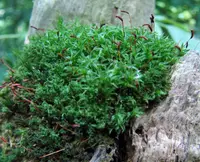
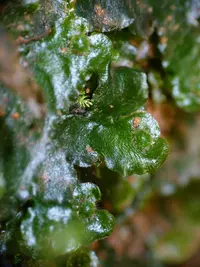
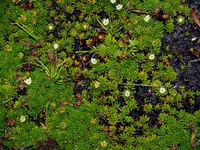
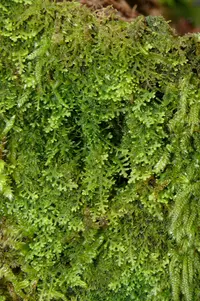
Minute pouncewort, Myriocoleopsis minutissima, is a tiny leafy liverwort rather than a true moss. It forms very low, delicate mats that hug rock, bark, or soil surfaces. The shoots are finely divided and often require close inspection to appreciate.

This species occurs in humid, shaded habitats, especially in East Asia and parts of Europe, where air and surface moisture stay consistently high. It is sensitive to drying out and to physical disturbance, which makes it challenging to maintain in typical home conditions.

Those who want to care for Minute Pouncewort usually do best in a controlled terrarium or paludarium, with gentle light, constant moisture, and stable, cool to mild temperatures.

Main Plant Requirements

Care Difficulty

Hard Care

Light Preference

Shade

Water Requirements

Keep Soil Moist

Temperature Preference

Tropical / Frost Sensitive

Hardiness Zone

Unknown

Soil Texture

Peaty, Organic-rich

Soil pH

Strongly acidic (4.5–5.5)

Soil Drainage

Waterlogged tolerant

Fertilization

Minimal (feed rarely)

Get Personalized Care Plan

Scan your plant to receive care tips personalized for your specific plant

Available on iOS and Android

How to Care for the Minute Pouncewort

This tiny liverwort needs low, diffused light that mimics the shaded forest floor.

  • Provide bright shade or dappled light, such as beneath shrubs, rocks, or logs; 1–2 hours of weak morning sun is acceptable, but avoid direct midday or afternoon sun.
  • Place Myriocoleopsis minutissima where it receives consistently filtered light; dense, deep shade slows growth and can cause thinning mats over time.
  • Monitor fronds: pale, crispy, or brown tips indicate excess sun, while elongated, loose growth signals insufficient light and the need for slightly brighter shade.

This species requires constantly moist conditions and does not tolerate drying out.

  • Aim for a consistently damp substrate; surfaces should feel moist to the touch at all times without standing water forming for more than a few hours.
  • Use soft, low-mineral water if possible, wetting the mat lightly whenever the surface begins to lose its sheen, increasing frequency in warm or windy weather.
  • Watch for signs of stress: curling or crisp edges indicate underwatering, while a sour smell, slimy patches, or algae growth suggest poor drainage and chronic overwatering.

This minute liverwort prefers cool to mild, consistently humid conditions without temperature extremes.

  • Optimal growth occurs around 50–70°F (10–21°C), typical of shaded stream banks and forest floors with stable, moderate temperatures.
  • Short exposures down to about 32°F (0°C) may be tolerated if kept constantly moist, but repeated or hard frosts can damage or kill delicate tissues.
  • Heat above 80°F (27°C), especially with low humidity, stresses the plant; provide extra shade, airflow, and moisture during hot spells to prevent desiccation and dieback.

This species needs constant high humidity to stay healthy in cultivation.

  • Aim for 80–100% humidity; growth declines quickly below about 70%.
  • Very dry air causes pale, crisping leaf tips and rapid thinning of cushions or mats.
  • Increase humidity with closed terrariums, covered trays with wet sphagnum, or by placing the plant in a shaded, sheltered outdoor microclimate when conditions are suitable for caring for Minute Pouncewort.

This liverwort prefers a consistently moist, fine-textured, organic-rich substrate.

  • Use a mix of finely milled sphagnum or peat, leaf mould, and a small amount of fine sand for structure and moisture retention.
  • Ensure the substrate is free-draining but never allowed to dry out completely; shallow, even moisture supports Myriocoleopsis minutissima.
  • Keep pH slightly acidic, roughly 5.0–6.5, avoiding limed or alkaline mineral soils that inhibit growth.
  • Improve aeration by avoiding compaction; gently firm the surface only and mist rather than drench to reduce pore collapse.

This species can be grown in shallow containers or terrariums if moisture and humidity are tightly controlled.

  • Choose shallow, wide containers to spread the mat and avoid deep water pockets that can stagnate at the bottom.
  • Use non-porous containers such as glass or glazed ceramic to slow evaporation and keep the thin substrate evenly moist.
  • Position the container so surface water drains or can be tipped off quickly, preventing standing films of water that suffocate the tiny shoots.

This tiny liverwort is adapted to very low nutrient conditions and usually needs no fertilizer under normal culture.

Myriocoleopsis minutissima needs minimal pruning, mainly for hygiene and to manage spread in cultivation.

  • Trim only browned, decaying, or obviously damaged patches, leaving healthy green shoots intact.
  • Use fine scissors or tweezers, cutting just above the substrate to avoid tearing delicate tissues.
  • Remove crowded or smothering tufts to improve air movement and light penetration in dense mats.
  • Discard removed material rather than reusing it, to limit transfer of algae, mold, or pests.

This species is usually grown on hardscape or shallow substrates, so transplanting is rare and done only to adjust layout or health issues.

  • Transplant when growth thins, mats detach, or the substrate becomes sour, stagnant, or heavily algae-covered.
  • Carry out moves in mild conditions, avoiding temperature extremes and strong sun immediately before or after handling.
  • Lift small sections with attached substrate or bark, disturbing the fragile rhizoids as little as possible.
  • Mist thoroughly after relocating, then keep humidity high and air movement gentle until growth re-anchors.

Propagation of Myriocoleopsis minutissima is commonly done by division of tiny mats rather than by spores in home culture.

  • Divide small patches during mild seasons, avoiding very hot or freezing weather for best recovery.
  • Gently tear or cut the mat into minute sections, each with visible healthy shoots.
  • Press divisions onto moist, fine-textured substrate or rough bark so rhizoids can anchor.
  • Maintain constant moisture, high humidity, and low to moderate light until new growth clearly spreads.

This liverwort is cold tolerant when kept evenly moist but benefits from stable, sheltered winter conditions in cultivation.

  • In regions with hard frost, grow Myriocoleopsis minutissima in a cold frame or unheated greenhouse for more stable temperatures.
  • For outdoor cultures, keep the substrate moist and shaded so tissues do not dry out during freeze–thaw cycles.
  • Move small container setups indoors to a cool, bright area if prolonged freezes below about 20°F are expected.

Care Tips

Secure To Substrate

Press the tiny mats gently onto rough bark, pumice, or cork and pin them with soft plant ties or nylon thread so the shoots make firm contact and can anchor instead of drying at the edges.

Use Capillary Mats

Place pots or culture trays on a clean capillary mat kept consistently moist so water is drawn up evenly from below, which helps prevent both desiccation and surface disturbance of the delicate thalli.

Fine-Mist Hydration

Use a hand mister or fogger that produces an ultra-fine spray above the plant and let droplets fall like fog, avoiding direct jets that can dislodge or fragment the small cushions.

Gentle Algae Control

If green film algae starts to overgrow, increase air movement slightly and shade the container sides, then carefully swab hard surfaces only with a cotton swab to avoid scraping the liverwort itself.

Quarantine New Material

Always isolate new bryophyte or wood pieces in a separate, closed container for 2–3 weeks to monitor for mites, springtails, or mold before combining with existing cultures when caring for Minute Pouncewort.

Common Pests and Diseases

Mite infestations

This pest often appears in very humid, sheltered microhabitats where the tiny shoots provide dense shelter. Symptoms include pale, speckled patches on the minute shoots and very fine webbing over the colony surface.

Solution

Rinse the colony gently with clean, soft water to dislodge mites, then increase gentle air movement and slightly reduce stagnation while keeping the substrate evenly moist. For persistent problems, repeat careful rinsing and, if grown in a terrarium, temporarily lower temperature and humidity a little to discourage mites without allowing the mat to dry.

Springtail overpopulation

These insects normally coexist with liverworts but can become a problem in closed containers where populations explode. Symptoms include visible swarms of tiny jumping insects and gradual thinning or fragmentation of the delicate mats.

Solution

Reduce excess organic debris, improve ventilation, and avoid overfeeding any neighboring plants or mosses so food sources decline. In terraria, manually remove heavily infested substrate patches and refresh with clean, inert material, keeping the liverwort on slightly lean, moist surfaces to stabilize populations while still growing Minute Pouncewort.

Algal overgrowth

This disease-like overgrowth occurs when free water and high nutrients allow green algae to coat the substrate and even the tiny liverwort shoots. Symptoms include a slimy green film that smothers the colonies and reduces their ability to photosynthesize effectively.

Solution

Reduce nutrient input by using low-mineral, low-fertilizer water and avoid runoff from fertilized plants. Gently wash or brush the surface to remove algae, then increase indirect light and airflow so surfaces dry slightly between mistings while the underlying substrate stays moist.

Fungal damping-off

This disease develops in saturated, poorly ventilated setups and affects newly established fragments or young shoots. Symptoms include sudden collapse, browning, and disappearance of small patches, often starting in the densest, wettest areas.

Solution

Improve air circulation, avoid constant surface flooding, and use very clean, low-organic substrates for new cultures. Remove and discard collapsed material, then re-establish small healthy fragments on fresh substrate kept evenly moist but not waterlogged, following conservative Myriocoleopsis minutissima care to limit fungal growth.

Interesting Facts

One of the smallest liverworts

This species is among the tiniest leafy liverworts known, with individual shoots often only visible clearly under magnification, which makes it easy to overlook in the field even by trained bryologists.

Minute epiphyllous specialist

It commonly grows directly on living leaves of other plants (epiphyllous growth), forming very thin, scattered patches that can influence the tiny leaf-surface microhabitat without noticeably harming the host plant.

Wide but patchy distribution

Despite its microscopic size, this species has been recorded from distant regions including parts of Asia, Europe, and the Americas, but it usually occurs in very localized, humid microhabitats, so populations are often sparse and discontinuous.

FAQs about Minute Pouncewort

This species usually does better outdoors or in very humid terrariums, where air movement and moisture stay stable. Standard indoor air is often too dry, so indoor success typically requires an enclosed, consistently moist microclimate rather than open-room conditions.

Grow Healthy Plants with Botan Care

Keep your plants happy and healthy with plant identification, disease detection, and easy care guidance.


Botan plant care app — identify plants on mobile

Explore More Plants