

Anchoring Stems
Use small plant weights or gently push stem bases into coarse sand or fine gravel so the plants stay upright and form dense, stable underwater stands instead of floating loosely.

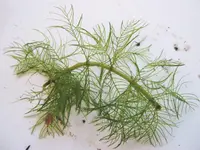
Whorled water-milfoil, Myriophyllum verticillatum, is a submerged aquatic plant found in ponds, lakes, and slow-moving rivers across parts of Europe, Asia, and North America. It forms dense underwater stands with finely divided, feathery leaves arranged in whorls around flexible stems.
This species provides shelter for aquatic life and can improve water habitat structure, but it may spread quickly in suitable conditions. Once established, it is fairly resilient, yet its need for consistent water depth and quality means it is not ideal for very small or unstable ponds.
Those who want to care for Whorled Water-milfoil should provide clean, still or gently flowing water, moderate light, and a soft, nutrient-rich substrate at the bottom.

Care Difficulty
Moderate Care

Light Preference
Full Sun

Water Requirements
Aquatic

Temperature Preference
Cool Climate

Hardiness Zone
4–9

Soil Texture
Silty, Loamy, Organic-rich

Soil pH
Slightly acidic (6.5–7.0), Neutral (7.0)

Soil Drainage
Waterlogged tolerant

Fertilization
Minimal (feed rarely)
Scan your plant to receive care tips personalized for your specific plant
Available on iOS and Android
This submerged aquatic species needs consistent light to support dense underwater foliage and healthy oxygen production.
This plant is fully aquatic and depends on stable, clean water rather than traditional soil watering.
This hardy aquatic species tolerates a wide temperature range but grows best in moderate conditions.
This submerged aquatic species relies on stable high humidity above the water surface but mainly responds to water conditions.
This rooted aquatic plant prefers soft, nutrient-rich substrate rather than typical potting soil.
This species grows well in containers such as ponds, tubs, or aquaria when the container is prepared for underwater rooting.
This aquatic native usually grows well in nutrient-balanced ponds and needs only light supplemental feeding in containers.
Pruning Myriophyllum verticillatum helps control spread, maintain shape, and support healthy submerged growth.
This species is most often managed by transplanting stem sections rather than traditional repotting.
Myriophyllum verticillatum is commonly propagated from stem cuttings rather than by seed in garden and aquarium settings.
In many temperate ponds, this hardy aquatic survives winter with minimal intervention once established.

Plant Health Check
Not sure what's wrong with your plant? Check your plant's health inside the app.
This submerged species forms its finely divided leaves in true whorls of 4–6 around the stem, giving a very regular, bottlebrush-like profile that helps separate it from many other water-milfoil species with looser leaf arrangement.
It naturally colonizes slow-moving or still freshwater such as ponds, ditches, and lake margins, where its tall, flexible stems can reach close to the surface without being damaged by strong currents.
In summer it produces stiff, emergent flower spikes that rise above the water surface, carrying small, unshowy flowers arranged in the same whorled pattern as the underwater leaves.
This species spreads quickly by stem fragments and creeping underwater shoots. In small ponds it can form dense mats that outcompete other plants. Regular thinning and physical removal of excess growth help keep it under control.
Keep your plants happy and healthy with plant identification, disease detection, and easy care guidance.

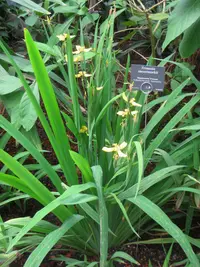
yellow walking iris
Trimezia steyermarkii
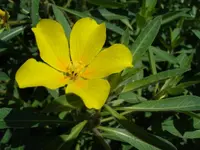
large-flower primrose-willow
Ludwigia grandiflora
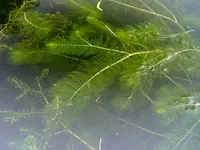
shortspike watermilfoil
Myriophyllum sibiricum
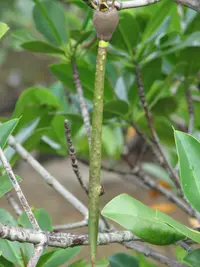
mangrove
Rhizophora mucronata
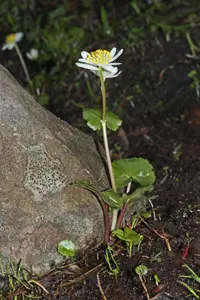
white marsh marigold
Caltha leptosepala
shrubby primrose-willow
Ludwigia suffruticosa
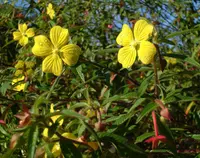
Mexican primrose-willow
Ludwigia octovalvis
white meadowfoam
Limnanthes alba