Wind-hardening shrubs
In exposed sites, gradually acclimate young plants to wind by first staking lightly and then loosening ties over 1–2 seasons so stems develop strong, tapered growth rather than remaining weak and top-heavy.

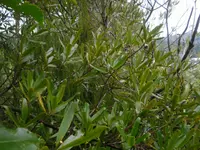
Toro, Myrsine salicina, is an evergreen shrub or small tree native to New Zealand forests and coastal areas. It is often grown for its neat form and glossy foliage. The plant typically has narrow, dark green leaves and a dense, upright habit that suits hedging or screen planting in mild climates. Small flowers and dark berries add subtle seasonal interest. Myrsine salicina generally prefers mild temperatures, steady moisture, and well-drained soil. These traits make it moderately easy to grow where conditions are suitable, but less adaptable in very hot or very cold regions, so it helps to learn how to care for Toro before planting it.

Care Difficulty
Moderate Care

Light Preference
Partial Shade

Water Requirements
Moderate Water

Temperature Preference
Warm Climate

Hardiness Zone
9–11

Soil Texture
Loamy, Sandy, Organic-rich

Soil pH
Acidic (5.5–6.5), Slightly acidic (6.5–7.0)

Soil Drainage
Moist but well-drained

Fertilization
Minimal (feed rarely)
Scan your plant to receive care tips personalized for your specific plant
Available on iOS and Android
Myrsine salicina prefers bright, gentle light that mimics an open woodland edge.
Myrsine salicina prefers evenly moist, not saturated, soil with good drainage.
This shrub grows best in mild, frost-free to light-frost climates.
Myrsine salicina prefers moderately moist air but copes with typical indoor humidity if watering is consistent.
Myrsine salicina grows best in loose, slightly acidic, well-drained mixes that retain some moisture without staying soggy.
This species is suitable for container growing, especially where outdoor space or winter protection is limited.
Myrsine salicina benefits from light, steady feeding but often grows acceptably in average soil without heavy fertilization.
Pruning Myrsine salicina is mainly used to maintain structure, remove problem wood, and control size.
This species is more often grown in the ground, so transplanting timing and gentle handling matter more than frequent repotting.
Myrsine salicina propagation is possible from seeds or semi-hardwood cuttings with controlled moisture and warmth.
Established Myrsine salicina is moderately cold tolerant in mild-winter climates but benefits from basic winter protection in colder areas.

Plant Health Check
Not sure what's wrong with your plant? Check your plant's health inside the app.
This species is native to lowland and coastal forests of New Zealand, where it often forms part of the understorey on well-drained slopes and along forest margins.
Its small dark drupes are eaten by native birds such as silvereyes and korimako (bellbirds), which disperse the seeds through their droppings and help maintain natural regeneration.
The narrow, leathery leaves are adapted to windy, salt-laden environments, which helps the plant tolerate exposed coastal conditions and moderate salt spray.

In some intact New Zealand forest remnants, this species can act as a nurse plant by providing shade and shelter for seedlings of slower-growing tree species, indirectly supporting forest succession and structural diversity over time.
This species is naturally evergreen, keeping its small, leathery leaves year-round in mild climates. In colder areas, foliage may thin or suffer damage from frost, but healthy plants usually refoliate once conditions improve.
Keep your plants happy and healthy with plant identification, disease detection, and easy care guidance.