


Stem thinning strategy
Every 2–3 years, remove a few of the oldest canes at ground level to encourage fresh basal shoots and maintain a dense, upright structure instead of a woody, open shrub.

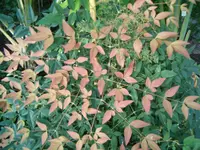
Nandina domestica, commonly called heavenly bamboo, is an evergreen to semi-evergreen shrub grown for its fine foliage, white flowers, and bright red berries. It forms upright, bamboo-like canes with divided leaves that often turn red or bronze in cool weather, giving strong year-round structure in borders and foundation plantings.
This species is native to East Asia but has become a common ornamental shrub in many mild-climate gardens. It adapts to a wide range of conditions, which makes it generally easy to grow if its basic needs are met.
It prefers sun to light shade, moderately moist but well-drained soil, and benefits from occasional pruning to keep a neat shape. Gardeners often find that learning how to care for Nandina is straightforward once its light and moisture preferences are understood.

Care Difficulty
Easy Care

Light Preference
Partial Sun

Water Requirements
Moderate Water

Temperature Preference
Cold Hardy

Hardiness Zone
6–9

Soil Texture
Sandy, Loamy, Clay

Soil pH
Acidic (5.5–6.5), Slightly acidic (6.5–7.0)

Soil Drainage
Moist but well-drained

Fertilization
Minimal (feed rarely)
Scan your plant to receive care tips personalized for your specific plant
Available on iOS and Android
This shrub develops best color and density with several hours of direct sun each day.
Watering aims to keep the root zone evenly moist but never saturated.
This species is tolerant of a wide temperature range but grows best in moderate conditions.
Humidity is rarely a limiting factor for Nandina domestica in typical outdoor conditions.
Nandina domestica grows best in loose, well-structured mineral soil that drains freely yet retains some moisture.
This species is well suited to container growing outdoors on patios, balconies, and entryways.
Light, balanced feeding helps Nandina domestica maintain steady foliage color and berry production in most garden soils.
Thoughtful pruning keeps Nandina domestica dense, upright, and productive without exhausting the plant.
Nandina domestica is usually grown in the ground, so transplanting is more common than container repotting.
Nandina domestica can be propagated, but controlling spread and local regulations should be checked first in some regions.
Mature Nandina domestica is generally cold hardy in much of the US and needs limited winter attention.

Plant Health Check
Not sure what's wrong with your plant? Check your plant's health inside the app.
This shrub holds its leaves year-round but changes color with the seasons, often showing a mix of green, red, and bronze foliage on the same plant, especially in cooler weather. The red winter foliage is caused by pigments called anthocyanins, which increase as temperatures drop and light intensity rises.
It produces bright red berries that can persist through winter and are valued for ornamental use in gardens and floral arrangements. Although visually attractive, these berries contain cyanogenic compounds and can be toxic to birds and other animals if eaten in quantity.
In several regions of the southeastern United States, this species has escaped cultivation and is listed as invasive in natural areas. It spreads by both seed and underground suckers, forming dense thickets that can displace native understory shrubs.

Despite its common name heavenly bamboo and its bamboo-like segmented stems, this species is not a true bamboo at all but a member of the barberry family (Berberidaceae), making it more closely related to plants like Mahonia and Berberis than to any grass or bamboo.
Browning leaves usually result from drought stress, excess fertilizer, winter windburn, or root damage from poor drainage. Check soil moisture, reduce feeding, improve drainage, and prune out dead tips to stimulate new, healthy foliage.
Keep your plants happy and healthy with plant identification, disease detection, and easy care guidance.

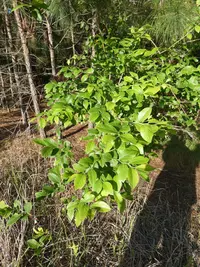
southern blueberry
Vaccinium formosum
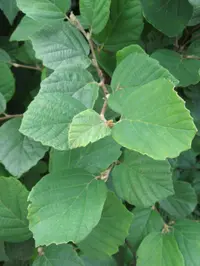
witch alder
Fothergilla gardenii
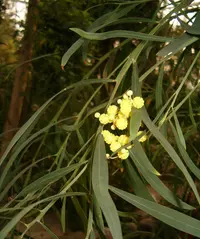
summer-scented wattle
Acacia rostellifera

Sawara Cypress
Chamaecyparis pisifera 'Golden Mop'

California Juniper
Juniperus californica
large-seeded coprosma
Coprosma macrocarpa
pearl wattle
Acacia podalyriifolia

Viburnum mullaha
Viburnum mullaha