Substrate Anchoring
Press small pieces of the moss firmly onto rough, pre-moistened bark or stone so the rhizoids can attach quickly and form a dense, even carpet rather than loose clumps that dry out.


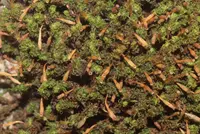
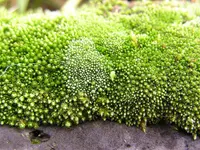
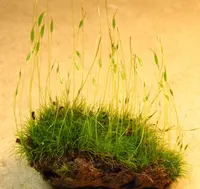
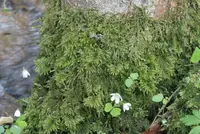
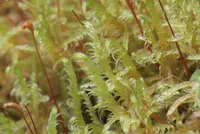
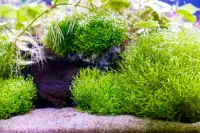
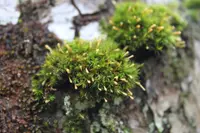
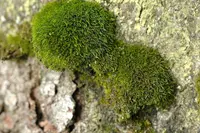
Dwarf Neckera (Neckera pumila) is a small, creeping moss that forms low, dense mats of glossy green foliage. It stays compact and close to the substrate, giving a fine-textured, cushion-like look.
In nature it grows on rocks, tree bases, and shaded forest surfaces in cool, moist regions, especially in parts of Europe and North America. Its slow, steady growth and shallow anchoring make it sensitive to drying out and physical disturbance.
Because of this, it is best suited to stable, humid environments such as terrariums or shaded outdoor nooks. Understanding how to care for Dwarf Neckera mainly involves providing consistent moisture, gentle airflow, and low to medium light without harsh sun.

Care Difficulty
Moderate Care

Light Preference
Partial Shade

Water Requirements
Keep Soil Moist

Temperature Preference
Cool Climate

Hardiness Zone
5–8

Soil Texture
Loamy, Rocky, Organic-rich

Soil pH
Acidic (5.5–6.5), Slightly acidic (6.5–7.0)

Soil Drainage
Moist but well-drained

Fertilization
Minimal (feed rarely)
Scan your plant to receive care tips personalized for your specific plant
Available on iOS and Android
This moss prefers low to moderate, indirect light similar to shaded woodland conditions.
This species needs consistently moist conditions but suffers if waterlogged for long periods.
This moss is adapted to cool, temperate conditions and dislikes prolonged extreme heat or hard frost.
This moss prefers consistently moist, cool air and reacts quickly to drying conditions.
This species prefers a loose, moist, and organic-rich substrate that mimics decaying wood or forest rock crevices.
This moss can be grown successfully in shallow containers or terrariums when moisture is managed carefully.
This moss has low nutrient demand, so fertilizing Neckera pumila should stay very light and infrequent.
Pruning Neckera pumila is mainly cosmetic and for hygiene rather than shaping.
Neckera pumila is usually grown on stone, bark, or substrate mats, so transplanting is more common than classic repotting.
Propagation of Neckera pumila is mostly done vegetatively by dividing and reattaching small moss fragments.
This moss is generally cold hardy and often needs minimal winter care in temperate climates.

Plant Health Check
Not sure what's wrong with your plant? Check your plant's health inside the app.
In parts of Europe, this moss is considered an indicator of long-continuity forests because it is most often found in old, undisturbed woodland habitats with stable, humid microclimates.
The species typically grows on shaded, calcareous rock outcrops and damp cliff faces, preferring limestone or other base-rich substrates rather than acidic rock.
Its flattened, overlapping shoots form thin, soft mats that can trap moisture and fine particles on rock surfaces, creating microhabitats for microorganisms and tiny invertebrates.

Neckera pumila has a fragmented and often very local distribution in several European regions, and in some countries it is considered rare or threatened, so its presence can contribute to conservation assessments of vulnerable forest and rock communities.
This moss spreads slowly to moderately by creeping stems and fragmentation. It usually forms low, compact patches on bark, rocks, or soil and rarely becomes aggressive. Regular monitoring and gentle trimming keep it neatly contained in designed areas.
Keep your plants happy and healthy with plant identification, disease detection, and easy care guidance.