

Substrate anchoring
Press small fragments gently onto rough bark, stone, or unglazed clay using a fine moss mesh or biodegradable netting for 4–6 weeks so rhizoids can attach securely before the support is exposed to wind or handling.

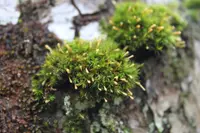
Ulota crispula is a small cushion moss that forms tight, tufted mats on rocks, bark, or exposed substrates. It has fine, upright shoots with narrow, often crisped leaves when dry. This moss naturally occurs in cool, humid regions, especially in montane and coastal environments where air moisture is high and light is bright but not scorching. It anchors shallowly to its substrate and does not form deep roots, which makes it sensitive to drying out or physical disturbance. For those who care for Ulota crispula in cultivation, the main challenges are maintaining steady moisture, good air movement, and a clean, low-nutrient surface similar to its natural habitat.

Care Difficulty
Moderate Care

Light Preference
Partial Shade

Water Requirements
Keep Soil Moist

Temperature Preference
Cool Climate

Hardiness Zone
Unknown

Soil Texture
Rocky, Organic-rich

Soil pH
Acidic (5.5–6.5)

Soil Drainage
Moist but well-drained

Fertilization
Minimal (feed rarely)
Scan your plant to receive care tips personalized for your specific plant
Available on iOS and Android
This moss prefers soft, cool light similar to what it receives on shaded tree bark or rocks.
Watering should mimic consistent natural moisture without leaving the moss submerged or soupy.
This species is adapted to cool to mild outdoor conditions and tolerates a wide seasonal range.
This moss prefers consistently moist air and benefits from elevated humidity.
This species thrives on moist, well-aerated, acidic, organic substrates rather than standard potting soil.
This moss can be grown in shallow containers if moisture and airflow are carefully balanced.
This moss is adapted to low-nutrient habitats, so Ulota crispula usually performs well without added fertilizer in cultivation.
Pruning needs are minimal; Ulota crispula benefits mainly from light grooming to keep patches dense and healthy.
This moss is more often transplanted than repotted, since Ulota crispula typically grows on bark, rocks, or other outdoor surfaces.
Ulota crispula is commonly multiplied by dividing and reattaching small cushions rather than using spores in home settings.
This moss is naturally cold hardy and usually requires no special winter care in outdoor plantings.

Plant Health Check
Not sure what's wrong with your plant? Check your plant's health inside the app.
This moss is naturally restricted to cool, oceanic regions of the Southern Hemisphere, especially southern South America and subantarctic islands, where it occupies a relatively narrow climatic niche compared with many related Ulota species.
Its narrow leaves characteristically twist and curl around the stem when dry, then spread out again when moist, a hygroscopic response that helps regulate water loss and protects the delicate photosynthetic tissues.
It commonly forms small, cushion-like tufts on tree bark and siliceous rocks in windy, exposed sites, showing a strong adaptation to surfaces that experience frequent wetting and drying cycles.
This moss grows slowly, usually adding only a few millimeters of height each year. Growth is most active in cool, moist seasons. Stable moisture, clean substrates, and gentle airflow support growing Ulota crispula in cultivation.
Keep your plants happy and healthy with plant identification, disease detection, and easy care guidance.

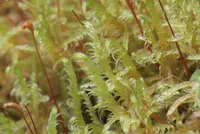
sanionia moss
Sanionia uncinata
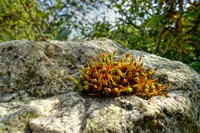
Ulota bruchii
Ulota bruchii

fissidens moss
Fissidens fontanus
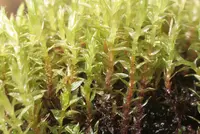
common green bryum moss
Bryum pseudotriquetrum
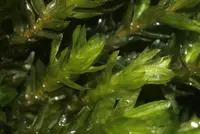
Smaller Lattice-moss
Cinclidotus fontinaloides
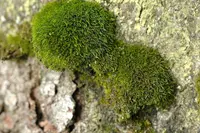
dicranella moss
Dicranella heteromalla
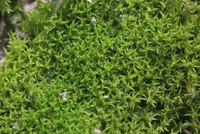
Hornschuch's pseudocrossidium moss
Pseudocrossidium hornschuchianum
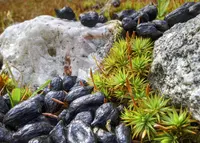
pogonatum moss
Pogonatum urnigerum