

Substrate layering
Create a 2–3 cm base of inert gravel or coarse sand under the main acidic moss substrate to keep rhizoids from sitting in stagnant water while still maintaining surface moisture.

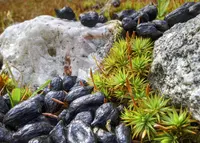
Pogonatum urnigerum, often called urn haircap moss, is a small, upright moss that forms dense, bright green tufts or cushions. It is a true moss, not a vascular plant, and has fine, hair-like stems topped with distinctive capsule structures. In nature it usually grows on acidic, sandy, or rocky soils, especially in open, disturbed sites and banks across temperate regions. The species prefers cool, moist conditions with good air flow and consistent humidity, which shapes how easy it is to keep healthy. It adapts fairly well in controlled environments, so learning how to care for pogonatum moss focuses mainly on stable moisture, gentle light, and a loose, low-nutrient substrate.

Care Difficulty
Moderate Care

Light Preference
Partial Shade

Water Requirements
Keep Soil Moist

Temperature Preference
Cool Climate

Hardiness Zone
3–8

Soil Texture
Loamy, Silty, Organic-rich

Soil pH
Strongly acidic (4.5–5.5), Acidic (5.5–6.5)

Soil Drainage
Moist but well-drained

Fertilization
Minimal (feed rarely)
Scan your plant to receive care tips personalized for your specific plant
Available on iOS and Android
This moss prefers low to moderate light that mimics a shaded forest floor.
This moss requires consistently moist conditions without long dry periods.
This species prefers cool to mild conditions similar to moist woodland climates.
This moss prefers consistently moist air and reacts quickly to dry conditions.
This species prefers a moist, loose, acidic substrate that mimics decomposing woodland or stream-bank conditions.
This species adapts well to shallow containers that maintain constant surface moisture.
This moss needs only minimal feeding under cultivation, as it is adapted to nutrient-poor substrates.
Pruning Pogonatum urnigerum is mainly hygienic, helping maintain an even, healthy cushion.
Transplanting is infrequent and should focus on expanding healthy patches rather than disturbing roots.
Propagation relies on vegetative spread, which is straightforward under stable, moist conditions.
This moss is generally cold hardy and usually needs little special winter care outdoors.

Plant Health Check
Not sure what's wrong with your plant? Check your plant's health inside the app.
This moss develops distinctive egg- to urn-shaped spore capsules with a swollen lower part and narrowed neck, which inspired the species epithet urnigerum, meaning urn-bearing. The capsule shape, combined with its long seta (stalk), helps elevate spores into moving air for more effective wind dispersal.
It commonly colonizes exposed, acidic mineral soils such as road cuttings, banks, and disturbed slopes in cool, humid regions. As a pioneer species, it helps stabilize bare substrates and creates microhabitats that later support other bryophytes and small vascular plants.
The protective cap that covers developing capsules, called the calyptra, is hairy and often ragged-toothed at the tip in this species. This feature is one of the key characters bryologists use to distinguish it from related Pogonatum species in the field.

This species has a broad Holarctic distribution, occurring across temperate and boreal regions of North America, Europe, and Asia, and its presence is often used by bryologists as an indicator of relatively undisturbed, cool, and consistently moist microhabitats on acidic substrates.
This species does not form true flowers. Instead, it produces spore capsules on slender stalks, usually in spring to early summer, once a patch is mature and environmental moisture and temperature are suitable.
Keep your plants happy and healthy with plant identification, disease detection, and easy care guidance.

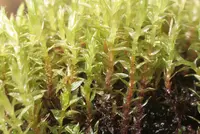
common green bryum moss
Bryum pseudotriquetrum
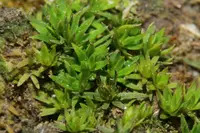
Pogonatum nanum
Pogonatum nanum

fissidens moss
Fissidens fontanus
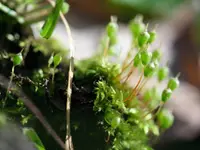
Common Bladder Moss
Physcomitrium pyriforme
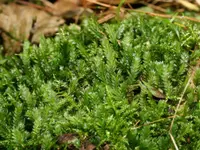
fissidens moss
Fissidens adianthoides
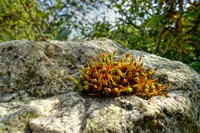
Ulota bruchii
Ulota bruchii
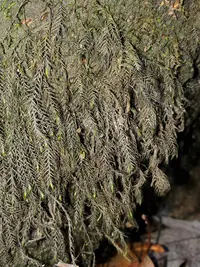
dichelyma moss
Dichelyma capillaceum
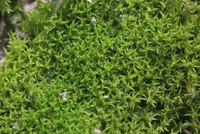
Hornschuch's pseudocrossidium moss
Pseudocrossidium hornschuchianum