Shallow Substrate Layer
Provide only a very thin, even layer of fine, clean sand or silty loam over a firm base so the tiny protonema can spread quickly without being buried by deep or chunky media.

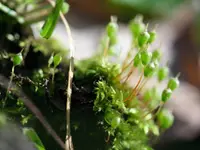
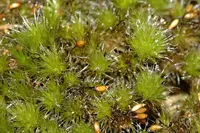
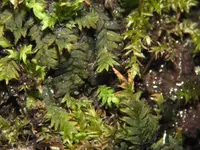
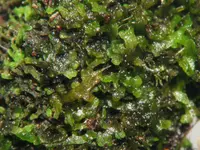
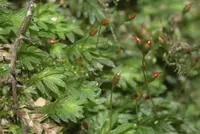
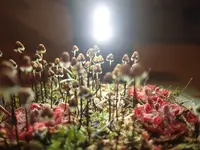
Common bladder moss, Physcomitrium pyriforme, is a small, non-vascular moss that forms low, cushion-like patches on soil, rocks, or damp disturbed ground. It is recognized by its pear-shaped spore capsules held on thin stalks, which give the plant its common name.
This moss occurs widely across temperate regions, often colonizing bare, moist soil in fields, paths, stream banks, and garden beds. It grows quickly when conditions are cool and damp, then can dry and appear dormant until moisture returns.
Because it has simple needs, many growers find it straightforward to care for Common Bladder Moss in containers or terrariums. It prefers consistent moisture, gentle light, and a stable, undisturbed substrate.

Care Difficulty
Moderate Care

Light Preference
Partial Shade

Water Requirements
Keep Soil Moist

Temperature Preference
Cool Climate

Hardiness Zone
3–9

Soil Texture
Loamy, Silty, Organic-rich

Soil pH
Acidic (5.5–6.5), Slightly acidic (6.5–7.0)

Soil Drainage
Moist but well-drained

Fertilization
Minimal (feed rarely)
Scan your plant to receive care tips personalized for your specific plant
Available on iOS and Android
This moss prefers cool, moist sites with soft, indirect light rather than strong, direct sun.
This moss needs consistently moist conditions and reacts quickly to drying or stagnant water.
This species is adapted to cool to mild climates but can handle a fairly broad outdoor temperature range.
This moss needs constantly moist air and surfaces to stay healthy in cultivation.
This moss anchors best on fine-textured, consistently moist, organic-rich substrates rather than standard potting soil.
This species can be grown in shallow containers, especially trays or terrariums designed to hold steady surface moisture.
This moss has very low nutrient needs and is usually grown without added fertilizer when established in soil or on natural substrates.
Pruning Physcomitrium pyriforme is minimal and focuses on hygiene and maintaining an even carpet.
This moss is usually grown on soil, rock, or wood, so transplanting is more relevant than traditional repotting.
Physcomitrium pyriforme is commonly propagated by division and spore sowing under consistently moist conditions.
This moss is naturally cold hardy and usually needs no special winter care in outdoor settings.

Plant Health Check
Not sure what's wrong with your plant? Check your plant's health inside the app.
This moss is easily recognized by its distinctive pear-shaped spore capsules that sit on short stalks and often appear slightly tilted, a feature that sets it apart from many other small mosses.
It commonly appears on recently disturbed, nutrient-rich bare soil such as garden beds, agricultural fields, and construction sites, acting as an early colonizer that helps stabilize the surface.
In many temperate regions it behaves like an annual moss, quickly completing its life cycle in cool, moist seasons, producing abundant spores, and then largely disappearing when conditions become hot or dry.

This species is frequently used as a model in bryology research because it grows rapidly from spores in culture and has relatively simple, well-studied reproductive structures, making it useful for studying moss development and evolution.
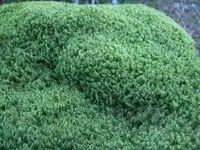
This moss forms small, patchy cushions and spreads mainly by short creeping stems and spores. It colonizes disturbed or bare soil quickly but usually stays low and patchy, so it is not considered aggressively spreading in most gardens.
Keep your plants happy and healthy with plant identification, disease detection, and easy care guidance.