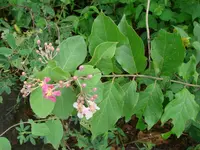
peppervine Care (Nekemias arborea)

peppervine

About peppervine

Peppervine, Nekemias arborea, is a fast-growing woody vine native to the southeastern and south-central United States and parts of Mexico. It often climbs fences, trees, and shrubs, forming dense, tangled growth.

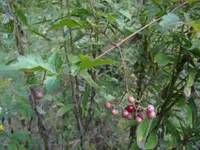
The plant has divided, glossy green leaves and clusters of small flowers that develop into showy berries, which turn from green to pink, purple, and nearly black as they mature. Its vigorous, sometimes invasive growth habit is the main factor that complicates how to care for peppervine in residential gardens.

Peppervine tolerates heat, drought, and poor soils, and it thrives in full sun to partial shade with moderate moisture, which makes it generally easy to establish but sometimes difficult to control.

Main Plant Requirements

Care Difficulty

Easy Care

Light Preference

Partial Sun

Water Requirements

Moderate Water

Temperature Preference

Warm Climate

Hardiness Zone

7–9

Soil Texture

Sandy, Loamy, Clay

Soil pH

Acidic (5.5–6.5), Slightly acidic (6.5–7.0)

Soil Drainage

Moist but well-drained

Fertilization

Minimal (feed rarely)

Get Personalized Care Plan

Scan your plant to receive care tips personalized for your specific plant

Available on iOS and Android

How to Care for the peppervine

This woody vine prefers bright outdoor conditions and adapts well to varied light across its native range.

  • Provide 4–6 hours of sun daily, ideally with morning sun and afternoon shade to reduce leaf scorch on exposed sites.
  • It tolerates partial shade and can grow under open tree canopies, but very dense shade leads to sparse growth and fewer fruits on peppervine.
  • In hot summers, use filtered light or dappled shade in the afternoon; in cooler climates, slightly more direct sun helps maintain compact, vigorous growth.

This species prefers steadily moist, well-drained soil once established in the landscape.

  • Allow the top 3–5 cm of soil to dry before deep watering, then soak the root zone so moisture reaches 15–20 cm depth.
  • During hot, dry periods, increase frequency when leaves begin to lose turgor or curl slightly; reduce watering in cool or rainy seasons.
  • Use soil with good drainage to prevent waterlogging; yellowing, soft leaves suggest overwatering, while crispy edges and leaf drop suggest the plant is staying too dry.

This vine is adapted to warm-temperate climates and shows moderate tolerance to both heat and cold.

  • Active growth is strongest around 70–85°F (21–29°C), with good performance across typical outdoor summer conditions in much of the southern and central US.
  • It tolerates short drops near 20–25°F (-6 to -4°C), but repeated hard freezes can damage young stems and reduce vigor the following season.
  • In very hot spells above 95°F (35°C), provide soil moisture and some afternoon shade to limit heat stress, leaf scorch, and premature leaf drop.

This species tolerates a wide humidity range but benefits from moderate moisture in the air.

  • Aim for 40–60% humidity, which suits peppervine both outdoors and in most homes.
  • Dry indoor air can cause crisp leaf edges and reduced vigor, especially near heaters or strong sun.
  • Increase humidity by grouping plants, placing containers over pebble trays with water, or growing outdoors in a sheltered, humid microclimate.

Nekemias arborea prefers slightly moist, well-structured soil that drains freely yet retains some organic moisture.

  • Use a loamy mix with noticeable organic matter, such as garden loam blended with compost and leaf mold.
  • Ensure rapid drainage by adding coarse sand or fine bark; avoid heavy, compacted clay that stays wet for long periods.
  • Target a pH of about 6.0–7.5, avoiding strongly acidic or saline conditions that restrict nutrient uptake.
  • Improve aeration by incorporating chunky materials like pine bark fines or perlite, especially in dense or repeatedly cultivated beds.

This species can be grown successfully in containers if the pot supports its vigorous, climbing habit.

  • Choose a deep, wide container that allows spreading roots and provides ballast against the vine’s top growth and wind load.
  • Use a heavier material such as ceramic or thick plastic outdoors to reduce tipping as the stems lengthen and climb.
  • Position a sturdy trellis or support within the pot so the root mass and support structure act together for stability.

Nekemias arborea is adaptable and usually grows well with modest feeding, especially in poor or very sandy soils.

  • Use a balanced slow-release fertilizer or compost in spring to support new growth when caring for peppervine.
  • Feed once in early spring and again in midsummer during active growth if soil is low in organic matter.
  • Apply fertilizer at 1/2 strength for container plants to limit salt buildup and root burn.
  • Avoid feeding in late fall and winter to prevent soft, frost-tender growth.

Nekemias arborea responds well to thoughtful pruning that controls size and maintains a strong framework.

  • Prune in late winter or very early spring before vigorous new growth starts.
  • Remove dead, diseased, rubbing, or overcrowded stems back to healthy wood with clean, sharp hand pruners or loppers.
  • Thin and shorten long vines to manage spread and improve light penetration and air flow.
  • Cut back to outward-facing buds or lateral shoots to guide direction and maintain an organized, climbing habit.

This vine is more often transplanted outdoors than grown long term in containers, but root disturbance should still be gentle.

  • Transplant in early spring or early fall when temperatures are mild and moisture is reliable.
  • Look for roots circling the pot, crowded drainage holes, or slowed growth as signs a container plant needs more space.
  • Move up only 1–2 pot sizes, loosen circling roots lightly, and keep the original soil level at the same depth.
  • Water thoroughly after planting, then maintain even moisture and light shade for 1–2 weeks to reduce transplant shock.

Nekemias arborea can be propagated by seeds, softwood or semi-ripe cuttings, and occasionally by layering.

  • Sow fresh seeds in fall or provide a cold stratification period of 60–90 days to improve germination.
  • Take softwood or semi-ripe cuttings in late spring–summer, 8–12 cm long, with 2–3 nodes.
  • Remove lower leaves, dip the base in rooting hormone, and place in a moist, well-drained, sterile mix under high humidity.
  • For simple layering, bend a flexible stem to the ground, pin it, cover with soil, and separate once well rooted.

This species is generally cold hardy in much of its range and often needs only minimal winter care outdoors.

  • In regions with sustained freezes, apply a 5–8 cm mulch layer around the root zone, keeping it off the stems.
  • Leave mature vines in place; remove only storm-damaged or dead stems at the end of winter.
  • For container plants in colder zones, move pots into a sheltered, unheated but frost-free area for winter.

Care Tips

Provide sturdy support

Install a durable trellis, wire mesh, or tensioned galvanized wires early, then guide new stems onto it so the vine lignifies (hardens) in the correct direction and does not tear or smother nearby plants.

Control spread zones

Use root barriers, deep edging, or mow regularly around the planting area to define a firm boundary, since stems that touch the ground can root and allow the vine to move into unintended spaces.

Time structural pruning

Carry out major structural thinning in late winter while the plant is leafless, removing whole stems back to the base to open the framework and keeping no more than 25–30% of total wood removed in a single season.

Manage wildlife attraction

If birds spreading seeds are a concern, remove or deadhead fruiting clusters before berries fully ripen, focusing on vines near fences, woodland edges, and property boundaries.

Monitor for herbicide drift

When using lawn or weed herbicides nearby, protect the vine with physical barriers and avoid spraying on warm, breezy days, since Nekemias arborea is sensitive to drift that can cause distorted foliage and dieback.

Common Pests and Diseases

Grape leafhopper

This pest feeds on the undersides of leaves, causing pale stippling, a dry speckled look, and occasional leaf yellowing on peppervine. Heavy infestations can stress the plant and reduce vigor.

Solution

Monitor the undersides of leaves regularly and hose foliage with a firm stream of water to dislodge nymphs and adults. For persistent problems, use insecticidal soap or a light horticultural oil, applied in the early morning or evening and repeated as needed, and reduce nearby weeds that can harbor leafhoppers.

Grape cane borer

This insect bores into woody stems and canes, causing wilting or dieback of peppervine shoots above the entry point. Symptoms include small holes in stems and weakened growth along affected canes.

Solution

Prune out and destroy infested canes several inches below visible boring damage, making clean cuts into healthy tissue. Maintain balanced, not overly lush growth through moderate fertilization, and remove plant debris and old, dead canes where borers may overwinter as part of general Nekemias arborea care.

Downy mildew

This disease produces yellow to reddish angular spots on the upper leaf surface and grayish downy growth on the undersides during humid conditions. Severe infections can lead to leaf drop and reduced vigor.

Solution

Improve air circulation by thinning dense growth and avoid overhead watering, especially late in the day. Remove and discard heavily infected leaves, and in areas with repeated issues, apply a labeled copper or phosphorous acid fungicide preventively when cool, damp weather is forecast.

Anthracnose

This disease causes sunken, dark lesions along peppervine stems and on leaves, sometimes leading to tip dieback and distorted new growth. Symptoms include irregular brown spots that may coalesce along veins or shoots.

Solution

Prune and destroy affected shoots during dry weather, cutting back into healthy tissue and disinfecting pruning tools between cuts. Reduce leaf wetness by watering at soil level, remove fallen infected leaves from the ground, and consider a targeted fungicide labeled for anthracnose on grape relatives if the problem recurs.

Interesting Facts

Native woodland climber

This species is native to the southeastern and south-central United States, where it naturally scrambles over shrubs and trees along woodland edges, stream banks, and disturbed sites.

Berry color change

Its small berries shift from green to red and finally to deep bluish-black as they ripen, forming attractive clusters that are consumed by many bird species.

Bird-dispersed seeds

Birds feeding on the ripe fruits disperse the seeds through their droppings, helping the plant colonize new areas across forest margins and fencerows.

Botan icon

Did you know?

Nekemias arborea is a larval host for several species of sphinx moths (family Sphingidae), whose caterpillars feed on its foliage and contribute to nocturnal pollinator communities in its native range.

FAQs about peppervine

This species can spread aggressively by underground rhizomes and bird‑dispersed berries, especially in warm, moist regions. In some US states it is considered weedy. Regular pruning and prompt removal of fruit clusters help limit unwanted spread.

Grow Healthy Plants with Botan Care

Keep your plants happy and healthy with plant identification, disease detection, and easy care guidance.

Botan plant care app — identify plants on mobile

Explore More Plants