Formative framework pruning
In the first 2–3 years, select 3–5 evenly spaced main stems and remove closely competing shoots to build a strong framework that will support heavy flowering clusters later without splitting.

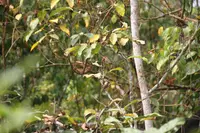
Newbouldia, especially Newbouldia laevis, is a small tree or large shrub native to tropical Africa. It is often grown for its showy, tubular flowers and dense foliage. In the landscape it usually forms a rounded crown with multiple stems and a fairly fast growth rate in warm climates. It is mainly used as an ornamental, boundary, or avenue tree in frost-free areas. The plant prefers warm temperatures, good light, and evenly moist but well-drained soil. For gardeners in suitable climates, understanding how to care for Newbouldia focuses on providing consistent warmth and avoiding cold or waterlogged conditions.

Care Difficulty
Moderate Care

Light Preference
Full Sun

Water Requirements
Moderate Water

Temperature Preference
Tropical / Frost Sensitive

Hardiness Zone
10–12

Soil Texture
Loamy, Sandy, Organic-rich

Soil pH
Slightly acidic (6.5–7.0), Neutral (7.0)

Soil Drainage
Moist but well-drained

Fertilization
Minimal (feed rarely)
Scan your plant to receive care tips personalized for your specific plant
Available on iOS and Android
This sun-loving shrub performs best with strong light but benefits from some protection at the hottest times of day.
Watering should balance consistent moisture with good drainage to prevent root problems.
This tropical species prefers warm conditions and is sensitive to frost and prolonged cold.
This species handles a fairly wide humidity range but grows best with moderate ambient moisture.
Newbouldia laevis prefers deep, well-drained, nutrient-rich soil that still holds some moisture.
This species can be grown in containers, especially when managed as a pruned shrub or small tree outdoors in warm climates.
Moderate feeding supports steady growth and flowering in Newbouldia laevis without producing weak, overly lush shoots.
Thoughtful pruning keeps Newbouldia laevis manageable, encourages branching, and maintains good flowering.
This species is more often planted in the ground, so focus on careful transplanting and occasional container adjustment for young Newbouldia.
Newbouldia laevis is commonly propagated from semi-hardwood cuttings and sometimes from seed for new landscape plants.
This tropical tree is frost-tender, so winter care matters in regions with cool or freezing conditions.

Plant Health Check
Not sure what's wrong with your plant? Check your plant's health inside the app.
In parts of West Africa, its durable, termite-resistant wood has been traditionally used to make coffins and carved ritual objects, reflecting its cultural link with ancestry and remembrance.
The tree is widely planted around homesteads and farm borders in West and Central Africa as a living boundary marker, because it is long-lived, easy to recognize, and coppices readily after cutting.
It produces large purple to pinkish trumpet-shaped flowers arranged in terminal clusters, which provide abundant nectar for pollinators such as bees and sunbirds across its native range.

In several West African cultures, this species is considered a sacred or shrine tree and is sometimes planted near places of worship or family compounds to symbolize protection, continuity, and a connection between the living and ancestral spirits.
Poor flowering is often linked to plant immaturity, heavy pruning at the wrong time, or nutrient imbalance with too much nitrogen. Allow it to reach shrub or small-tree size and prune lightly only after the main bloom period.
Keep your plants happy and healthy with plant identification, disease detection, and easy care guidance.