Use light staking
Install a thin bamboo stake and loosely tie stems with soft garden tape in exposed or windy sites to prevent tall flowering stalks from snapping before seed set.

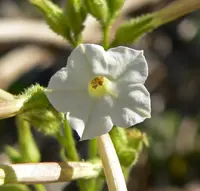
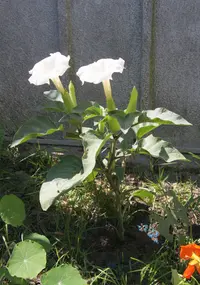
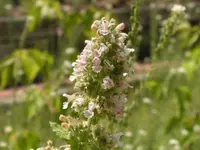
Coyote tobacco (Nicotiana attenuata) is a wild annual herb in the nightshade family, known for its narrow leaves and tubular, pale greenish-white flowers. It often grows in open, disturbed habitats such as desert edges, canyon slopes, and dry grasslands in western North America.
Plants usually stay relatively small and upright, with a somewhat sparse, airy look that suits naturalistic or xeric plantings. It reseeds readily, which can make it persistent once established.
This species prefers full sun, dry to moderately moist conditions, and loose, well-drained soil. Gardeners who learn how to care for coyote tobacco find it relatively straightforward in suitable climates, provided it is not overwatered.

Care Difficulty
Moderate Care

Light Preference
Full Sun

Water Requirements
Moderate Water

Temperature Preference
Warm Climate

Hardiness Zone
6–10

Soil Texture
Sandy, Loamy, Rocky

Soil pH
Acidic (5.5–6.5), Slightly acidic (6.5–7.0)

Soil Drainage
Well-drained

Fertilization
Minimal (feed rarely)
Scan your plant to receive care tips personalized for your specific plant
Available on iOS and Android
Nicotiana attenuata prefers bright, open conditions similar to its native dry habitats.
This species prefers evenly moist but never saturated soil, especially while actively growing.
This plant thrives in warm, dry-summer conditions but is sensitive to hard frost.
This species handles relatively dry air but grows best in moderate humidity.
This plant prefers light, well-drained soil that does not stay wet after watering or rain.
This species can be grown successfully in containers if the pot and medium are chosen to prevent waterlogging and instability.
Nicotiana attenuata usually needs minimal feeding in typical garden soil, but light fertilization can support flowering in poor soils.
Pruning Nicotiana attenuata is mainly used to maintain vigor and extend blooming.
This species is usually grown in the ground, so care focuses on thoughtful transplanting rather than frequent repotting.
Nicotiana attenuata is most commonly propagated by seed, which allows many plants from a small parent group.
Nicotiana attenuata is usually grown as a warm-season annual and typically does not need special winter care.

Plant Health Check
Not sure what's wrong with your plant? Check your plant's health inside the app.
This desert tobacco opens its tubular white flowers at dusk and shifts its main pollinators seasonally, from hawkmoths in early summer to hummingbirds later in the season, depending on local conditions.
When attacked by caterpillars, this species can detect specific compounds in insect saliva and respond by boosting nicotine levels and emitting volatile scents that attract predatory insects.
This wild tobacco is a major model organism for ecological and evolutionary plant research, used to study plant–insect interactions, induced defenses, and how plants adjust growth and reproduction to stressful environments.

Seeds of this wild tobacco germinate especially well after fire-related cues, such as chemicals from wood smoke, which helps the species rapidly colonize recently burned, nutrient-enriched soils in its native western North American habitats.
Yes, this species strongly attracts nocturnal moths with its pale tubular flowers and evening scent. Bees and some butterflies may visit during the day, but night-flying hawk moths are its primary pollinators in garden conditions.
Keep your plants happy and healthy with plant identification, disease detection, and easy care guidance.