Buchanan's sage Care (Salvia buchananii)

Buchanan's sage

About Buchanan's sage

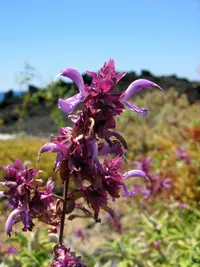
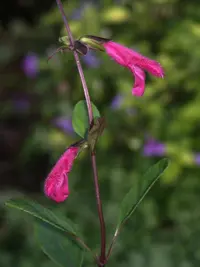
Buchanan's sage, Salvia buchananii, is a compact, shrubby perennial grown mainly for its vivid, velvety magenta flowers and aromatic foliage. It often flowers over a long season, adding strong color to borders and containers. This species is believed to originate from Mexico and typically forms upright clumps rather than spreading aggressively. Its soft stems and lush leaves create a tidy, ornamental look that suits small gardens and patios. It is considered moderately easy to grow when given mild conditions, good drainage, and protection from hard frosts. Understanding how to care for Buchanan's sage helps keep it flowering well and looking healthy over many seasons.

Main Plant Requirements

Care Difficulty

Moderate Care

Light Preference

Partial Sun

Water Requirements

Moderate Water

Temperature Preference

Tropical / Frost Sensitive

Hardiness Zone

9–11

Soil Texture

Sandy, Loamy, Organic-rich

Soil pH

Acidic (5.5–6.5), Slightly acidic (6.5–7.0)

Soil Drainage

Well-drained

Fertilization

Light (every 4–6 weeks)

Get Personalized Care Plan

Scan your plant to receive care tips personalized for your specific plant

Available on iOS and Android

How to Care for the Buchanan's sage

This sun-loving perennial flowers best with strong but not harsh light.

  • Provide 4–6 hours of direct morning sun plus bright light the rest of the day for Buchanan's sage, especially in spring and early summer.
  • In hotter regions, give afternoon shade or lightly filtered light to prevent leaf scorch and faded blooms when sun is intense.
  • In cooler or coastal climates, it tolerates full sun all day; in cloudy areas, avoid deep shade or flowering and growth decline over time.

This species prefers evenly moist, well-drained soil without staying soggy.

  • Water when the top 3–5 cm of soil feels dry, aiming for thorough soaking that drains freely rather than frequent light splashes for Salvia buchananii.
  • Reduce watering in cool seasons when growth slows, but do not allow the root zone to stay dry and dusty for more than a few days.
  • Watch for yellowing, soft stems as a sign of overwatering and crisp, drooping leaves and dry stems as signs of underwatering.

This salvia grows best in mild, frost-free conditions.

  • Aim for 65–80°F (18–27°C) during active growth; it maintains good flowering and foliage quality in this range.
  • Protect plants when temperatures approach 32°F (0°C); foliage is damaged by light frost and roots may die if soil freezes hard.
  • In hot climates, it tolerates brief spikes to 90–95°F (32–35°C) if soil moisture is stable and roots are mulched, but flowering can slow in prolonged heat.

This species grows best in moderate air moisture but tolerates typical indoor humidity levels.

  • Aim for 40–60% humidity, which suits both indoor and outdoor Buchanan's sage plantings.
  • Dry indoor air can cause crisp leaf edges and slower growth, but the plant usually survives without intervention.
  • Increase humidity slightly with a nearby pebble tray or grouping plants, rather than misting leaves directly.

This plant prefers a loose, well-drained, moderately fertile substrate.

  • Use a loamy mix with 40–50% organic matter such as compost plus 30–40% garden soil and 10–20% perlite or coarse sand for drainage.
  • Keep the soil structure crumbly, not compacted, so air can reach roots and water drains within a few minutes after watering.
  • Aim for slightly acidic to neutral pH, roughly 6.0–7.0, which supports nutrient availability and root health in Salvia buchananii.
  • Avoid heavy clay, waterlogged sites, or pure peat that stays soggy, since these conditions strongly increase root rot risk.

This species is well suited to container growing when drainage and stability are managed carefully.

  • Choose a pot at least 25–30 cm wide to allow a fibrous root system and branching shoots to develop without crowding.
  • Select a heavier material like ceramic or thick terracotta in windy spots to keep the top growth from tipping the container.
  • Elevate the pot slightly on feet or bricks so drainage holes stay clear and excess water can exit quickly after rain or irrigation.

This ornamental sage benefits from light, consistent feeding during its active growing season.

  • Use a balanced liquid fertilizer (for example 10-10-10 or 20-20-20) diluted to 1/2 strength for Buchanan's sage.
  • Apply every 4–6 weeks in spring and summer when growth and flowering are strongest.
  • Reduce or stop feeding in fall and winter when growth slows, especially outdoors.
  • Compost or a slow-release granular fertilizer in spring can support flowering without encouraging weak, lush growth.

Thoughtful pruning supports compact growth and prolonged flowering in Salvia buchananii.

  • Use clean, sharp hand pruners to avoid tearing stems and spreading disease.
  • In late winter or early spring, remove dead, damaged, and very thin stems back to healthy growth.
  • Lightly shorten crowded or leggy shoots to improve air circulation and keep a bushy, upright shape.
  • Deadhead spent flower spikes through the growing season to encourage additional blooms.

This salvia adapts well to containers and garden beds but dislikes frequent root disturbance.

  • Plan to repot or transplant every 2–3 years, or when roots circle the pot base and growth slows.
  • Choose early spring, just before strong new growth, to minimize stress on Salvia buchananii.
  • Shift into a container 2–5 cm wider, using well-drained soil, and gently loosen circling roots without tearing.
  • Water thoroughly after moving, then keep slightly moist and shaded for a few days to help recovery.

This plant is most often propagated from softwood or semi-ripe stem cuttings.

  • Take 7–10 cm non-flowering cuttings in late spring to summer for reliable rooting.
  • Remove lower leaves, dip the cut end in rooting hormone, and insert into a free-draining mix of perlite and peat or similar.
  • Maintain high humidity, gentle bottom warmth if possible, and bright, indirect light until roots form.
  • Division of established clumps in early spring is possible if the root system is dense and healthy.

This tender sage needs protection in regions with freezing winters.

  • It is only frost tolerant in very mild climates, usually around USDA zones 9–10.
  • In colder areas, grow in containers and move indoors to a bright, cool, frost-free spot before nights drop near 32°F.
  • Mulch the root zone with 5–8 cm of organic material in mild climates to buffer temperature swings.
  • Cut back frost-damaged growth in late winter or early spring once the risk of hard frost has passed.

Care Tips

Pinch For Bushiness

Regularly pinch out soft shoot tips in spring and early summer to promote a denser, self-supporting plant with more flowering stems.

Staggered Flower Deadheading

Remove individual spent flower spikes weekly instead of cutting the whole plant back at once to extend the blooming period and keep energy focused on new buds.

Discreet Stem Support

Use low, circular plant supports or pea sticks installed early in the season so the foliage can grow through them, preventing flopping of the soft stems in wind or rain.

Root Zone Mulching

Apply a 3–5 cm layer of fine bark or composted mulch around, but not touching, the base to stabilize soil temperature, retain moisture, and protect shallow feeder roots.

Overwintering Strategy

In colder regions, lift and pot a division in late summer to overwinter in a bright, frost-free space as insurance against severe cold while still growing Buchanan's sage outdoors as a semi-hardy perennial.

Common Pests and Diseases

Aphids

This pest feeds on young shoots and flower stems, sucking sap and causing distorted growth and sticky honeydew on leaves and calyces.

Solution

Spray stems and undersides of leaves with a strong stream of water to dislodge colonies, then treat remaining insects with insecticidal soap or a light horticultural oil, repeating every 5–7 days until no new aphids appear; encourage lady beetles and lacewings outdoors by avoiding broad-spectrum chemicals.

Spider mites

These insects thrive in hot, dry conditions and cause fine stippling, a dull appearance to leaves, and fine webbing between stems and foliage.

Solution

Increase humidity around the plant, rinse foliage thoroughly with lukewarm water, and apply insecticidal soap or a miticide labeled for ornamentals, ensuring full coverage of leaf undersides and repeating at 5–7 day intervals until new growth appears clean.

Botrytis blight

This disease causes soft, water-soaked spots on leaves and flowers that quickly develop gray, fuzzy mold, especially in cool, damp weather and crowded plantings.

Solution

Remove and discard all affected flowers and foliage, improve air circulation, avoid overhead watering, and if conditions stay cool and wet, apply a fungicide labeled for botrytis, focusing on dense flower spikes and inner stems.

Powdery mildew

Symptoms include white, powdery patches on leaves and stems, often starting on lower or shaded foliage and leading to yellowing and premature leaf drop.

Solution

Thin crowded stems to improve airflow, water at the base to keep foliage dry, and treat early infections with a sulfur, potassium bicarbonate, or neem-based product, repeating as directed until new growth remains free of symptoms; avoid high nitrogen fertilization that promotes soft, susceptible growth.

Interesting Facts

Mexican garden origin

This species is believed to be of garden origin from central Mexico, and it is not known from any confirmed wild population, which makes its natural distribution and original habitat uncertain.

Sterile but long blooming

The plant is effectively sterile and rarely, if ever, sets viable seed, yet it flowers over an unusually long season in mild climates, often from late spring or early summer through autumn.

Velvety magenta flowers

Its tubular flowers have a distinctive rich magenta to wine-purple color with a velvety texture, which makes them especially attractive and easily distinguishable from many other salvias.

FAQs about Buchanan's sage

Lack of flowers usually results from low light, excess nitrogen fertilizer, or old, unpruned stems. Provide strong light, avoid high-nitrogen feeds, and trim back after flowering so new, flowering shoots can develop the following season.

Grow Healthy Plants with Botan Care

Keep your plants happy and healthy with plant identification, disease detection, and easy care guidance.

Botan plant care app — identify plants on mobile

Explore More Plants