

Root collar protection
Keep the swollen stem base slightly raised above the soil line and use a coarse mineral mulch around it to reduce rot risk and prevent soil from staying in contact with the trunk after heavy rain or watering.

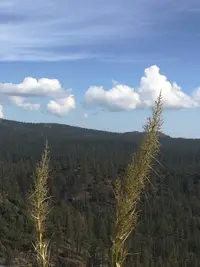
Nolina palmeri, often called Palmer’s beargrass, is a drought-adapted shrub-like plant with a swollen, woody base and long, narrow, arching leaves. It belongs to the asparagus family and is not a true grass. Native to arid regions of Baja California and nearby areas, it naturally grows on rocky slopes and dry hillsides. The plant is slow-growing and forms a striking architectural clump, sometimes developing a short, branching trunk with age. Its tough, leathery foliage and strong drought tolerance make it suitable for low-water landscapes and collectors of desert plants. In cultivation, it generally prefers bright light, very well-drained soil, and minimal watering, which influences how to care for Nolina palmeri.

Care Difficulty
Easy Care

Light Preference
Full Sun

Water Requirements
Low Water

Temperature Preference
Warm Climate

Hardiness Zone
8–11

Soil Texture
Sandy, Loamy, Rocky

Soil pH
Slightly acidic (6.5–7.0), Slightly alkaline (7.0–7.5)

Soil Drainage
Well-drained

Fertilization
Minimal (feed rarely)
Scan your plant to receive care tips personalized for your specific plant
Available on iOS and Android
This desert species thrives with high light but can adapt to slightly lower exposure if introduced gradually.
This drought-tolerant species prefers deep, infrequent watering and fast-draining soil.
This species is heat-tolerant but needs protection from hard frost, especially when young.
This species tolerates dry indoor air well, so humidity management is usually low priority.
Use a sharply draining, mineral-rich mix that mimics desert-like, rocky soil conditions.
This species is well suited to container growing, especially in dry or cold climates.
This desert-adapted species needs only light feeding in containers; in the ground, most established plants grow well with minimal fertilizer.
Pruning needs are minimal and mainly cosmetic, focused on removing old or damaged foliage.
This species dislikes frequent disturbance, so repot or transplant only when clearly necessary.
Propagation is usually done from seed and is relatively slow, so it is not a frequent home project.
Mature plants are fairly cold hardy in dry climates, but young or potted specimens need some winter attention.

Plant Health Check
Not sure what's wrong with your plant? Check your plant's health inside the app.
This species is naturally restricted to arroyos and rocky desert washes of northern Baja California and adjacent southern California, where it tolerates intense sun, alkaline soils, and episodic flash flooding.
Mature plants develop a large, swollen basal stem that stores water and carbohydrates, allowing survival through prolonged drought typical of its native desert climate.
Nolina palmeri grows slowly and can form tall, tree-like trunks over many decades, with individual plants in undisturbed habitats believed to persist for well over a century.

Genetic and morphological studies place Nolina palmeri in the family Asparagaceae rather than among true palms or yuccas, despite its common name and palm-like appearance, making it more closely related to plants like asparagus and agave than to any real palm.
This species grows well in large, heavy containers with excellent drainage and a gritty mix. Containers limit ultimate size but allow better cold protection. Repot only when rootbound, since it prefers being slightly crowded around the base.
Keep your plants happy and healthy with plant identification, disease detection, and easy care guidance.

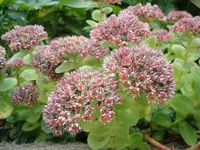
Love-restoring Stonecrop
Hylotelephium anacampseros
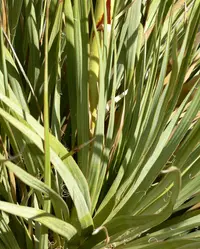
Bigelow's nolina
Nolina bigelovii
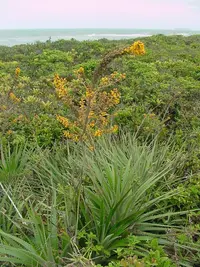
Dyckia encholirioides
Dyckia encholirioides
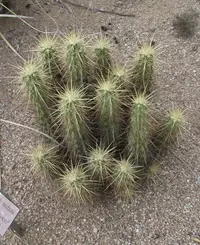
Nichol's hedgehog cactus
Echinocereus nicholii
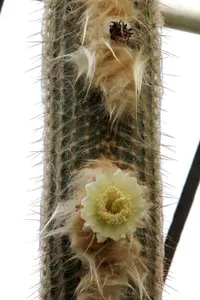
Espostoa melanostele
Espostoa melanostele
Beschorneria yuccoides
Beschorneria yuccoides
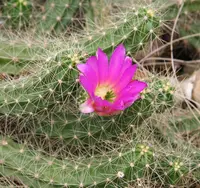
Echinocereus cinerascens
Echinocereus cinerascens
Cuming crown cactus
Rebutia neocumingii