Contain Rhizome Spread
Plant in a wide, shallow aquatic basket lined with fine mesh to confine the creeping rhizomes and make it easier to divide and control spread each season.

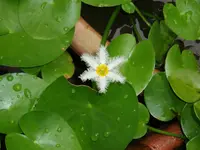
Water snowflake, Nymphoides indica, is a small aquatic plant grown for its floating, lily-like leaves and delicate white, fringed flowers. It forms rosettes that spread across still or slow-moving water surfaces.
This species occurs naturally in tropical and subtropical regions, often in ponds, lakes, and quiet backwaters. It is generally considered easy to moderate to grow if water depth, temperature, and nutrients are stable.
The plant prefers calm, fresh water, good light, and a nutrient-rich substrate or container. Understanding how to care for water snowflake helps prevent overgrowth and keeps it healthy in ponds or water gardens.

Care Difficulty
Moderate Care

Light Preference
Full Sun

Water Requirements
Aquatic

Temperature Preference
Tropical / Frost Sensitive

Hardiness Zone
9–11

Soil Texture
Loamy, Silty, Organic-rich

Soil pH
Slightly acidic (6.5–7.0), Neutral (7.0)

Soil Drainage
Waterlogged tolerant

Fertilization
Light (every 4–6 weeks)
Scan your plant to receive care tips personalized for your specific plant
Available on iOS and Android
This floating aquatic plant needs abundant light to bloom and maintain compact growth.
This species is an aquatic plant that grows rooted in saturated soil under standing or very slow-moving water.
This tropical aquatic plant prefers consistently warm conditions and reacts poorly to cold snaps or frost.
This aquatic species prefers consistently high humidity around its leaves but usually receives it from the water surface microclimate.
This floating-rooted plant grows best when its roots are anchored in soft, nutrient-rich aquatic substrate rather than typical potting soil.
This species is suitable for container growing in ponds, tubs, or water gardens if the container is stable and water-filled.
This aquatic species benefits from light, targeted feeding during its active growing season.
Pruning helps keep Nymphoides indica healthy, flowering well, and contained in ponds or tubs.
This water plant is usually grown in baskets or shallow containers that may need transplanting as it fills the space.
This species is commonly propagated to expand pond plantings or replace older, congested clumps.
This tropical to subtropical aquatic plant is sensitive to freezing conditions and needs winter planning in cold climates.

Plant Health Check
Not sure what's wrong with your plant? Check your plant's health inside the app.
This species forms small, free-floating rosettes that resemble miniature water lily pads, with each leaf attached to the submerged stem by a flexible petiole that allows it to ride gently on wave movement.
Its star-shaped white flowers have finely fringed petal margins, an adaptation that increases surface area and can help shed water film so pollinators can access the reproductive structures more easily.
Although native to tropical and subtropical regions of the Old World, this plant is now naturalized in various warm areas worldwide, including parts of Florida and other southern US states, where it grows in still or slow-moving freshwater.

This species can reproduce both sexually through seed and vegetatively by forming new plantlets along creeping underwater stems, which allows it to rapidly colonize calm ponds and ditches when conditions are favorable.
Lack of flowers usually comes from insufficient light, shallow or nutrient-poor water, or water that is too cool. Stable warm temperatures, enough sun, and a rich aquatic substrate are essential to support regular blooming.
Keep your plants happy and healthy with plant identification, disease detection, and easy care guidance.