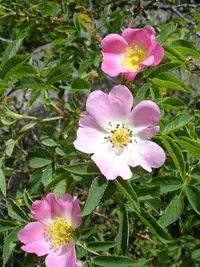
spotted evening primrose Care (Oenothera canescens)

About spotted evening primrose

Spotted evening primrose, Oenothera canescens, is a small, short-lived perennial or biennial wildflower from dry, open habitats in North America, especially the southwestern United States. It forms low clumps of narrow, often grayish-green leaves and sends up slender stems with delicate, pale yellow to cream flowers that open mainly in the evening.

This species is adapted to lean, well-drained soils and low to moderate moisture, so it suits xeriscapes and naturalistic plantings. It tends to be relatively easy to grow where winters are not too wet, especially if given full sun and good drainage. Gardeners who care for spotted evening primrose often value it for its drought tolerance and soft, informal look.

Main Plant Requirements

Care Difficulty

Easy Care

Light Preference

Full Sun

Water Requirements

Low Water

Temperature Preference

Cold Hardy

Hardiness Zone

4–9

Soil Texture

Sandy, Loamy, Rocky

Soil pH

Slightly acidic (6.5–7.0), Neutral (7.0)

Soil Drainage

Well-drained

Fertilization

Minimal (feed rarely)

Get Personalized Care Plan

Scan your plant to receive care tips personalized for your specific plant

Available on iOS and Android

How to Care for the spotted evening primrose

This sun-loving perennial thrives in bright, open sites typical of dry prairies and roadsides.

  • Provide 6–8 hours of direct sun daily; morning to midafternoon sun promotes compact growth and abundant flowers.
  • Plant in a spot that still receives at least 4–5 hours of direct light if partial shade is unavoidable, as prolonged shade reduces blooms and causes lanky stems in spotted evening primrose.
  • In very hot regions, light afternoon shade or filtered sun can reduce leaf scorch, especially during summer heat waves.

This drought-tolerant perennial prefers infrequent, deep watering in sharply draining soil.

  • Allow the top 5–8 cm of soil to dry before watering again; in most climates this means waiting until foliage looks slightly less turgid rather than following a fixed schedule.
  • During the first growing season, water after hot, dry spells to help roots establish, then reduce frequency once growth is robust and flowering is consistent.
  • Use gritty, fast-draining soil to prevent standing water; persistent wilting with dry soil signals underwatering, while yellowing, soft stems in damp soil indicate overwatering of Oenothera canescens.

This hardy species tolerates a wide temperature range typical of continental and semi-arid climates.

  • Optimal growth occurs around 65–80°F (18–27°C), especially in spring and early summer when vegetative growth and flowering initiate.
  • Mature plants tolerate winter lows near 0°F (−18°C) in well-drained soil, but new plantings benefit from mulch to buffer freeze–thaw cycles.
  • In summer, plants cope with heat up to about 95°F (35°C) if soil drains well; extended extreme heat with drought can reduce flowering until conditions moderate.

This species tolerates a wide range of dry conditions and usually does not need special humidity management indoors or outdoors.

Oenothera canescens prefers dry, lean, fast-draining soil that mimics sandy or gravelly native habitats.

  • Use a sandy or gritty mix, such as 50% cactus mix with 50% coarse sand or fine gravel, to prevent water retention around roots.
  • Ensure very rapid drainage; water should pass through the pot or bed within seconds, not sit on the surface or in saucers.
  • Aim for slightly acidic to neutral pH around 6.0–7.2; avoid heavy clay or high-organic potting blends that stay damp for long periods.
  • Improve aeration in marginal soils by incorporating coarse sand or small gravel rather than peat-heavy materials that hold moisture.

This species can be grown in containers if the setup emphasizes rapid drainage and dry conditions.

  • Choose a wide, relatively shallow container to accommodate its spreading root system while keeping the mix from staying wet at depth.
  • Select unglazed terracotta to allow moisture to evaporate quickly through the pot walls, supporting the plant’s drought-adapted needs.
  • Raise the container on pot feet or bricks so gravity helps water exit quickly and the drainage holes never sit in standing water.

Oenothera canescens is a low-nutrient, drought-tolerant perennial that needs only light feeding in typical garden soils.

  • Apply a thin layer of compost around plants in early spring to support new growth of spotted evening primrose.
  • Use a balanced, slow-release fertilizer (around 10-10-10) at half strength once in spring if soil is very poor.
  • Avoid midsummer and late-season feeding to prevent weak, lush growth and reduce risk of winter damage.
  • Do not fertilize during winter dormancy; allow the plant to rest in cool, dry conditions.

Oenothera canescens benefits from light, targeted pruning to keep plants compact and flowering well.

  • In late spring to midsummer, shear back spent flower stems by one-third to encourage new blooms.
  • Remove dead, damaged, or diseased stems at the base using clean, sharp hand pruners.
  • Thin out crowded, weak shoots to improve air movement and maintain a low, open mound.
  • In late fall, cut back dry stalks to a few cm above ground or leave them for winter interest, then tidy in early spring.

This species is usually grown in the ground; focus on thoughtful transplanting rather than frequent repotting.

  • Transplant in early spring or early fall, when temperatures are mild and soil moisture is steady.
  • Look for signs such as slow growth, plants heaving from the soil, or roots circling a small container before moving.
  • Lift with a wide root ball, disturb roots as little as possible, and replant at the same depth in well-drained soil.
  • Water thoroughly after transplanting, then keep moisture even but not waterlogged for 1–2 weeks to limit transplant shock.

Oenothera canescens is most often propagated from seed, with some potential for division in established clumps.

  • Sow seeds in late fall outdoors for natural cold stratification or indoors in late winter after 4–6 weeks of moist chilling.
  • Use a free-draining seed mix, press seeds onto the surface, and provide bright light; keep slightly moist until germination.
  • Once seedlings have several true leaves, harden them off gradually and transplant to sunny, well-drained beds.
  • Every 3–4 years, divide vigorous clumps in early spring, replanting divisions promptly and watering to settle soil.

This perennial is generally cold hardy in much of its range and needs only minimal winter care in the ground.

  • Tolerates typical light to moderate frosts once established, especially in well-drained soils.
  • After the first hard frost, optionally mulch lightly (2–5 cm) around the root zone in colder climates, avoiding crown burial.
  • In containers, move pots to a sheltered, unheated area and keep soil just barely moist to prevent freeze–thaw root damage.

Care Tips

Encourage Compact Growth

Pinch back the soft tips of young stems in late spring to reduce legginess and promote a denser, more wind-resistant clump.

Staggered Rejuvenation

Every 2–3 years, divide and replant only one-third to one-half of a crowded patch so the planting keeps flowering well without leaving a bare area.

Targeted Seed Control

If self-seeding is excessive, deadhead only the most vigorous stems after bloom and leave a few seedpods on weaker plants to maintain a balanced stand.

Drought Training Strategy

In the plant’s second season, gradually lengthen the interval between deep waterings to train roots to grow deeper and increase resilience to summer dry spells.

Low-Input Pest Monitoring

Inspect stems and flower buds every 1–2 weeks in warm weather, and wash off aphids with a firm water spray before populations build, which is often enough when caring for spotted evening primrose in low-fertilizer, open sites.

Common Pests and Diseases

Flea beetles

These insects chew many small round holes in young leaves, giving foliage a shot‑holed or lacy appearance and sometimes stunting new growth.

Solution

Use floating row covers over young plants in spring, remove nearby weeds that host the beetles, and if damage is high, apply a spinosad or pyrethrin-based product in the evening following label directions while avoiding open blooms to protect pollinators.

Aphids

These insects cluster on tender stems and buds, sucking sap and causing distorted growth and sticky honeydew that can attract sooty mold.

Solution

Dislodge colonies with a strong stream of water, pinch off heavily infested tips, and if needed use insecticidal soap or a light horticultural oil, making sure to coat the undersides of leaves and repeating every 5–7 days until populations drop.

Leafhoppers

These insects feed on leaf surfaces, leading to pale stippling, tip yellowing, and sometimes a general faded look to the foliage, especially in hot, dry weather.

Solution

Encourage natural predators by avoiding broad-spectrum insecticides, remove plant debris where leafhoppers shelter, and if damage is persistent apply insecticidal soap or a low-impact pyrethrin spray in the evening, directing it to the undersides of leaves.

Powdery mildew

This disease appears as white, powdery patches on leaves and stems, which can cause premature yellowing and reduced vigor during warm, dry periods with high humidity at night.

Solution

Increase air circulation by thinning crowded stems, avoid overhead watering in the evening, remove and discard affected leaves, and apply a sulfur or potassium bicarbonate fungicide early in the outbreak according to label instructions as part of general Oenothera canescens care.

Rust

This disease causes small orange to brown pustules on the undersides of leaves, often with yellow spots visible on the upper surfaces and gradual leaf drop if severe.

Solution

Promptly remove and discard infected leaves, keep foliage as dry as possible, avoid crowding plants, and in recurring cases use a labeled ornamental rust fungicide, applying preventively at the first sign of spots in spring or early summer.

Interesting Facts

Gray, hairy foliage

This evening primrose has a distinctive grayish, canescent (densely hairy) leaf surface that helps reduce water loss and reflect intense sunlight in its often dry, exposed habitats.

Night-blooming yellow flowers

Its pale yellow flowers typically open in the evening and close by the following day, matching the activity pattern of nocturnal pollinators such as moths that visit for nectar and pollen.

Adapted to sandy soils

In the wild, this species often grows in sandy or well-drained, low-nutrient soils, where its deep root system helps it access moisture and remain stable in shifting substrates, which is useful to know for Oenothera canescens care.

FAQs about spotted evening primrose

This species spreads moderately by seed and short rhizomes. In favorable conditions it can form loose colonies but usually does not overwhelm healthy, well-managed beds. Deadheading and removing unwanted seedlings help keep it within defined areas.

Grow Healthy Plants with Botan Care

Keep your plants happy and healthy with plant identification, disease detection, and easy care guidance.


Botan plant care app — identify plants on mobile

Explore More Plants