


Encourage Successive Bloom
Deadhead spent flowers every few days during peak season, cutting the stem just above the next healthy leaf node, to extend blooming and keep the plant from exhausting itself on seed production.

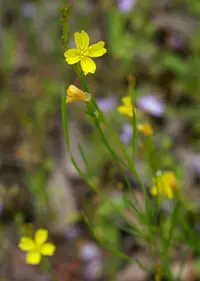
Threadleaf evening primrose (Oenothera linifolia) is a small, herbaceous perennial known for its finely divided, threadlike leaves and delicate pale yellow flowers. It forms loose clumps or low mounds that give a soft, airy look in garden beds and naturalistic plantings.
This species is native to parts of the southeastern United States, where it grows in open, sunny sites with well-drained, often sandy soils. It is generally undemanding once established, which makes it relatively easy to care for threadleaf evening primrose in low-maintenance landscapes.
Plants prefer full sun, modest moisture, and soils that do not stay wet for long periods, especially in cooler climates.

Care Difficulty
Easy Care

Light Preference
Full Sun

Water Requirements
Low Water

Temperature Preference
Warm Climate

Hardiness Zone
5–9

Soil Texture
Sandy, Loamy, Rocky

Soil pH
Acidic (5.5–6.5), Slightly acidic (6.5–7.0)

Soil Drainage
Well-drained

Fertilization
Minimal (feed rarely)
Scan your plant to receive care tips personalized for your specific plant
Available on iOS and Android
This sun-loving perennial thrives in open, bright sites with long daily exposure.
This species prefers dry to moderately dry conditions and is adapted to drought-prone sites.
This hardy perennial tolerates a broad temperature range typical of many temperate climates.
Humidity is not a significant factor for Oenothera linifolia, which thrives in dry outdoor conditions.
This species prefers lean, well-drained sandy or gravelly soil that mimics dry, open habitats.
This species can be grown in containers if the pot is set up to drain and dry quickly.
This native perennial thrives in lean soils, so threadleaf evening primrose needs only light, targeted feeding in containers or very poor ground.
Thoughtful pruning helps Oenothera linifolia maintain a tidy mound and sustain flowering.
This species is usually grown in-ground, where it dislikes disturbance, so transplanting should be infrequent and carefully timed.
Propagation of Oenothera linifolia is most reliable from seed, with some potential for careful division of established clumps.
This perennial is generally cold hardy in temperate climates and needs minimal winter care once established in the ground.

Plant Health Check
Not sure what's wrong with your plant? Check your plant's health inside the app.
This species has very slender, threadlike leaves that distinguish it from many other evening primroses and reduce leaf surface area, which can help limit water loss in dry, sandy habitats.
It is naturally associated with dry, open, sandy sites in the southeastern United States, including sandhills and well-drained pine communities, where it thrives in high light and low fertility soils.
Unlike many evening primroses that open mainly at dusk, this species produces pale yellow flowers that are commonly open during the day, making them more accessible to daytime pollinators such as small bees.
This species usually forms loose clumps and short spreading mats through self-seeding rather than running roots. It can gently naturalize in sunny, well-drained sites but is not typically considered aggressively spreading in most garden settings.
Keep your plants happy and healthy with plant identification, disease detection, and easy care guidance.

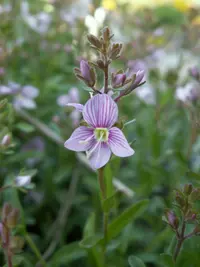
Rose Mountain Speedwell
Veronica fruticulosa
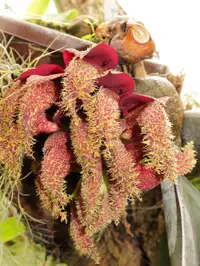
Bulbophyllum phalaenopsis
Bulbophyllum phalaenopsis

Climbing Sundew
Drosera planchonii
 POPULAR
SІtriped begonia
Begonia listada
 POPULAR
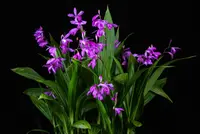
Chinese ground orchid
Bletilla striata
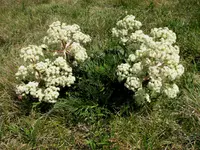
mountain celery
Aciphylla glacialis
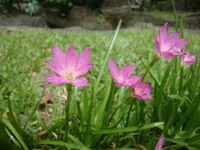
Cuban zephyrlily
Zephyranthes rosea

Rose
Rosa 'Cinco de Mayo'