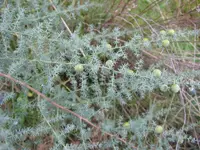
burrowing four o'clock Care (Okenia hypogaea)

burrowing four o'clock

About burrowing four o'clock

Burrowing four o'clock (Okenia hypogaea) is a small, tuber-forming perennial herb in the four o'clock family. It stays low to the ground, with foliage and flowers close to the soil surface. The plant produces funnel-shaped flowers, typically opening later in the day, and underground seed pods that help it spread discreetly. It is native to arid and semi-arid regions of the southwestern United States and northern Mexico, where it copes with heat and poor, sandy soils. These natural adaptations make it drought tolerant but somewhat particular about drainage and dislike of heavy, waterlogged ground. Gardeners who learn how to care for burrowing four o'clock often find it easier to maintain in dry, sunny rock gardens or naturalistic plantings.

Main Plant Requirements

Care Difficulty

Moderate Care

Light Preference

Full Sun

Water Requirements

Moderate Water

Temperature Preference

Warm Climate

Hardiness Zone

8–11

Soil Texture

Sandy, Loamy, Organic-rich

Soil pH

Slightly acidic (6.5–7.0)

Soil Drainage

Well-drained

Fertilization

Minimal (feed rarely)

Get Personalized Care Plan

Scan your plant to receive care tips personalized for your specific plant

Available on iOS and Android

How to Care for the burrowing four o'clock

This tuber-forming species prefers bright, open conditions similar to a sunny, well-drained meadow.

  • Provide 6–8 hours of direct sun daily, with a preference for morning sun and some light afternoon shade in very hot climates to reduce leaf scorch.
  • Burrowing four o'clock tolerates light partial shade (around 3–4 hours sun), but flowering and tuber development decline if shade is dense or prolonged.
  • In summer, protect from reflected heat off walls or pavement; in cooler seasons, avoid planting where low winter sun is blocked by buildings or shrubs.

This plant is drought-tolerant once established and resents sitting in wet soil.

  • Water when the top 3–5 cm of soil are dry, using a deep soak that moistens the root zone, then let the soil dry again before the next watering.
  • During active growth, watch foliage: limp, dull leaves indicate thirst, while yellowing, soft stems or a sour soil smell suggest overwatering and possible root rot.
  • Use well-drained, sandy or gritty soil so water runs through within a few seconds; in cooler or rainy seasons, extend the interval between waterings significantly.

This species prefers warm, frost-free conditions and behaves like a tender perennial or warm-season plant.

  • Aim for growing temperatures around 70–85°F (21–29°C), where shoot growth and flowering are most consistent and tubers develop well.
  • The plant is damaged near 32°F (0°C) and tubers can be killed by hard frost below about 28°F (-2°C), so protect or lift them in cold-winter regions.
  • In hot climates, it tolerates short periods up to 95–100°F (35–38°C) if soil is not waterlogged and the site has some afternoon shade and airflow.

This species copes well with typical household humidity and rarely needs special adjustment.

  • Aim for 30–50% humidity; it handles slightly drier air better than prolonged dampness around the foliage and stems.
  • Watch for leaf edge browning or stalled growth as signs low humidity is combining with heat or underwatering, not humidity alone.
  • For burrowing four o'clock in very dry, heated rooms, place the pot on a pebble tray with water below the pot base, not touching it.

Soil should be loose, sandy to sandy-loam, and very free-draining to suit this geophytic species.

  • Use a mix of roughly 50% coarse sand, 25% loam, and 25% gritty material such as fine gravel or perlite for Okenia hypogaea.
  • Target slightly acidic to neutral pH, around 6.0–7.0, which supports balanced nutrient uptake without encouraging rot.
  • Incorporate only a modest amount of compost; excess organic matter can hold too much water around the underground tubers.
  • Avoid heavy clay, peat-heavy potting mix, or any soil that stays wet for more than 1–2 days after thorough watering.

This species can be grown in containers if the pot is set up to protect its underground tubers from excess moisture.

  • Choose a wide, shallow pot to provide horizontal space for underground structures while keeping the soil column thin enough to dry evenly.
  • Select unglazed terracotta rather than plastic where possible, as it allows faster evaporation and reduces the risk of tuber rot.
  • Place the container where it will not be shaded by taller pots, so the soil surface warms and dries promptly after watering, limiting fungal problems.

Okenia hypogaea is a light feeder that benefits from modest nutrition during its active growing season.

  • Apply a balanced, dilute liquid fertilizer (for example 10-10-10 at 1/2 strength) every 4–6 weeks in spring and summer.
  • Alternatively, work a thin layer of fine compost into the topsoil once in spring for slow, gentle feeding.
  • Avoid high-nitrogen products that push soft leafy growth at the expense of tuber and flower development.
  • Stop feeding in late summer to allow natural dormancy and avoid stimulating tender growth before cooler weather.

Pruning Okenia hypogaea is mainly cosmetic and focuses on maintaining plant health and a tidy outline.

  • Carry out light pruning in late winter or very early spring before strong new growth starts.
  • Remove dead, damaged, or pest-infested stems first, then thin weak or crowded shoots to improve airflow.
  • Use clean, sharp scissors or hand pruners and make cuts just above a healthy node or branching point.
  • Limit cutting of green, healthy stems to gentle shaping, which helps maintain compact growth without reducing flowering.

This species is usually grown in the ground, so attention focuses more on careful transplanting than frequent repotting.

  • Transplant in late winter to early spring when growth is just starting and temperatures are mild.
  • Look for signs like slow vigor, crowded clumps, or tubers pressing against the planting area as cues to divide and shift plants.
  • Lift clumps gently, keeping as much soil around the underground tubers as possible to reduce root stress.
  • Replant at the same depth in a well-drained site, water thoroughly once, then keep soil just slightly moist until new growth establishes.

Propagation of burrowing four o'clock is usually done through seed sowing or careful division of established clumps.

  • Collect ripe seeds and sow in late winter to early spring in a free-draining, sandy mix kept lightly moist.
  • Provide warm conditions around 68–75°F and bright, indirect light to encourage steady germination.
  • For division, lift mature clumps in early spring and gently separate tubers with attached buds or shoots.
  • Replant divisions promptly, keeping tubers at their original depth, then water lightly to settle soil without waterlogging.

Okenia hypogaea is fairly tolerant in mild-winter climates but benefits from some root-zone protection in colder regions.

  • In areas with light frost, a 5–8 cm layer of dry mulch over the root zone helps buffer temperature swings.
  • In colder climates, grow Okenia hypogaea in containers so plants can be moved to a cool, frost-free space in winter.
  • Reduce watering significantly while the plant is dormant, keeping the soil barely moist to prevent tuber rot.

Care Tips

Tubers in baskets

Grow plants in wide, shallow nursery pots or mesh baskets sunk into the bed to keep the underground tubers contained and make division and lifting much easier after several seasons.

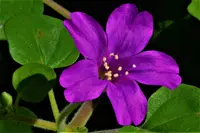
Staggered replanting

Lift and divide older clumps every 3–4 years, then replant only the healthiest tuber sections at the same depth to maintain vigorous flowering and reduce crowding-related decline.

Targeted rabbit protection

In areas with rabbits or other burrowing herbivores, lay a sheet of hardware cloth 15–20 cm below the planting zone so roots can grow through while tubers remain protected from chewing.

Low-disturbance weeding

Hand-weed or use a narrow hoe that works the top 2–3 cm of soil only, to avoid damaging the shallow, spreading underground stems and storage organs.

Dormancy monitoring

Mark plant positions with unobtrusive stakes before dormancy so the area is not accidentally dug or replanted, which is especially useful when caring for burrowing four o'clock in mixed borders.

Common Pests and Diseases

Leaf miners

This pest creates pale, winding tunnels in the leaves as larvae feed within the leaf tissue, often causing blotchy or distorted foliage on burrowing four o'clock plants. Symptoms include reduced vigor and cosmetic damage, especially on younger growth.

Solution

Remove and destroy heavily mined leaves to break the life cycle, and check nearby Mirabilis species that can act as reservoirs. For recurring issues, use yellow sticky traps to monitor adults and apply a neem oil or spinosad foliage spray, thoroughly coating both leaf surfaces while avoiding high-temperature periods.

Spider mites

These insects cause fine stippling, a dull or dusty appearance on leaves, and sometimes very fine webbing on stems and leaf undersides in warm, dry conditions. Symptoms include gradual yellowing, leaf drop, and slowed growth if populations become high.

Solution

Rinse foliage thoroughly with a firm stream of water, paying special attention to the undersides of leaves, and repeat every few days to knock back populations. In persistent infestations, increase humidity around the plant, then use insecticidal soap or neem oil at label rates, reapplying 2–3 times at 5–7 day intervals while monitoring with a hand lens.

Mirabilis rust

This disease produces small, powdery orange to brown pustules on the undersides of leaves, sometimes with yellow spots on the upper surface. Symptoms include premature leaf drop and general decline in ornamental quality in plantings of Mirabilis species such as Okenia hypogaea.

Solution

Remove and dispose of infected leaves promptly and avoid overhead watering to keep foliage dry, especially late in the day. Improve air circulation around plants by thinning crowded stems, and in severe or recurring cases consider a targeted fungicide labeled for rust on ornamental species, applied preventively at the first sign of symptoms.

Powdery mildew

This disease appears as a white to gray powdery coating on leaves and young stems, usually starting on older foliage where air movement is poor. Symptoms include leaf curling, reduced flowering, and gradual weakening of the plant if unmanaged.

Solution

Increase spacing and airflow around plants, water at soil level rather than on leaves, and remove heavily affected foliage. At early stages, apply a sulfur, potassium bicarbonate, or horticultural oil product labeled for powdery mildew, making sure to coat both sides of leaves and avoid spraying in direct, intense sun.

Root-knot nematodes

These pests cause swollen, knotted galls on roots and can lead to stunted growth, yellowing, and poor response even when water and nutrients are adequate. Symptoms include an overall weak plant that fails to establish or regrow strongly from its underground tubers.

Solution

Discard severely affected plants and avoid replanting burrowing four o'clock in the same soil, since nematodes persist for years. In garden settings, rotate with non-host cover crops such as certain marigold cultivars, improve soil organic matter to favor beneficial organisms, and consider raised beds or containers with clean, nematode-free potting mix to grow Okenia hypogaea in problem areas.

Interesting Facts

Underground flowering habit

This species produces much of its flowering and fruiting activity below or right at the soil surface, a growth habit known as geocarpy, where fruits develop in contact with the ground.

Specialized taproot storage

It forms a thickened underground taproot that stores water and carbohydrates, allowing the plant to survive seasonal drought and quickly resprout when moisture returns.

Restricted native range

The plant is native to arid and semi-arid regions of southern Africa, where it grows in sandy or gravelly soils and is adapted to high light and strong temperature fluctuations.

FAQs about burrowing four o'clock

This species spreads slowly from its underground tubers and usually forms a small clump rather than a fast-running patch. In typical garden settings it is not considered aggressive and rarely outcompetes neighboring plants.

Grow Healthy Plants with Botan Care

Keep your plants happy and healthy with plant identification, disease detection, and easy care guidance.

Botan plant care app — identify plants on mobile

Explore More Plants