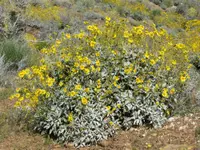
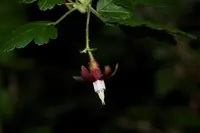
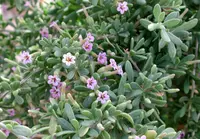
Bastard Sourplum Care (Olax dissitiflora)

Also known as: Kamasa, Small-Fruited False-Sourplum, Small False-Sourplum, Small Sourplum, Small-Fruited Olax

About Bastard Sourplum

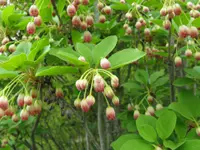
Bastard sourplum, Olax dissitiflora, is a small African tree or shrub known for its simple leaves and small, often fragrant flowers followed by fleshy, plum-like fruits. It typically grows in woodland and savanna habitats, where it handles seasonal dry periods and relatively poor soils.

The plant has a somewhat irregular, open crown and can form a modest ornamental feature in warm climates. Its natural toughness suggests moderate drought tolerance but it usually performs best in well-drained soil with steady, not excessive, moisture.

Light to full sun exposure generally suits this species, although young plants may appreciate some light shade. Gardeners who want to care for Bastard Sourplum should note that it is better suited to outdoor planting in frost-free or very mild regions than to typical indoor conditions.

Main Plant Requirements

Care Difficulty

Moderate Care

Light Preference

Partial Shade

Water Requirements

Moderate Water

Temperature Preference

Warm Climate

Hardiness Zone

Unknown

Soil Texture

Sandy, Loamy

Soil pH

Slightly acidic (6.5–7.0)

Soil Drainage

Well-drained

Fertilization

Minimal (feed rarely)

Get Personalized Care Plan

Scan your plant to receive care tips personalized for your specific plant

Available on iOS and Android

How to Care for the Bastard Sourplum

This African shrub prefers bright, open conditions but benefits from some protection from harsh midday sun.

  • Provide 4–6 hours of direct morning sun with light afternoon shade, or bright dappled light under taller trees in hotter regions.
  • In cooler or overcast climates, Bastard Sourplum tolerates near full sun if soil moisture is maintained and hot, reflective sites are avoided.
  • Insufficient light leads to sparse branching and poor fruiting, while intense all‑day summer sun can scorch young leaves, especially during drought.

This species prefers a seasonally dry regime with deep but infrequent watering once established.

  • Water thoroughly only when the top 3–5 cm of soil are dry, allowing moisture to reach deeper roots while avoiding constant surface dampness.
  • Use well‑drained, sandy or loamy soil; persistent puddling, sour smell, or soft, yellowing leaves indicate overwatering and risk of root rot.
  • During cooler or dormant periods, reduce watering, watching for dull, drooping foliage and fine twig dieback as signs the soil has stayed dry too long for Olax dissitiflora.

This shrub is adapted to warm, frost‑free to light‑frost climates with a marked dry season.

  • Aim for active growth in 70–90°F (21–32°C); brief peaks up to 95°F (35°C) are tolerated if soil is not bone dry and roots are mulched.
  • Plants are damaged below about 30°F (-1°C); young growth and flowers are especially sensitive to frost and may blacken after a single cold night.
  • In regions with cool winters, choose a site with good air drainage and a warm microclimate, and avoid low spots where cold air collects.

Olax dissitiflora tolerates a wide humidity range but grows best with moderately moist air.

  • Aim for ambient humidity around 40–60% to support steady growth of Bastard Sourplum foliage.
  • Accepts short periods of dry indoor air, but persistent humidity below 30% may cause leaf edge browning and tip dieback.
  • Increase humidity with a nearby water tray, grouped plants, or a small humidifier rather than misting, which adds only brief moisture.

Olax dissitiflora prefers light, well-aerated mineral soils that drain quickly but do not dry out instantly.

  • Use a sandy-loam structure with roughly 50–60% mineral material (sand and fine gravel) and 40–50% organic matter such as composted bark or leaf mold.
  • Ensure sharp drainage by mixing in coarse sand or fine grit plus a small amount of perlite to keep pore spaces open after watering.
  • Target a slightly acidic to neutral pH around 6.0–7.0, avoiding strongly acidic or calcareous (very lime-rich) ground that can lock up nutrients.
  • Avoid compacted clay, waterlogged spots, or thick peat-heavy mixes; loosen dense native soil by incorporating coarse material through the full rooting depth.

This species can be grown in containers if the pot is deep, stable, and drains quickly.

  • Select a heavy, wide-based pot so the woody framework remains stable in wind and does not tip as the canopy enlarges.
  • Choose a container at least 35–45 cm deep to accommodate its developing root system and reduce stress during hot, dry spells.
  • Use a gritty mix and raise the pot on feet or bricks so drainage holes stay clear and water does not pool under the base.

This species is adapted to low-nutrient soils, so Bastard Sourplum needs only light, infrequent feeding in cultivation.

  • Use a balanced, slow-release fertilizer (for example 10-10-10) or a thin layer of well-aged compost in early spring.
  • Feed once at the start of the warm growing season; avoid multiple heavy applications that encourage weak, lush growth.
  • Apply at half the label strength for woody shrubs or small trees, keeping granules or compost away from direct stem contact.
  • Do not feed during winter or dry dormancy, as inactive roots cannot take up nutrients efficiently.

Olax dissitiflora responds well to light structural pruning aimed at maintaining a healthy, open canopy.

  • Carry out pruning at the end of the dry season or late winter, before strong new growth starts.
  • Remove dead, diseased, crossing, or storm-damaged branches first, cutting back to healthy wood.
  • Thin crowded interior shoots to improve light penetration and airflow, which supports leaf health and reduces fungal issues.
  • Use clean, sharp bypass pruners or a small pruning saw, making smooth cuts just outside the branch collar.

This species is usually grown in the ground, so focus on careful transplanting rather than frequent container repotting.

  • Transplant young plants at the start of the rainy season or mild spring, when soil is moist and temperatures are moderate.
  • Look for signs such as roots circling a nursery pot or reduced shoot growth to decide when to shift from container to ground.
  • Dig a wide planting hole, keep the original root ball intact, and plant at the same depth to limit transplant shock.
  • Water deeply after planting, then shade temporarily and maintain even moisture while roots establish over several weeks.

Propagation of Olax dissitiflora is possible but usually undertaken by seed rather than vegetative methods.

  • Collect ripe fruits, extract seeds, and clean off pulp, which can inhibit germination if left to dry on the seed coat.
  • Sow in warm conditions around 70–80°F in a free-draining, sandy mix, keeping the medium evenly moist but not saturated.
  • Provide bright, indirect light and stable temperatures; germination may be slow and somewhat erratic in timing.
  • Label seed trays clearly and avoid disturbance of young roots, potting on only once seedlings show several true leaves.

This species is adapted to warm climates and is not fully hardy in regions with freezing winters.

  • In frost-prone areas, grow in a large container and move indoors or into a frost-free greenhouse before temperatures drop below 40°F.
  • For in-ground plants in marginal climates, apply a 5–8 cm mulch layer over the root zone, keeping it slightly away from the trunk.
  • Shelter young plants from cold, drying winds with windbreak fabric or by planting near a south-facing wall.

Care Tips

Root zone mulching

Apply a 3–5 cm layer of coarse organic mulch around the drip line, keeping it 5–8 cm away from the trunk, to stabilize soil moisture and temperature and protect fine feeder roots from heat and compaction.

Windward staking

In open or exposed sites, install 1–2 sturdy stakes on the windward side and secure the trunk with soft, flexible ties in a loose figure-eight to reduce root rocking while the plant establishes in the first 1–2 years.

Deep structural pruning

In late winter, selectively remove crossing, rubbing, or very low branches to develop a strong, open framework that improves light penetration, air movement, and long-term fruiting wood quality.

Targeted fruit thinning

If the plant sets heavily, pinch or clip off excess young fruits so clusters are spaced 10–15 cm apart, which helps remaining fruits size up better and prevents limb stress or breakage.

Seasonal sanitation

At the end of the dry or growing season, collect and dispose of fallen leaves, mummified fruits, and pruned material away from the planting area to reduce overwintering pests and diseases when caring for Bastard Sourplum.

Common Pests and Diseases

Leaf-chewing caterpillars

This pest feeds on young leaves and tender shoots, leaving irregular holes and ragged edges on Olax dissitiflora foliage. Symptoms include rapid defoliation on new growth, especially on seedlings and young shrubs in woodland or savanna margins.

Solution

Hand-pick caterpillars from branches in the early morning or evening and destroy them, focusing on young plants and fresh flushes of growth. For heavier pressure, use a targeted biological control such as Bacillus thuringiensis (Bt) sprayed on foliage, and encourage natural predators by avoiding broad-spectrum insecticides nearby.

Wood-boring beetle larvae

These insects tunnel into stems and older branches, disrupting water flow and causing localized dieback, wilted shoots, or branch breakage. Symptoms include small entry holes, frass (wood dust) around the base or on bark, and hollow or weakened stems in older Olax dissitiflora plants harvested for wood or traditional uses.

Solution

Prune and remove affected stems well below the last visible tunnel and destroy the infested material to break the life cycle. Maintain plant vigor with adequate water during dry periods and avoid wounding the bark, and where infestations recur, use trunk or branch applications of systemic insecticides registered for woody ornamentals, applied according to label directions.

Leaf spot complex

This disease is caused by various fungi that produce small brown to dark lesions on leaves, sometimes with pale halos, which can merge under prolonged wet conditions. Symptoms include scattered spots, premature yellowing, and early leaf drop on plants growing in shaded, humid thickets or forest edges.

Solution

Remove and dispose of heavily spotted fallen leaves to reduce fungal spores, and trim dense surrounding vegetation to improve airflow and faster leaf drying. In persistently wet climates or high-value specimens, protect new flushes of growth with a copper-based or other registered foliar fungicide applied at the start of the rainy period, following label instructions as part of broader Olax dissitiflora care instructions.

Interesting Facts

Southern African specialist

This species is native to the dry woodlands and bushveld of southern Africa, especially in Zambia, Zimbabwe, Botswana, and neighboring regions, where it grows as a small tree or shrub in sandy or rocky soils.

Parasitic root connections

Like other members of the Olacaceae, it forms specialized root connections to neighboring plants, allowing it to act as a hemiparasite that supplements its own photosynthesis by tapping into host roots.

Wild food resource

Local communities in parts of southern Africa harvest its sour-tasting fruits as a seasonal wild food, and the plant is sometimes protected in traditional agroforestry landscapes for this reason.

FAQs about Bastard Sourplum

The small, often fragrant flowers are visited by bees and other small insects seeking nectar and pollen. This makes the shrub useful in wildlife-friendly gardens and agroforestry systems where additional pollination services are desirable.

Grow Healthy Plants with Botan Care

Keep your plants happy and healthy with plant identification, disease detection, and easy care guidance.

Botan plant care app — identify plants on mobile

Explore More Plants