Ornamental Oregano Care (Origanum 'Kent Beauty')

About Ornamental Oregano

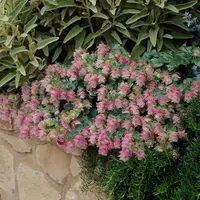
Ornamental oregano Origanum 'Kent Beauty' is a compact, mound-forming perennial grown mainly for its colorful bracts and trailing habit. It is often used in containers, rock gardens, and hanging baskets. The plant forms cascading stems with small gray-green leaves and overlapping pink to cream papery bracts that resemble hop flowers. In suitable conditions it creates a soft, textured dome that spills attractively over edges.

This cultivar originates from Mediterranean-type oregano species, so it prefers bright light, good air circulation, and sharply drained, rather dry soil. Its drought tolerance and modest nutrient needs usually make it straightforward to care for Ornamental Oregano in sunny, well-drained sites.

Main Plant Requirements

Care Difficulty

Easy Care

Light Preference

Full Sun

Water Requirements

Low Water

Temperature Preference

Cold Hardy

Hardiness Zone

5–9

Soil Texture

Sandy, Loamy, Rocky

Soil pH

Slightly acidic (6.5–7.0), Slightly alkaline (7.0–7.5)

Soil Drainage

Well-drained

Fertilization

Minimal (feed rarely)

Get Personalized Care Plan

Scan your plant to receive care tips personalized for your specific plant

Available on iOS and Android

How to Care for the Ornamental Oregano

This ornamental oregano thrives in bright, direct sun with some protection from harsh afternoon exposure.

  • Provide 6–8 hours of sun daily, with morning sun and light afternoon shade ideal, especially in hotter climates.
  • Accepts light or dappled shade for part of the day, but stems may stretch and flowering may decrease if light drops below about 4 hours.
  • In very intense summer sun, especially in the south or in reflected-heat spots, give Origanum 'Kent Beauty' some filtered afternoon light to prevent leaf scorch.

This drought-tolerant oregano prefers thorough but infrequent watering in sharply drained soil.

  • Allow the top 3–5 cm of soil to dry before watering; the foliage should look firm and leaves feel dry, not soft or soggy, at the base.
  • In spring and early summer, water deeply, then let excess drain completely; reduce watering in late summer and fall as growth slows.
  • Watch for yellowing, limp leaves and a sour soil smell as signs of overwatering, and crisp, curling leaves as a sign that Origanum 'Kent Beauty' needs water sooner.

This plant is a sun-loving perennial that prefers warm conditions and tolerates moderate cold when well established.

  • Optimal growing temperatures are 65–80°F (18–27°C), with good air movement to keep foliage dry and reduce disease risk.
  • Mature plants in the ground can tolerate brief drops to about 10–15°F (−12 to −9°C), but young plants need protection from hard freezes.
  • In periods above 90°F (32°C), provide light afternoon shade and avoid heat-reflecting surfaces to prevent stress and leaf scorch, while maintaining free-draining soil.

This drought-tolerant ornamental oregano prefers relatively dry air and does not require elevated humidity.

  • Target 30–50% humidity, similar to average indoor conditions, as higher levels can encourage fungal problems on bracts and foliage.
  • Dry air is usually tolerated; persistent leaf edge browning or papery bracts during heat waves can indicate combined low humidity and high heat stress.
  • Increase local humidity only during extreme dry spells by grouping pots or placing a nearby water tray, but avoid misting to keep foliage dry.

Origanum 'Kent Beauty' needs lean, fast-draining soil that stays aerated and never waterlogged.

  • Use a gritty mix such as 50–60% standard potting mix combined with coarse sand and perlite or fine gravel for sharp drainage.
  • Aim for slightly alkaline to neutral pH around 7.0–7.8; add a small amount of garden lime if your mix tests acidic.
  • Keep organic matter modest; excess compost or peat makes the substrate hold too much water and encourages root rot.
  • Improve aeration by avoiding compaction, using a pot with multiple drainage holes, and raising containers on feet so water exits freely.

This species is well suited to container growing, especially in hanging baskets or raised pots.

  • Choose a wide, shallow container to match its trailing, shallow-rooted habit and prevent wasted depth that holds excess moisture.
  • Use a heavier or weighted pot if placed in windy, exposed sites so the cascading stems do not tip the container.
  • Leave 2–3 cm between soil surface and rim to keep water from washing over the edge during thorough, infrequent watering.

This ornamental oregano prefers lean conditions, so keep feeding light and focused on the active growing season.

  • Use a balanced, diluted liquid fertilizer (around 10-10-10) at 1/4–1/2 strength for caring for Ornamental Oregano in containers.
  • Feed every 4–6 weeks from mid-spring to late summer, only when plants show active growth.
  • Skip fertilizer in fall and winter when Origanum 'Kent Beauty' is semi-dormant.
  • Outdoors in the ground, rely mostly on compost or slow-release fertilizer mixed into soil once in spring.

Thoughtful pruning keeps Origanum 'Kent Beauty' compact, flowering well, and free of damaged growth.

  • In early spring, trim back old, woody, or winter-damaged stems with clean, sharp scissors or hand pruners.
  • Lightly shear after main flowering to tidy bracts, encourage a denser mound, and promote some rebloom.
  • Remove dead, weak, or crowded stems at the base to improve air flow and reduce disease risk.
  • Pinch back overly long, trailing shoots during the season to maintain a neat cascading form.

This oregano has a shallow, fibrous root system that adapts well to containers and rock garden pockets.

  • Check for roots circling the pot, slow growth, or quick drying soil as signs Origanum 'Kent Beauty' needs a larger container.
  • Plan repotting or transplanting in early spring, just as new growth starts, about every 2–3 years for potted plants.
  • Choose a shallow, well-drained pot and gritty mix, then lift the root ball gently, loosening outer roots without tearing.
  • Water lightly after moving, keep in bright but not harsh sun for a week, and avoid heavy feeding until growth resumes.

This cultivar is most reliably propagated vegetatively to keep the same flower and growth traits.

  • Take 5–8 cm softwood or semi-ripe stem cuttings from non-flowering shoots in late spring or early summer.
  • Insert cuttings in a gritty, free-draining mix, keep just moist, and provide bright, indirect light until roots form.
  • Divide established clumps in early spring, replanting divisions at the same depth in well-drained soil.
  • Seeds from Origanum 'Kent Beauty' do not come true to type, so are less useful for consistent ornamental plants.

This ornamental oregano is fairly cold hardy but benefits from some winter attention, especially in containers.

  • In-ground plants tolerate light to moderate frost if soil drains freely and does not stay waterlogged.
  • Apply a thin gravel or bark mulch around the crown to reduce freeze–thaw stress without trapping excess moisture.
  • Move containers to a sheltered, unheated but frost-free or low-freeze spot, such as a cold frame or protected porch.
  • Reduce watering in winter, keeping the root zone only slightly moist to prevent rot in cool, low-light conditions.

Care Tips

Encourage Cascading Form

Plant in a hanging basket or a tall, narrow container and position stems near the rim so they can spill over naturally, then gently turn the pot every 1–2 weeks to keep the display even and balanced.

Control Excess Legginess

Pinch out just the soft stem tips every few weeks during active growth to maintain a compact, layered look and to encourage more colorful bracts rather than long, bare stems.

Optimize Container Drainage

Use a pot with large drainage holes and add a shallow layer of coarse grit or broken clay at the base so roots stay aerated and less prone to rot in wet weather.

Weather Protection Strategy

In climates with cold, wet winters, move containers under an eave, cold frame, or unheated porch to shield the plant from prolonged saturation and freeze–thaw cycles that damage crowns.

Monitor Bract Aging

Allow the papery bracts to fade fully, then shear off only the oldest, dullest stems in late summer to stimulate fresh growth while preserving the overall shape when growing Ornamental Oregano.

Common Pests and Diseases

Aphids

These insects often cluster on young stems and bracts, sucking sap and causing distorted growth and sticky honeydew on foliage and flowers.

Solution

Rinse stems and bracts thoroughly with a strong but controlled stream of water, then spot-treat remaining colonies with insecticidal soap or a horticultural oil, repeating weekly until controlled. Improve airflow, avoid excess nitrogen fertilizer, and remove heavily infested shoot tips to reduce reinfestation while growing Ornamental Oregano.

Spider mites

These pests thrive in hot, dry conditions, causing fine speckling on leaves, dull or bronzed foliage, and sometimes fine webbing between stems and bracts.

Solution

Increase humidity around the plant and hose down foliage, paying attention to leaf undersides, to physically remove mites. If populations persist, apply insecticidal soap or a light horticultural oil at labeled intervals and keep the plant well watered but not soggy to reduce stress.

Powdery mildew

This disease appears as white or gray powdery patches on leaves and stems, which can lead to leaf yellowing and premature drop in dense or humid conditions.

Solution

Improve air circulation by spacing plants properly and trimming crowded stems, and water at soil level rather than overhead. Remove and discard affected leaves and, if needed, use a sulfur or potassium bicarbonate-based fungicide labeled for ornamentals, applied according to directions.

Downy mildew

Symptoms include pale, yellowish patches on upper leaf surfaces with gray or purplish fuzzy growth on the undersides, often developing in cool, moist weather or with poor airflow.

Solution

Reduce leaf wetness by watering early in the day and avoiding overhead irrigation, and thin dense growth to increase airflow. Remove and discard infected foliage promptly and consider a copper-based fungicide if conditions remain favorable for the disease.

Botrytis blight

This disease causes soft, brown lesions on bracts, flowers, and stems, often covered with gray fuzzy mold, especially in crowded, damp hanging baskets or containers.

Solution

Remove and discard all affected plant parts and dead debris, then improve drainage and airflow by reducing crowding and avoiding water sitting on foliage. Allow the surface of the potting mix to dry between waterings and, in persistent cases, use a fungicide labeled for botrytis on ornamentals following product instructions.

Interesting Facts

Bracts that mimic hops

This plant forms overlapping, papery, hop-like bracts in soft pink and green tones, while the true flowers are small and tucked between them. The showy bracts persist far longer than the flowers, which is why the plant is prized more for its bracts than for its blooms.

Hybrid of ornamental origins

It is not a wild species but a complex cultivated hybrid derived mainly from Origanum rotundifolium and Origanum scabrum. Breeders selected it specifically for trailing habit and decorative bracts, rather than for culinary flavor.

Scented but not tasty

Crushed foliage releases a mild oregano-like aroma, yet it lacks the strong, pungent flavor needed for cooking. As a result it is classified and sold strictly as an ornamental oregano, not as a culinary herb.

Botan icon

Did you know?

This cultivar is particularly valued by florists because its bracts dry naturally on the stem with minimal color loss, allowing entire flowering sprays to be used intact in long-lasting dried arrangements.

FAQs about Ornamental Oregano

The bracts and leaves are technically non-toxic but are bred for appearance, not flavor. They are usually not used in cooking because the taste is mild, sometimes bitter, and far inferior to culinary oregano types.

Grow Healthy Plants with Botan Care

Keep your plants happy and healthy with plant identification, disease detection, and easy care guidance.

Botan plant care app — identify plants on mobile

Explore More Plants