rock pine Care (Orostachys japonica)

rock pine

About rock pine

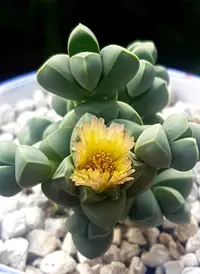
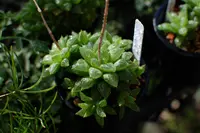
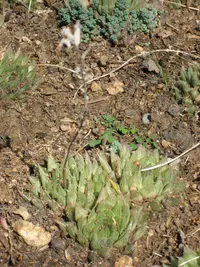
Rock pine (Orostachys japonica) is a small, cold-hardy succulent from East Asia, often found on rocky slopes and dry grasslands. It forms low rosettes with fleshy, pointed leaves that can develop attractive color in strong light. In time, rosettes may produce short flower spikes and slowly spread to form a compact mat. This species stays relatively small, which makes it suitable for containers, rock gardens, and troughs. Its drought tolerance and slow growth habit make it fairly low maintenance if given sharp drainage and plenty of light. Understanding how to care for rock pine starts with mimicking its naturally dry, open habitats.

Main Plant Requirements

Care Difficulty

Easy Care

Light Preference

Full Sun

Water Requirements

Low Water

Temperature Preference

Cold Hardy

Hardiness Zone

4–9

Soil Texture

Sandy, Loamy, Rocky

Soil pH

Slightly acidic (6.5–7.0), Neutral (7.0)

Soil Drainage

Well-drained

Fertilization

Minimal (feed rarely)

Get Personalized Care Plan

Scan your plant to receive care tips personalized for your specific plant

Available on iOS and Android

How to Care for the rock pine

This hardy alpine succulent needs bright light to stay compact and maintain strong rosettes.

  • Provide 6–8 hours of direct sun daily outdoors, ideally with morning sun and light afternoon shade in hotter regions.
  • Tolerates light partial shade (3–4 hours sun), but rosettes may stretch and lose color if light falls below this level.
  • In very intense summer sun, especially in the south, protect rock pine from scorching by giving thin shade cloth or positioning near light-filtering rocks.

Watering for this species should mimic dry, rocky habitats with brief wet periods and fast drainage.

  • Allow soil to dry thoroughly between waterings; at least the top 3–5 cm should feel dry before adding water.
  • During active growth in spring and early summer, water deeply but infrequently, then reduce sharply in late summer and keep almost dry in winter dormancy.
  • Use very fast-draining, gritty soil to prevent root rot; overwatering shows as mushy, yellowing rosettes, while severe underwatering causes shriveling leaves.

This cold-hardy succulent tolerates a wide temperature range but grows best in moderate conditions.

  • Optimal growth occurs around 60–75°F (16–24°C), with best rosette formation in cooler, bright conditions.
  • Mature plants typically survive down to about -10°F (-23°C) in dry, well-drained soil, though repeated freeze-thaw cycles can damage roots.
  • Handles summer heat up to about 90–95°F (32–35°C) if soil is very free-draining and the crown stays dry; prolonged heat with high humidity increases rot risk.

This species prefers dry air and does not require elevated humidity.

  • Aim for 30–50% humidity, similar to typical indoor air, avoiding steamy bathrooms or kitchens.
  • Rock pine tolerates very dry air but may stretch or lose compact rosettes if combined with low light and overwatering.
  • If air is extremely dry and hot, increase humidity slightly by grouping pots together rather than misting, which can promote rot.

This succulent needs a very fast-draining, mineral-based substrate to prevent root rot.

  • Use a gritty, sandy mix such as 50–70% mineral material (coarse sand, pumice, or perlite) with 30–50% lean potting mix or fine gravel.
  • Ensure the structure is loose and airy so water drains in seconds, not minutes, and the mix does not compact over time.
  • Aim for slightly acidic to neutral pH around 6.0–7.0, avoiding strongly acidic or strongly alkaline substrates that can limit nutrient uptake.
  • To improve drainage, raise plants in shallow, wide containers or rock crevices and avoid high organic content such as peat-heavy mixes.

This species is very suitable for container growing, especially in shallow, wide pots or troughs.

  • Choose a broad, shallow container to match the shallow root system and support spreading rosettes without water pooling in depth.
  • Select unglazed terracotta or similarly porous material to let excess moisture evaporate quickly from the root zone.
  • Elevate the pot on feet or mesh so drainage holes stay clear and runoff leaves the container area rapidly after watering.

This small succulent needs only light feeding to stay healthy in typical home or rock garden conditions.

  • Use a diluted balanced liquid fertilizer (around 10-10-10) at 1/4–1/2 strength during active growth in spring–summer.
  • Apply no more than once every 4–6 weeks for Orostachys japonica in containers; in-ground plants often need none.
  • Avoid high-nitrogen products, which cause weak, stretched growth and reduce compact rosettes typical of rock pine.
  • Stop feeding in fall and winter dormancy to prevent soft, frost-sensitive tissue.

This plant needs minimal pruning, mainly to keep rosettes tidy and disease free.

  • Best time to prune Orostachys japonica is late spring to early summer, after new growth has settled.
  • Snip off dead flower stalks and withered rosettes at the base to maintain a clean, compact appearance.
  • Remove any damaged or diseased leaves with clean, sharp scissors to limit rot and fungal spread.
  • Thin crowded offsets slightly if rosettes are shading each other, improving airflow and light exposure.

Container-grown plants benefit from occasional transplanting to maintain drainage and avoid root congestion.

  • Check for roots circling the pot, slow growth, or soil that dries out very fast as signs repotting is needed.
  • Shift to a slightly wider, shallow container every 2–3 years in early spring, using a gritty, fast-draining mix.
  • Gently loosen the root ball and remove old, compacted soil to reduce stress and restore aeration.
  • Water lightly after transplanting and keep in bright, indirect light for 3–5 days before returning to full sun.

This species is commonly multiplied by offsets, with seeds used less often for home growers.

  • Divide and replant offsets in late spring to early summer, when rosettes are actively growing.
  • Gently detach small rosettes with some roots attached and place on well-draining, barely moist succulent mix.
  • Provide bright, indirect light and good airflow; keep soil just slightly moist until roots establish.
  • Seeds of Orostachys japonica need a gritty surface, light, and cool to mild temperatures for steady germination.

This hardy succulent usually manages winter well in the ground but needs more attention in containers.

  • Most established clumps tolerate frost and snow, especially in well-drained soil.
  • Apply a light gravel or coarse sand mulch around the crown to keep leaves off wet winter soil.
  • Move containers under a cold, sheltered, bright roofed area to avoid saturation and freeze–thaw stress.
  • Water very sparingly in winter, just enough to prevent total desiccation of the root system.

Care Tips

Winter dormancy handling

Allow rosettes to experience a cool, dry winter rest outdoors or in a cold frame, reducing water to almost zero so the plant can complete its natural dormancy cycle and form stronger offsets in spring.

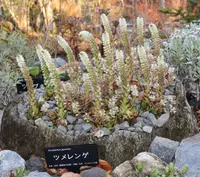
Offset ring thinning

When the rosette forms a dense ring of pups, remove some inner, weaker offsets with clean tweezers so remaining rosettes have better airflow and space to expand without rotting at the base.

Rock crevice planting

Tuck individual rosettes into narrow rock crevices or between stacked pavers filled with gritty mix to stabilize shallow roots, improve drainage, and create the compact, mound-forming habit this species shows in the wild.

Seed head management

After flowering, cut back spent flowering stems before seeds fully mature if you want to prevent uncontrolled self-seeding, or leave a few to dry and collect seed for controlled propagation in trays.

Mobile container staging

Grow this species in small, lightweight pots or shallow pans so containers can be moved under cover during prolonged rain, which reduces the risk of crown rot and makes caring for rock pine more predictable in wet climates.

Common Pests and Diseases

Mealybugs

This pest feeds on succulent leaves and rosettes, causing distortion, slow growth, and sticky honeydew on the plant surface.

Solution

Remove visible insects with a cotton swab dipped in 70% isopropyl alcohol, then rinse the plant gently and improve air movement and light. For heavier infestations, apply a light horticultural soap or neem oil spray, repeating every 7–10 days while keeping the foliage dry between treatments.

Aphids

These insects cluster on tender rosette centers and flower stalks, sucking sap and leaving behind sticky honeydew that can attract sooty mold.

Solution

Dislodge aphids with a firm stream of water, then inspect regularly and squash any remaining colonies by hand. If needed, use an insecticidal soap applied in the early morning, avoiding strong sun until the foliage is dry.

Fungal leaf spots

This disease appears as small brown or black lesions on the fleshy leaves, often starting where water sits on the rosette or where airflow is poor.

Solution

Remove and discard affected leaves, then allow the plant to dry thoroughly and increase spacing and airflow around the rosettes. Water at the soil level in the morning and, in persistent cases, use a sulfur or copper-based fungicide labeled for succulents, following directions carefully.

Crown rot

This disease causes the central rosette to turn mushy and collapse, usually after prolonged moisture in the crown or poorly draining soil.

Solution

Discard severely affected plants, as advanced crown rot cannot be reversed, and start new plants from healthy offsets if available. To prevent problems when growing rock pine, use a gritty, fast-draining mix, avoid watering into the rosette, and allow the soil to dry fully between waterings.

Interesting Facts

Winter rosette strategy

This species forms tight, flattened rosettes that overwinter in cold climates, allowing the plant to tolerate freezing temperatures on exposed rock and soil surfaces in parts of East Asia.

Monocarpic flowering habit

Individual rosettes are monocarpic, meaning each rosette flowers once, produces seeds, and then dies, while offsets around the base continue the colony.

Rock-face specialist

In the wild it commonly anchors itself in thin soil pockets on cliffs, rocky slopes, and old stone structures, using a shallow but dense root system to exploit limited moisture and nutrients.

Botan icon

Did you know?

This species naturally occurs from lowland areas up into cool montane zones in northeastern Asia, making it one of the few small succulents adapted to both strong seasonal cold and high light levels typical of continental climates.

FAQs about rock pine

Flowering usually occurs after rosettes mature, often in the second or third year. Lack of blooms often relates to insufficient light, excessive nitrogen fertilizer, or disturbance of older rosettes that would normally send up the flowering stalk.

Grow Healthy Plants with Botan Care

Keep your plants happy and healthy with plant identification, disease detection, and easy care guidance.

Botan plant care app — identify plants on mobile

Explore More Plants