

Substrate anchoring
Press small pieces of this moss gently but firmly into the cracks of bark, rock, or compacted soil so the fine rhizoids can attach and form a stable mat instead of drying and blowing away.

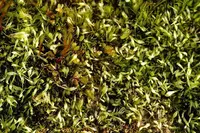
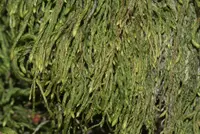
Cape thread-moss (Orthodontium lineare) is a small, fine-stemmed moss that forms loose, threadlike tufts rather than dense cushions. Its upright, needle-like leaves give it a delicate, bristly texture.
This moss naturally occurs on acidic, often shaded substrates such as rotting wood, rock, and tree bases, especially in humid, temperate regions. It is relatively undemanding but expects consistent moisture and clean, unpolluted conditions.
Because it has no true roots and absorbs water and nutrients across its surface, it reacts quickly to drying winds or heavy handling. Gardeners who want to care for Cape Thread-moss should focus on gentle moisture, stable shade, and low physical disturbance.

Care Difficulty
Moderate Care

Light Preference
Partial Shade

Water Requirements
Keep Soil Moist

Temperature Preference
Cool Climate

Hardiness Zone
5–9

Soil Texture
Loamy, Silty, Organic-rich

Soil pH
Strongly acidic (4.5–5.5), Acidic (5.5–6.5)

Soil Drainage
Moist but well-drained

Fertilization
Minimal (feed rarely)
Scan your plant to receive care tips personalized for your specific plant
Available on iOS and Android
Orthodontium lineare thrives in cool, shaded habitats with soft, indirect light.
Orthodontium lineare prefers consistently moist conditions without waterlogging.
This moss is adapted to cool, temperate conditions and dislikes extreme heat or hard freezes.
This moss prefers consistently moist air and substrate to maintain dense growth.
This moss thrives on moist, finely textured, acidic, organic-rich substrates rather than standard potting mixes.
This species is suitable for container culture, especially in shallow trays or terrarium setups.
Orthodontium lineare needs very little feeding, especially when grown on natural substrates like rocks, logs, or soil in shaded sites.
Pruning Orthodontium lineare is minimal and mainly serves to keep the moss mat tidy and healthy.
This moss is usually transplanted rather than repotted, since Orthodontium lineare is often grown on stones, wood, or shallow trays.
Orthodontium lineare is commonly multiplied by simple division and reattachment of small mats rather than by spores in home culture.
Outdoor Orthodontium lineare is generally cold hardy in temperate climates and usually needs no special winter care.

Plant Health Check
Not sure what's wrong with your plant? Check your plant's health inside the app.
This moss forms very narrow, straight leaves that give each shoot a stiff, bristle-like look, which is why it is often called Cape thread-moss. The leaves are arranged densely around the stem, creating a fine, hair-like texture distinct from many broader-leaved mosses.
Orthodontium lineare commonly colonizes the bark of trees and shrubs, especially in mildly acidic conditions, rather than spreading mainly on soil or rocks. In many regions it has become characteristic on the trunks and branches of conifers and other acid-barked hosts in humid, shaded habitats.
Although native to the Southern Hemisphere, this species has established stable populations in parts of Europe and North America after accidental introduction. Its tolerance of air pollution and disturbed habitats has helped it spread in urban and suburban environments.
Growth is slow to moderate, usually forming small patches that expand a few millimeters to a couple of centimeters per year. Rate depends strongly on constant moisture, cool temperatures, and clean, unpolluted surfaces such as stone, bark, or compact soil.
Keep your plants happy and healthy with plant identification, disease detection, and easy care guidance.

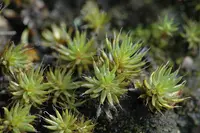
polytrichum moss
Polytrichum piliferum
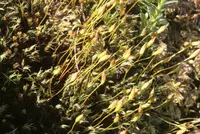
alpine polytrichastrum moss
Polytrichastrum alpinum
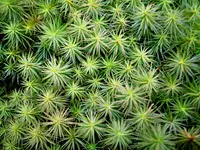
juniper polytrichum moss
Polytrichum juniperinum
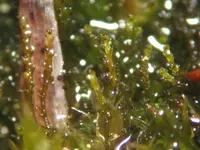
Spreading Threadwort
Cephaloziella divaricata
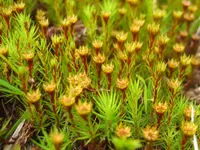
polytrichum moss
Polytrichum strictum
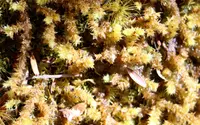
pipe-cleaner moss
Ptychomnion aciculare
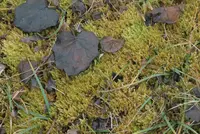
Lindberg's Hypnum Moss
Calliergonella lindbergii
pterigynandrum moss
Pterigynandrum filiforme