

Rock Crevice Mounting
Tuck the moss into shallow cracks of porous rocks or bark using soft nylon mesh or cotton thread, which stabilizes the fine stems and helps them attach quickly without drying out.

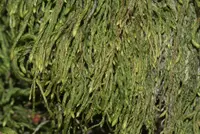
Pterigynandrum filiforme, often called pterigynandrum moss, is a small, creeping bryophyte that forms fine, feathery mats on bark, rocks, and soil. Its slender, thread-like stems create a soft, green carpet with a delicate texture.
This moss occurs mainly in temperate regions, especially in moist forests where humidity stays relatively high and air movement is gentle. It is generally considered moderate in difficulty, as it needs constant moisture and clean, low-pollution conditions to stay healthy.
Those who want to learn how to care for pterigynandrum moss should know it prefers cool, shaded locations, steady moisture, and stable surfaces with minimal disturbance.

Care Difficulty
Moderate Care

Light Preference
Shade

Water Requirements
Keep Soil Moist

Temperature Preference
Cool Climate

Hardiness Zone
Unknown

Soil Texture
Peaty, Organic-rich, Loamy

Soil pH
Strongly acidic (4.5–5.5), Acidic (5.5–6.5)

Soil Drainage
Moist but well-drained

Fertilization
Minimal (feed rarely)
Scan your plant to receive care tips personalized for your specific plant
Available on iOS and Android
This moss prefers soft, indirect light that mimics shaded rock or bark habitats.
This species depends on consistent surface moisture but does poorly in stagnant, waterlogged conditions.
This moss is cool to mild climate adapted and tolerates a fairly broad outdoor temperature range when moisture is stable.
This moss prefers consistently moist air and reacts quickly to dry conditions.
This species anchors best in moist, airy, organic-rich substrates rather than dense mineral soil.
This moss can be grown in shallow containers or terraria when moisture and airflow are balanced carefully.
This moss typically needs no fertilizer when grown on suitable bark or rock, as it draws nutrients from rainwater and dust.
Pterigynandrum filiforme requires almost no structural pruning, only light tidying to maintain an even carpet.
This species is usually grown on bark, rock, or outdoor surfaces, so transplanting matters more than container repotting.
Propagation of this moss is simple and relies on division of existing mats rather than spores for most growers.
This moss is quite cold hardy in much of its range and usually needs minimal winter attention outdoors.

Plant Health Check
Not sure what's wrong with your plant? Check your plant's health inside the app.
This moss often grows tightly attached to siliceous rocks along cold, clean mountain streams and waterfalls, where constant spray and high humidity provide the stable moisture it needs to form dense mats.
Its very slender, elongated shoots with closely overlapping leaves give a distinctly wiry, filiform appearance, which is a key field character for recognizing this species among other pleurocarpous mosses.
Because it favors unpolluted, well-oxygenated stream habitats and is sensitive to changes in water quality, its presence is often associated with relatively undisturbed, low-nutrient freshwater ecosystems.
This species spreads slowly to moderately by creeping stems and fragmentation. It usually forms low mats rather than thick carpets. In controlled spaces like terrariums or small displays, it is unlikely to become troublesome or overwhelming.
Keep your plants happy and healthy with plant identification, disease detection, and easy care guidance.

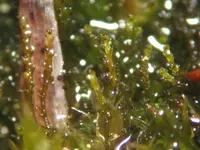
Spreading Threadwort
Cephaloziella divaricata
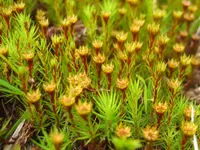
polytrichum moss
Polytrichum strictum
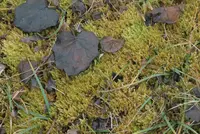
Lindberg's Hypnum Moss
Calliergonella lindbergii
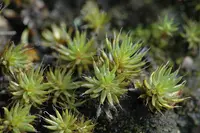
polytrichum moss
Polytrichum piliferum
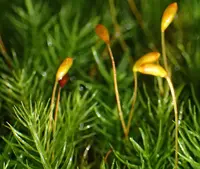
pyrrhobryum moss
Pyrrhobryum spiniforme
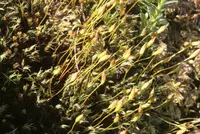
alpine polytrichastrum moss
Polytrichastrum alpinum
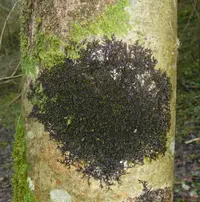
Dilated Scalewort
Frullania dilatata
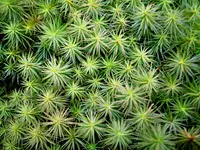
juniper polytrichum moss
Polytrichum juniperinum