

Rocky anchor points
Press small flat stones or rough lava rock firmly onto the moss cushions to provide extra anchoring surfaces and reduce mechanical damage from rain, irrigation, or handling.

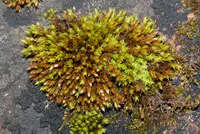
Orthotrichum cupulatum is a small, cushion-forming moss that often grows on rocks, concrete, and tree bark. It forms tight, tufted mats of fine green leaves that can tolerate periods of drying.
This moss is common in temperate regions, especially in urban areas where it colonizes walls and roofs as well as natural cliffs. Its ability to withstand fluctuating moisture and moderate air pollution makes it relatively robust.
For those learning how to care for orthotrichum moss, it helps to know that this species prefers bright, indirect light, cool to mild temperatures, and a stable, slightly moist surface without heavy disturbance.

Care Difficulty
Moderate Care

Light Preference
Partial Shade

Water Requirements
Moderate Water

Temperature Preference
Cold Hardy

Hardiness Zone
4–8

Soil Texture
Rocky, Organic-rich

Soil pH
Acidic (5.5–6.5)

Soil Drainage
Moist but well-drained

Fertilization
Minimal (feed rarely)
Scan your plant to receive care tips personalized for your specific plant
Available on iOS and Android
This moss prefers cool, soft light that mimics shaded rock or tree habitats.
Moisture should be steady but brief drying between waterings helps prevent rot.
This species is adapted to cool to mild climates with good air movement.
This moss prefers cool, moist air but tolerates moderate household conditions if not allowed to dry out completely.
Orthotrichum cupulatum anchors best on a firm, well-aerated, mineral-based surface rather than deep, loose potting mixes.
This species can be grown in shallow containers if the setup mimics a stable, rocky surface.
This moss is adapted to low-nutrient habitats and usually needs no additional fertilizer in outdoor settings.
Pruning needs for Orthotrichum cupulatum are minimal and mainly cosmetic.
Transplanting is only needed when relocating moss patches or refreshing a display surface.
Propagation of Orthotrichum cupulatum is typically done by vegetative division rather than from spores at home.
This moss is generally cold hardy and requires little specific winter care in temperate climates.

Plant Health Check
Not sure what's wrong with your plant? Check your plant's health inside the app.
This species is unusually successful at colonizing human-made substrates such as concrete, brick, and old mortar, especially in dry, polluted urban areas across Europe and parts of North America.
It copes with prolonged dryness by rapidly desiccating and then rehydrating when water returns, a survival strategy that allows stable populations on exposed walls, rocks, and tree bark.
Compared with many other mosses on bark and stone, it tolerates moderate air pollution, which makes it a useful indicator species for studying how bryophytes respond to urban environments.
Growth is slow to moderate. Small tufts usually expand a few millimeters to about 1 cm per year, depending on moisture, light, and surface texture. Stable, cool, humid conditions support the steadiest expansion of cushions over time.
Keep your plants happy and healthy with plant identification, disease detection, and easy care guidance.

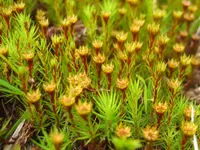
polytrichum moss
Polytrichum strictum

Trentepohlia jolithus
Trentepohlia jolithus
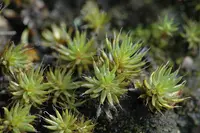
polytrichum moss
Polytrichum piliferum
Spreading Threadwort
Cephaloziella divaricata
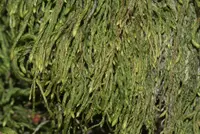
pterigynandrum moss
Pterigynandrum filiforme
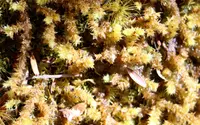
pipe-cleaner moss
Ptychomnion aciculare

juniper polytrichum moss
Polytrichum juniperinum
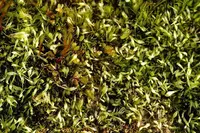
Cape Thread-moss
Orthodontium lineare