

Substrate choice
Grow this alga on rough, porous surfaces such as unglazed stone, old mortar, or textured bark, since its filaments attach and spread more reliably on materials with micro-crevices than on smooth plastic or glass.

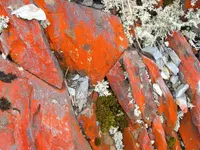
Trentepohlia jolithus is an orange to reddish filamentous alga, not a typical houseplant. It often forms velvety patches or crusts on tree bark, rocks, and walls. The vivid color comes from carotenoid pigments that mask the usual green of chlorophyll.
This species occurs mainly in humid, temperate to subtropical regions, where air moisture and shade are consistent. It is opportunistic and can colonize many surfaces, which makes it easy to encounter but not always easy to manage. To care for Trentepohlia jolithus in cultivation, conditions must stay moist, shaded, and relatively clean of competing algae or mosses.

Care Difficulty
Moderate Care

Light Preference
Partial Shade

Water Requirements
Keep Soil Moist

Temperature Preference
Warm Climate

Hardiness Zone
Unknown

Soil Texture
Rocky, Organic-rich

Soil pH
Acidic (5.5–6.5)

Soil Drainage
Moist but well-drained

Fertilization
Minimal (feed rarely)
Scan your plant to receive care tips personalized for your specific plant
Available on iOS and Android
This crust-forming alga prefers bright, indirect outdoor light with only brief direct sun.
This species favors consistently moist surfaces rather than true soil watering cycles.
This alga is adapted to mild, humid climates with limited temperature extremes.
This filamentous alga prefers consistently humid air and surface moisture to thrive.
This species is usually epiphytic or saxicolous, so treat soil more as a moisture-retentive substrate surface than a true rooting medium.
This alga can be grown in shallow containers mainly as a moist display surface rather than a rooted potted plant.
This crust-forming alga usually obtains enough nutrients from its substrate and surrounding moisture, so Trentepohlia jolithus rarely benefits from intentional fertilization in garden or indoor settings.
Pruning is generally unnecessary for Trentepohlia jolithus, which forms natural patches or films on bark, rock, or other surfaces without needing structural control.
Transplanting Trentepohlia jolithus is seldom required, as it behaves more like a surface biofilm than a conventional potted plant.
Propagation of Trentepohlia jolithus is mainly of scientific interest and is not a routine task for home growers, so planned propagation steps are rarely applied.
In most temperate climates, Trentepohlia jolithus manages winter without special intervention, functioning as an outdoor surface alga rather than a tender ornamental plant.

Plant Health Check
Not sure what's wrong with your plant? Check your plant's health inside the app.
This alga produces tiny wind-dispersed spores that readily colonize exposed rock and bark surfaces, which helps explain its scattered but repeatedly observed occurrences on calcareous substrates in Europe and North America.
It is frequently recorded on limestone and other calcareous rocks, where the slightly alkaline, mineral-rich surface film supports its growth as an orange to reddish crust-like layer.
Trentepohlia jolithus often serves as the photobiont (photosynthetic partner) in certain crustose lichens, contributing carbohydrates to the fungal partner while gaining protection and stable moisture conditions.
This filamentous alga performs best outdoors on naturally damp, shaded surfaces such as rocks, tree bark, or masonry. Indoors it is difficult to keep stable moisture, airflow, and light balance, so long‑term culture is challenging for most growers.
Keep your plants happy and healthy with plant identification, disease detection, and easy care guidance.

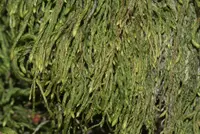
pterigynandrum moss
Pterigynandrum filiforme
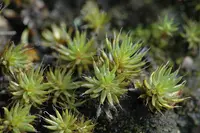
polytrichum moss
Polytrichum piliferum
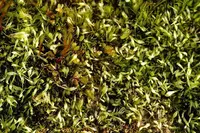
Cape Thread-moss
Orthodontium lineare
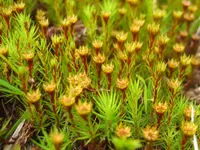
polytrichum moss
Polytrichum strictum
alpine polytrichastrum moss
Polytrichastrum alpinum
Spreading Threadwort
Cephaloziella divaricata
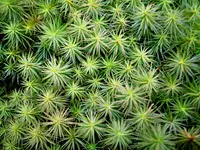
juniper polytrichum moss
Polytrichum juniperinum
pipe-cleaner moss
Ptychomnion aciculare