Cool root management
Use a thick topdressing of fine bark or fern fiber over the potting mix to keep roots cool and evenly moist, which reduces stress and frond drop in warm indoor conditions.

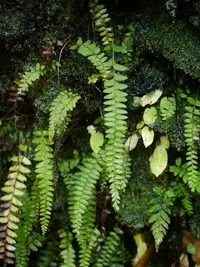
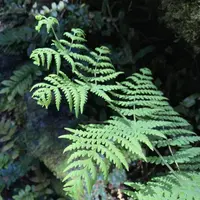
Osmolindsaea odorata is a small to medium-sized tropical fern with delicate, finely divided fronds and a softly arching habit. It typically forms loose clumps that lend a light, airy look.
This species occurs in humid forests of Southeast Asia, usually in shaded to semi-shaded sites with consistently moist conditions. Its preference for stable humidity and gentle light means it can be moderately challenging indoors without careful monitoring.
Those who care for Osmolindsaea odorata should focus on providing even moisture, good drainage, and protection from harsh sun, which helps maintain healthy fronds and steady growth.

Care Difficulty
Moderate Care

Light Preference
Partial Shade

Water Requirements
Keep Soil Moist

Temperature Preference
Tropical / Frost Sensitive

Hardiness Zone
Unknown

Soil Texture
Loamy, Peaty, Organic-rich

Soil pH
Acidic (5.5–6.5)

Soil Drainage
Moist but well-drained

Fertilization
Minimal (feed rarely)
Scan your plant to receive care tips personalized for your specific plant
Available on iOS and Android
This shade-loving fern prefers soft, filtered light that mimics a forest understory.
This fern favors consistently moist but not waterlogged soil around its shallow roots.
This species prefers mild, frost-free conditions with stable, moderate temperatures.
This fern prefers consistently moist air and reacts quickly to dry indoor conditions.
This species favors a loose, humus-rich substrate that drains freely yet stays evenly moist.
This fern adapts well to container culture when the pot supports its shallow, fibrous root system.
This fern benefits from light, consistent feeding rather than heavy fertilization.
Pruning needs are modest and focus on hygiene rather than shaping.
Container specimens handle disruption poorly, so repot or transplant only when clearly necessary.
Propagation is usually done in specialist settings, as this species can be slow and particular about conditions.
This fern prefers mild, frost-free conditions and benefits from simple winter protection in colder climates.

Plant Health Check
Not sure what's wrong with your plant? Check your plant's health inside the app.
This species produces a noticeable sweet, resinous scent from its fronds, which is unusual among ferns and is the origin of the epithet odorata, meaning fragrant or scented.
In its native range in tropical Asia, this fern typically grows on moist forest floors and stream banks, often forming colonies in shaded, humid microhabitats with steady moisture but not constant flooding.
The fronds show evenly spaced, opposite pinnae (leaflets) along a slender, dark rachis, giving a very regular, ladderlike appearance that helps distinguish it from many other small woodland ferns.
This species has a moderate growth rate. Under stable warmth, high humidity, and consistently moist but not waterlogged substrate, new fronds appear steadily through the growing season, with clumps enlarging noticeably over several years rather than months.
Keep your plants happy and healthy with plant identification, disease detection, and easy care guidance.