Pot depth choice
Use a wide, shallow pot rather than a deep one to keep the fibrous roots in the warm, top layer of the mix and to reduce the risk of the root ball staying wet for too long.

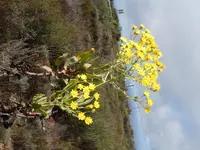
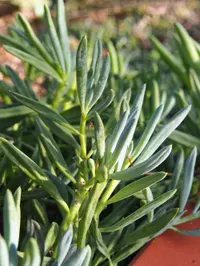
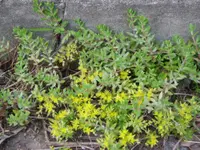
Poorflower babooncabbage, Othonna parviflora, is a small, clumping succulent from arid regions of South Africa. It forms low mounds of fleshy, often cylindrical leaves on branched stems. In season it produces small, daisy-like yellow flowers on slender stalks, giving it a fine-textured look rather than a showy display. The plant is adapted to strong light, lean, very well-drained soil, and dry periods, which makes it suitable for rock gardens and containers in warm, dry climates. Its drought tolerance and compact size can make it straightforward to care for Poorflower Babooncabbage if overwatering is avoided.

Care Difficulty
Moderate Care

Light Preference
Full Sun

Water Requirements
Low Water

Temperature Preference
Warm Climate

Hardiness Zone
10–11

Soil Texture
Sandy, Loamy, Rocky

Soil pH
Slightly acidic (6.5–7.0), Neutral (7.0)

Soil Drainage
Well-drained

Fertilization
Minimal (feed rarely)
Scan your plant to receive care tips personalized for your specific plant
Available on iOS and Android
This succulent prefers bright, open conditions that mimic its sunny native habitat for healthy growth.
This drought-tolerant succulent needs infrequent, careful watering to prevent root rot.
This plant prefers warm, dry conditions and reacts poorly to hard frost or prolonged cold.
This succulent tolerates a wide humidity range and rarely needs special humidity control indoors.
This species needs a very fast-draining, mineral-rich soil to prevent root rot.
This compact succulent is very suitable for container growing.
This drought-adapted succulent needs minimal feeding, as Poorflower Babooncabbage is naturally efficient in low-nutrient soils.
Othonna parviflora benefits from light, targeted pruning to maintain a compact, healthy form.
This species grows slowly and prefers a stable root environment, so container repotting or garden transplanting should be infrequent.
This succulent is commonly propagated from stem cuttings or seeds when increasing plant numbers is desired.
Othonna parviflora has limited frost tolerance and benefits from basic winter precautions in cooler climates.

Plant Health Check
Not sure what's wrong with your plant? Check your plant's health inside the app.
This species is a compact, winter-growing succulent from the winter-rainfall regions of South Africa, staying mostly dormant in the hot, dry summer and resuming active growth with the cool season rains.
Its leaves are very slender, almost threadlike, yet still succulent, an adaptation that reduces surface area and water loss while storing enough moisture to survive in rocky, arid habitats.
It produces small yellow flower heads typical of the daisy family Asteraceae, with each head made up of many tiny florets that together attract a range of small pollinating insects in its native habitat.
This species usually blooms in late winter to spring, producing small yellow daisy-like flowers on slender stalks above the foliage. Flowering is often strongest after a cool, dry rest followed by slightly increased moisture.
Keep your plants happy and healthy with plant identification, disease detection, and easy care guidance.