

Summer growth reset
After the main flowering flush, lightly pinch back soft, elongated stems to encourage a compact dome of new growth and more branching for the next season.

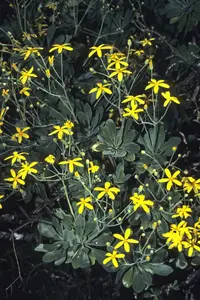
Thicket baboon-cabbage (Othonna triplinervia) is a small shrubby succulent from the daisy family, valued for its swollen, woody base and drought tolerance. It typically forms a compact, branching plant with fleshy leaves and bright yellow, daisy-like flowers that appear seasonally. Native to arid and semi-arid regions of South Africa, it is adapted to strong light, dry air, and infrequent rainfall.
This species suits growers who enjoy slow-growing, sculptural succulents rather than fast, leafy plants. It is generally considered manageable for beginners who are careful not to overwater. Understanding how to care for Thicket Baboon-Cabbage starts with providing strong light, excellent drainage, and allowing the soil to dry between waterings.

Care Difficulty
Moderate Care

Light Preference
Full Sun

Water Requirements
Low Water

Temperature Preference
Warm Climate

Hardiness Zone
9–11

Soil Texture
Sandy, Loamy, Rocky

Soil pH
Slightly acidic (6.5–7.0), Neutral (7.0)

Soil Drainage
Well-drained

Fertilization
Minimal (feed rarely)
Scan your plant to receive care tips personalized for your specific plant
Available on iOS and Android
This succulent shrub thrives in bright, open conditions with strong but not extreme sun exposure.
This species prefers infrequent, deep watering and dries quickly between soakings.
This drought-adapted plant prefers warm, dry air and mild seasonal variation without hard frost.
This succulent tolerates a wide humidity range and rarely needs special humidity management.
This species needs sharply draining, mineral-based soil to protect its succulent roots from rot.
This species is well suited to container growing, especially in climates with cold or wet winters.
Othonna triplinervia is a low-feeding succulent shrub that benefits from light nutrition during active growth.
Othonna triplinervia needs only light, strategic pruning to maintain a compact, healthy form.
This species prefers stable conditions, so repotting or transplanting Othonna triplinervia should be infrequent and gentle.
Othonna triplinervia is most commonly propagated from semi-ripe stem cuttings or seeds under warm, dry-leaning conditions.
This succulent shrub dislikes prolonged freezing, so some winter care is helpful in colder climates.

Plant Health Check
Not sure what's wrong with your plant? Check your plant's health inside the app.
This species is a small, woody, succulent shrub from winter-rainfall regions of South Africa and Namibia, producing fleshy, water-storing stems and leaves that allow it to stay active in the cool, wet season and rest during the hot, dry summer.
Its name triplinervia refers to the characteristic three main veins visible on each leaf blade, a feature that helps distinguish it from many other small yellow-flowered members of the daisy family Asteraceae.
The plant bears bright yellow, daisy-like flower heads on slender stalks, which are typical composite inflorescences of the Asteraceae, with many tiny florets grouped together to function as a single, showy flower for pollinators.
This species usually flowers in late winter to spring, producing small, daisy-like yellow blooms on wiry stems above the foliage. Flowering often coincides with its active growth season after a relatively dry rest period.
Keep your plants happy and healthy with plant identification, disease detection, and easy care guidance.

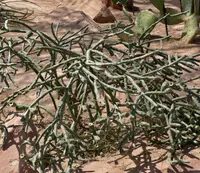
Arizona pencil cholla
Cylindropuntia arbuscula
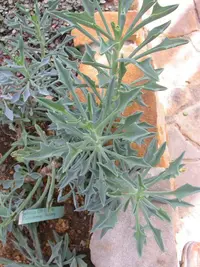
spear head
Senecio kleiniiformis
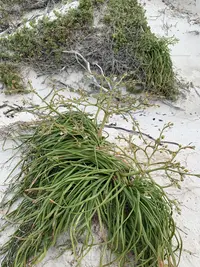
Branch Capespinach
Trachyandra divaricata
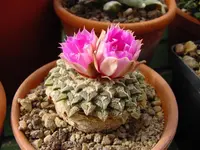
star rock
Ariocarpus kotschoubeyanus
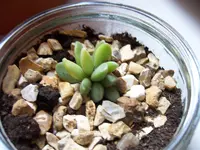
Adromischus schuldtianus
Adromischus schuldtianus
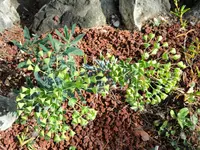
Copper Brightfig
Lampranthus glaucoides
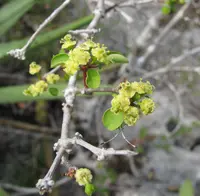
Euphorbia schlechtendalii
Euphorbia schlechtendalii
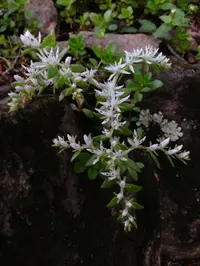
woodland stonecrop
Sedum ternatum