Seasonal dormancy rest
After flowering slows and foliage begins to tire, gradually reduce watering and allow the bulbs to dry slightly for 6–8 weeks, which helps reset the plant and promotes stronger growth in the next cycle.

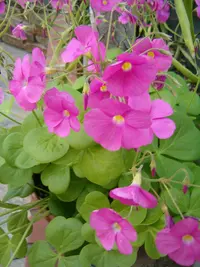
Red-flower woodsorrel (Oxalis bowiei) is a bulb-forming perennial often grown as a small ornamental for pots, rock gardens, or mixed borders. It produces bright pink to red funnel-shaped flowers above soft, clover-like leaves.
This species comes from South Africa, where it grows in open, sunny spots with well-drained soil and a marked dry rest period. In cultivation it tends to form dense clumps and may spread by bulbs where conditions are mild.
Its main traits are fast growth in the active season, a clear dormant phase, and moderate tolerance to short dry spells, which makes it fairly forgiving if not overwatered. Light, free-draining soil and bright light make it easier to care for red-flower woodsorrel.

Care Difficulty
Moderate Care

Light Preference
Partial Sun

Water Requirements
Moderate Water

Temperature Preference
Tropical / Frost Sensitive

Hardiness Zone
9–11

Soil Texture
Loamy, Sandy, Organic-rich

Soil pH
Acidic (5.5–6.5), Slightly acidic (6.5–7.0)

Soil Drainage
Moist but well-drained

Fertilization
Light (every 4–6 weeks)
Scan your plant to receive care tips personalized for your specific plant
Available on iOS and Android
Oxalis bowiei performs best with bright, indirect light and gentle direct sun.
Water to keep the soil lightly moist during active growth, then drier in dormancy.
This species prefers mild, frost-free conditions to grow and flower well.
This species handles typical indoor humidity but shows best growth with slightly moist air.
This bulb-forming species prefers loose, well-aerated, sharply draining soil to prevent rot.
This species is very suitable for container growing due to its clumping, bulb-based habit.
This bulbous perennial benefits from light feeding while actively growing but does not need heavy fertilization.
Light pruning keeps Oxalis bowiei tidy and supports healthy new growth.
This species forms clumps of bulbs that appreciate occasional division and repotting to maintain vigor.
This bulb-forming plant is most commonly propagated by division rather than by seed.
This plant is only moderately cold tolerant and benefits from simple winter precautions in cooler climates.

Plant Health Check
Not sure what's wrong with your plant? Check your plant's health inside the app.
This species is native to moist forest margins and shaded slopes of the Eastern Cape and KwaZulu-Natal in South Africa, where it grows among grasses and low shrubs rather than in open, exposed sites.
It produces relatively tall, slender stalks bearing clusters of bright pink, funnel-shaped flowers that are noticeably larger and more showy than those of many other ornamental Oxalis species.
The plant forms an ovoid, bulb-like tuber that stores starch and water, allowing it to survive seasonal drought and resume growth quickly when conditions improve.

In some mild-climate regions outside its native range, this species has escaped cultivation and naturalized along roadsides and in disturbed habitats, where its persistent underground tubers make it difficult to eradicate once established.
This species forms clumps that gradually expand through underground bulbs. It is not usually aggressive in managed beds, but in mild climates it can self-sow and naturalize. Lift excess bulbs if it starts crowding nearby plants.
Keep your plants happy and healthy with plant identification, disease detection, and easy care guidance.