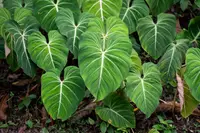
Tuber-based drought pause
Oxalis triangularis survives dry spells by retreating into its small underground tubers, allowing the leaves to die back while the plant waits for moisture to return before resprouting.

This page explains when, how often, and how much to water Oxalis triangularis in straightforward, practical terms.

Water Requirements
Moderate Water

Native to seasonally moist regions, False Shamrock is adapted to soil that dries slightly between rainfall rather than staying wet. Indoors, Oxalis triangularis usually thrives with light, even moisture that never becomes soggy, matching this pattern.
As a starting point for watering False Shamrock, aim for soil that is lightly moist, then allowed to dry a bit between sessions. Container plants typically need closer attention than those in the ground, which benefit from more stable surrounding moisture.
Water when the top 1–2 inches (3–5 cm) of soil feel dry, rather than on a fixed schedule. Oxalis triangularis typically needs water every 5–10 days indoors, but bright light and warm rooms shorten this interval, while lower light or cooler seasons usually extend the time between waterings.
Water False Shamrock when the top 1-2 inches (3-5 cm) of soil feel dry, giving a slow, even soak.
Incorrect moisture levels can stress Oxalis triangularis and gradually weaken overall plant health.
Leaflets sag and close early from dry soil or irregular watering that exhausts stored energy.
Older foliage turns pale or yellow when roots sit in consistently soggy, poorly drained mix.
Crisp margins and papery tips develop when soil alternates between very dry and oversaturated.
Soft, foul-smelling bases indicate prolonged waterlogging, requiring drier conditions and removal of rot.
Keep the potting mix lightly moist, allowing partial drying while avoiding extended dryness or waterlogging.
Unsuitable watering habits disturb Oxalis triangularis’ shallow roots and bulbs, reducing vigor and shortening its natural active and resting cycles.
Safer watering means using a fast‑draining mix, feeling the soil first, then watering deeply while letting excess escape quickly.

Plant Water Guide
Learn how much water your plant needs and keep its routine on track
Use Botan for a simple watering guide and step-by-step care procedures for False Shamrock. The app can also review plant photos to help notice issues early.
Oxalis triangularis survives dry spells by retreating into its small underground tubers, allowing the leaves to die back while the plant waits for moisture to return before resprouting.
In cultivation, extended dryness in summer often triggers a rest phase in Oxalis triangularis, matching its natural tendency to go partially dormant when soil moisture and conditions become less favorable.
After a dry dormancy, thorough watering commonly prompts rapid emergence of new leaves in Oxalis triangularis, reflecting its adaptation to respond quickly to renewed rainfall in its native environment.
Smaller pots dry out faster, so they usually need more frequent watering. Larger pots hold moisture longer and raise the risk of soggy roots. Adjust how often to water based on how quickly the topsoil dries.
Use Botan to quickly review whether your watering schedule matches your plant’s needs.
5 min read · 21 Jul 2026
Summer watering is easy to get wrong. This guide explains when to turn on your sprinkler, how much liquid your grass needs each week, and how to tell if you're overwatering or underwatering.

10 min read · 7 Jul 2026
Bamboo grows extremely fast: some species can reach 5-6 m in just 3-4 months under the right conditions. This guide explains how much bamboo can grow per day, week, and year, and what affects its growth rate.

5 min read · 9 Jul 2026
Banana water can provide potassium and some nutrients that may support plant growth, but it is not a universal fix. Use it carefully and only when the plant actually shows signs of nutrient deficiency rather than as a routine treatment.