

cottonwood Identification (Ozothamnus leptophyllus)

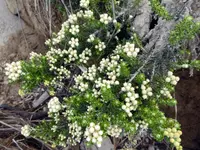
To recognize Ozothamnus leptophyllus, look for a compact woody shrub with many fine branchlets, very narrow linear leaves packed closely along the stems, and small clustered flower heads at the shoot tips.

The leaves are short, slender, and stem-hugging in a dense arrangement, giving the plant a tight, twiggy outline.

Ozothamnus leptophyllus Identification

Identify a Plant by Photo

Upload a clear photo to check your plant identification with Botan.

Clear images work best. Avoid photos taken too close or too far away

Check Ozothamnus leptophyllus for a compact, many-branched shrub form with very fine foliage.

  • Leaves are narrow and linear, about 1/2 to 1 inch (1.5 to 2.5 cm) long, giving the plant a soft, feathery look.
  • Foliage is crowded along the stems rather than widely spaced, so the branchlets look densely covered.
  • Stems are slender and woody, with numerous short side branches that create a bushy outline.
  • Flower heads are small and clustered near stem tips, appearing as tight groups rather than single large blooms.

Dense branching and very narrow leaves are the quickest visual clues.

Ozothamnus leptophyllus shows useful visual shifts in branching, stature, and reproductive structures.

  • Young plant: Young plants are compact and upright, with slender stems carrying narrow leaves densely along the shoots and only limited side branching.
  • Mature plant: Mature plants form a woody, many-branched shrub about 3-6 feet (0.9-1.8 m) tall, with a denser crown and more rigid branch structure.
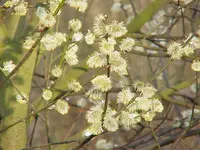
  • Flowering stage: At flowering, branch tips carry clustered small white flower heads, making the outer canopy look paler and more textured than nonflowering shoots.

Ozothamnus leptophyllus stays leafy through the year, so there is no leaf-drop phase that adds much to identification. The clearest seasonal clue is flowering, when clusters of small pale flower heads become visible above the fine foliage, usually from late spring into summer. After bloom, the drying flower heads can persist for a time, keeping a lighter, tufted look on branch tips.

Does Your Plant Match?

Upload a photo to Botan to identify it or confirm your result before labeling, buying, or troubleshooting the wrong plant.

FAQ

The species is most often identified in bloom, when many small white flower heads cluster at shoot tips. For cottonwood identification, flowers are typically visible from late spring into summer, depending on local climate.

More Plant Identification Guides

Find Out What Plant It Is

Use Botan to identify it from a photo, then see plant details, care information, and common problems for that species.

Botan app identifying a plant from a photo
How to Winterize Your Garden in 6 Steps

5 min read · 28 Sept 2026

How to Winterize Your Garden in 6 Steps

Learn how to prepare your garden for winter with a practical six-step checklist covering cleanup, tender plant care, watering, mulching, winter protection, and winterizing equipment and containers.

Plant Care
How to Winterize Your Garden in 6 Steps
12 Best Plants That Repel Spiders For Your Home and Garden

8 min read · 24 Jul 2026

12 Best Plants That Repel Spiders For Your Home and Garden

Spiders constantly appear in places you don't want them. A few common plants can help repel them using scent alone. Here are 12 options suitable for both indoors and outdoors, plus care tips for each.

Plant Recommendations
12 Best Plants That Repel Spiders For Your Home and Garden
Best Fertilizer for Vegetable Gardens – What to Use for Each Plant

11 min read · 20 Jul 2026

Best Fertilizer for Vegetable Gardens – What to Use for Each Plant

Here, you’ll find the right fertilizer formula for vegetables in your garden. Learn how to adjust feeding correctly throughout the growing cycle, spot nutrient deficiencies by their symptoms, and keep your plants healthy and prolific.

Plant Recommendations
Best Fertilizer for Vegetable Gardens – What to Use for Each Plant