gold coin Care (Pallenis maritima)

gold coin

About gold coin

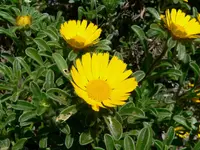
Pallenis maritima, commonly called gold coin, is a compact, low-growing perennial from Mediterranean coastal regions. It forms mounded cushions of small grey-green leaves. Its bright yellow, daisy-like flowers sit close to the foliage and appear over a long season, giving strong color even in exposed sites. The plant naturally tolerates wind, salt spray, and poor, stony soils. These traits make it suitable for rock gardens, coastal gardens, and containers where drainage is sharp and watering is moderate. Sun-loving and drought-tolerant once established, it is considered easy to handle for gardeners learning how to care for gold coin.

Main Plant Requirements

Care Difficulty

Easy Care

Light Preference

Full Sun

Water Requirements

Low Water

Temperature Preference

Warm Climate

Hardiness Zone

8–11

Soil Texture

Sandy, Loamy, Rocky

Soil pH

Slightly acidic (6.5–7.0), Slightly alkaline (7.0–7.5)

Soil Drainage

Well-drained

Fertilization

Minimal (feed rarely)

Get Personalized Care Plan

Scan your plant to receive care tips personalized for your specific plant

Available on iOS and Android

How to Care for the gold coin

This coastal perennial thrives in strong light and benefits from consistent sun exposure.

  • Provide 6–8 hours of direct sun daily; full sun is ideal in most climates, especially with morning and midday exposure.
  • In very hot inland areas, give gold coin light afternoon shade to reduce leaf scorch and flower fade during intense summer sun.
  • In winter or cloudy seasons, prioritize the brightest, most open site, since prolonged shade causes lax, stretched stems and fewer blooms.

This species prefers dry to moderately dry conditions and is highly drought tolerant once established.

  • Allow the top 3–5 cm of soil to dry completely before watering, then soak the root zone and let excess water drain away.
  • Use sharply draining, sandy or gritty soil on a slope or raised area to prevent waterlogging, root rot, and yellowing foliage from excess moisture.
  • In summer heat, watch for slight wilting or dull leaves as a cue to water; in cooler months, reduce watering to only when soil is fully dry.

This Mediterranean coastal plant prefers warm, mild conditions and dislikes hard frost.

  • Optimal growth occurs around 65–80°F (18–27°C), with strong flowering during warm, bright months in well-drained sites.
  • Pallenis maritima typically survives brief drops to about 20–25°F (-6 to -4°C) if soil is very free-draining, but foliage may be damaged.
  • In regions with colder winters, treat it as a tender perennial or protect with mulch, and shield from extreme heat reflecting off walls or pavement.

This coastal species handles dry air well, so humidity control is rarely critical for gold coin.

This coastal perennial prefers very free-draining, sandy soil that never stays waterlogged.

  • Use a sandy or sandy-loam mix with 40–60% sharp sand or grit to mimic its native coastal habitats.
  • Ensure rapid drainage; combine standard potting mix with coarse sand and fine gravel in roughly equal parts.
  • Keep pH slightly alkaline to neutral (pH 7.0–8.0); add a small amount of crushed limestone if soil is acidic.
  • Avoid heavy clay, peat-heavy, or compacted substrates that hold water around the roots for more than 1 day.

This species suits container growing, especially in sunny, exposed spots.

  • Choose a wide, relatively shallow pot that matches its spreading habit and prevents the root zone from staying wet at depth.
  • Use a stable, heavier container material such as ceramic or stone in windy sites to keep the plant from tipping.
  • Raise the pot on feet or spacers so drainage holes stay clear and runoff leaves the container quickly after rain or watering.

Pallenis maritima is a low-feeding coastal perennial, so use light fertilization to support flowering without making growth too soft.

  • Apply a balanced, slow-release fertilizer or light compost top-dressing once in spring as new growth starts, then again mid-summer in poor soils.
  • Use a dilute liquid balanced NPK feed at 1/2–1/4 strength every 4–6 weeks during active growth if container-grown.
  • Avoid high-nitrogen products, which can reduce flowering and make stems floppy, especially in rich substrates.
  • Stop feeding in late summer to allow growth to harden before winter; do not fertilize in winter dormancy.

Pallenis maritima responds well to light, timely pruning that keeps plants dense and flowering well.

  • In late winter or very early spring, lightly shear back leggy stems by 1/3 to refresh compact growth before the season starts.
  • Deadhead faded flower heads through summer to extend blooming and maintain a neat mound.
  • Remove dead, diseased, or storm-damaged stems whenever noticed, cutting back to healthy tissue using clean, sharp snips or secateurs.
  • After heavy flowering flushes, trim stray or crowded shoots to maintain a low, rounded form and good air movement.

This coastal perennial is often grown in the ground, but careful transplanting or occasional repotting keeps plants healthy in containers.

  • Transplant in spring or early fall, when temperatures are mild and soil is workable, to reduce stress.
  • In pots, consider moving to a slightly larger container every 2–3 years, or when roots circle the base and growth slows.
  • Lift plants with as much root ball as possible, keeping roots shaded and moist; replant at the same depth in well-drained, gritty soil.
  • Water thoroughly after transplanting, then keep evenly moist but not waterlogged for 1–2 weeks while roots re-establish; avoid heavy feeding during this period.

This species is commonly propagated to refresh older clumps and to increase plants for coastal or dry, sunny sites.

  • Use semi-ripe stem cuttings in late spring to summer; take 5–8 cm non-flowering tips and remove lower leaves.
  • Insert cuttings into a free-draining sandy mix, keep at 65–75°F with bright, indirect light, and maintain slightly moist but not wet conditions.
  • Divide established clumps in early spring, replanting vigorous outer sections into well-drained soil or containers.
  • Sow seeds in spring on the surface of gritty seed compost, provide light, and keep at moderate warmth until germination.

This Mediterranean perennial is moderately frost tolerant but benefits from simple winter care in colder regions.

  • In USDA zones around 8–10, plants usually overwinter outdoors with little intervention if soil drains sharply.
  • Mulch lightly with gravel or coarse bark around the crown to keep the root zone drier and insulated in wet, cold winters.
  • In colder zones or exposed sites, grow Pallenis maritima in containers and move to a bright, frost-free porch or cool greenhouse.
  • Reduce watering in winter, allowing the top layer of soil to dry, especially for gold coin indoor care.

Care Tips

Salt-wind acclimation

If planting near the coast, harden plants off by keeping them outdoors in a sheltered but breezy spot for 7–10 days so foliage can adapt gradually to salt-laden winds without scorching.

Heat-stress management

In very hot, reflective sites such as near paving or walls, add a light-colored gravel mulch around the base to keep roots cooler and reduce surface evaporation during peak summer heat.

Targeted deadheading

Rather than shearing the whole plant, remove only individual spent flower heads with a short section of stem every 3–4 days to encourage a continuous flush of new blooms with minimal stress to the plant.

Winter drainage check

Before winter rains, test drainage by filling the planting area with water and timing how fast it disappears; if water still stands after 2–3 hours, raise the plant onto a low berm or add gritty material to avoid root loss.

Low-profile edging

Use flat stones or shallow edging around the planting zone to protect the low mounds from foot traffic or hose damage, especially in mixed borders where growing gold coin near paths or patio edges is common.

Everything About gold coin

Common Pests and Diseases

Aphids

These insects cluster on young stems and flower buds, sucking sap and causing distortion, sticky honeydew, and reduced flowering. Symptoms include curled foliage, stunted new growth, and sooty mold developing on the honeydew in humid conditions.

Solution

Rinse colonies off with a firm stream of water, then treat remaining insects with insecticidal soap or a light horticultural oil, repeating weekly until under control. Encourage natural predators such as lady beetles outdoors and avoid high nitrogen fertilization that promotes very soft, aphid‑prone growth when caring for gold coin.

Spider mites

This pest thrives in hot, dry conditions and feeds on leaf undersides, causing fine speckling, dull foliage, and in severe cases, fine webbing. Symptoms include leaves losing their deep green color and looking dusty or stippled.

Solution

Increase humidity around the plant, then wash foliage thoroughly with water to remove mites and webbing. Follow with insecticidal soap or a miticide labeled for ornamental plants, making sure to spray leaf undersides and repeating applications as needed.

Botrytis blight

This disease is a gray mold that attacks fading flowers, damaged leaves, and dense clumps in cool, humid weather. Symptoms include soft, water-soaked spots on petals and foliage that quickly become covered with fuzzy gray mold.

Solution

Remove and discard all affected flowers and leaves, avoid overhead watering, and space plants or thin stems to improve airflow. In persistent wet conditions, a fungicide labeled for Botrytis on ornamentals can be applied preventively to healthy tissue according to label directions.

Powdery mildew

This disease appears as white, powdery patches on leaves and stems, especially in crowded, shaded, or poorly ventilated sites. Symptoms include yellowing, distorted leaves and reduced flowering over time.

Solution

Improve air circulation by thinning surrounding vegetation and avoid wetting the foliage late in the day. Remove heavily affected leaves and, if needed, apply a sulfur or potassium bicarbonate fungicide labeled for powdery mildew on ornamentals, coating both leaf surfaces.

Interesting Facts

Coastal spray specialist

This species naturally grows on rocky sea cliffs and coastal dunes around the Mediterranean, tolerating direct salt spray and saline winds that damage most other ornamentals.

Nighttime flower behavior

Its bright yellow flower heads open fully in strong light and tend to partially close or look less showy in low light or at night, a behavior that helps protect pollen and reproductive parts from moisture and cool temperatures.

True evergreen mounds

In mild coastal climates, this plant forms low, dense, evergreen cushions of foliage that remain green year-round rather than dying back seasonally, which is valuable for gold coin indoor care planning near bright windows.

Botan icon

Did you know?

The leaves and stems of this species have a slightly fleshy, succulent texture that allows the plant to store water and survive in shallow, fast-draining cracks of seaside rocks where soil is scarce and dries out rapidly.

FAQs about gold coin

Lack of flowers usually comes from insufficient light, nutrient-poor or overly rich soil, or old, woody stems. Deadhead spent blooms, trim leggy growth, and avoid heavy nitrogen fertilizers to support repeat flowering through the warm season.

Grow Healthy Plants with Botan Care

Keep your plants happy and healthy with plant identification, disease detection, and easy care guidance.

Botan plant care app — identify plants on mobile

Explore More Plants