common screwpine Care (Pandanus utilis)

common screwpine

About common screwpine

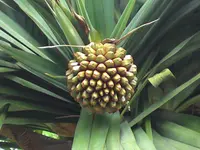
Common screwpine, Pandanus utilis, is an architectural shrub or small tree known for its spiraling rosettes of narrow, blade-like leaves and stout, branching trunk. It often develops prominent prop roots that give it a distinctive, slightly tropical, stilted look.

This species is native to Madagascar and nearby Indian Ocean islands, where it grows in coastal and lowland habitats. In cultivation it is valued as a bold specimen for large indoor spaces, warm conservatories, and subtropical gardens.

Its tough foliage, slow to moderate growth, and tolerance of heat, salt, and short dry periods make it fairly resilient, though the sharp leaf margins require careful handling. To care for common screwpine, provide bright light, well-drained soil, and steady but not excessive moisture.

Main Plant Requirements

Care Difficulty

Moderate Care

Light Preference

Full Sun

Water Requirements

Moderate Water

Temperature Preference

Tropical / Frost Sensitive

Hardiness Zone

10–12

Soil Texture

Sandy, Loamy, Organic-rich

Soil pH

Acidic (5.5–6.5), Slightly acidic (6.5–7.0)

Soil Drainage

Moist but well-drained

Fertilization

Light (every 4–6 weeks)

Get Personalized Care Plan

Scan your plant to receive care tips personalized for your specific plant

Available on iOS and Android

How to Care for the common screwpine

Pandanus utilis needs bright conditions that mimic its native coastal habitat for strong, compact growth.

  • Provide 6–8 hours of bright light daily, ideally with morning sun and light afternoon shade, especially in hot climates.
  • Tolerates light to partial shade, but prolonged low light causes leggy growth, weak stems, and duller leaf color in common screwpine.
  • In very strong summer sun, use filtered light or slight overhead shade to prevent leaf scorch, particularly on young or newly transplanted plants.

This species prefers evenly moist but not waterlogged soil, with brief drying between waterings.

  • Water when the top 3–5 cm of soil feels dry, applying enough to moisten the full root zone, then let excess drain away.
  • In warm growing seasons, expect more frequent watering; in cooler months, extend intervals, watching leaf tips for browning (too dry) or yellowing and softness (too wet).
  • Use free-draining soil and avoid standing water around the root base to reduce root rot risk in Pandanus utilis, especially on heavier soils.

This coastal plant prefers warm, frost-free conditions for reliable growth and leaf health.

  • Aim for 65–85°F (18–29°C) for active growth, with best performance toward the warmer end in bright light.
  • Short exposures down to about 40°F (4°C) may be survived, but growth slows and repeated chills weaken the plant.
  • Protect from frost and freezes below 32°F (0°C), and during heat above 95°F (35°C) provide some shade and soil moisture to limit stress.

Pandanus utilis prefers moderately humid air but usually adapts to typical indoor conditions if not kept too dry.

  • Aim for 40–60% humidity; it tolerates brief dips lower but prolonged very dry air weakens leaf tips.
  • Crisp, browning leaf margins and rolled or folding leaves indicate humidity stress for common screwpine.
  • Increase humidity by grouping plants, placing pots on pebble trays with water below the pot base, or running a nearby humidifier.

Pandanus utilis grows best in sharply drained, slightly sandy substrate that still retains some organic moisture.

  • Use a mix of roughly 40% all‑purpose potting mix, 30% coarse sand, and 30% perlite or fine bark to balance moisture and aeration.
  • Ensure water drains through within seconds, not minutes; if it pools on the surface, lighten the mix with more sand or perlite.
  • Keep pH slightly acidic to neutral, around 6.0–7.0, as this supports nutrient availability without risking micronutrient lockout.
  • Avoid heavy garden soil, peat-only mixes, or any medium that compacts, since low oxygen in the root zone promotes rot and slow growth.

This species is suitable for container growing, especially where outdoor space or climate is limited.

  • Choose a wide, heavy container so the tall, spiraling leaves do not tip the plant in strong wind or on balconies.
  • Select a pot material with some weight, such as ceramic or thick plastic, to balance the plant’s top-heavy crown as it matures.
  • Leave space at the rim of the pot to allow top-dressing with coarse grit or stones, which further stabilizes the base and reduces surface evaporation.

Pandanus utilis benefits from moderate feeding to support strong leaf and root growth, especially in containers.

  • Use a balanced liquid fertilizer (for example 10-10-10) at 1/2 strength every 4–6 weeks during the warm growing season.
  • Alternatively, apply a slow-release granular fertilizer in spring, following label rates for container trees.
  • Reduce feeding to once in late fall or stop entirely in winter when growth slows.
  • For outdoor common screwpine in fertile soil, light spring compost around the root zone is usually sufficient.

Pruning for Pandanus utilis focuses on safety, appearance, and removing weak growth rather than heavy shaping.

  • Carry out light pruning in late spring or early summer when growth is active.
  • Remove dead, damaged, yellowing, or crossing leaves at the base using clean, sharp pruners or a pruning saw.
  • Trim only a few healthy leaves at a time to maintain the plant’s natural architectural shape.
  • Cut back lower, hazardous leaves or aerial roots that obstruct paths, avoiding deep cuts into the main stem.

Container-grown common screwpine or young Pandanus utilis trees need thoughtful repotting or transplanting to avoid root stress.

  • Look for roots circling the pot surface, emerging from drainage holes, or slowing top growth as signs it needs a larger container.
  • Plan repotting or transplanting in spring, every 2–3 years for containers, when temperatures are steadily warm.
  • Move to a pot 2–5 cm wider with free-draining, gritty mix; keep the root ball intact and avoid breaking woody roots.
  • Water thoroughly after moving, then keep soil slightly moist and shaded for 1–2 weeks to help roots re-establish.

Pandanus utilis is most commonly propagated from offsets rather than from seed in home settings.

  • Detach well-formed basal or stem offsets in late spring or early summer when temperatures are consistently warm.
  • Allow cut surfaces to dry for several hours, then plant offsets in a fast-draining, sandy mix.
  • Maintain bright, indirect light, 70–80°F warmth, and lightly moist soil to encourage rooting.
  • Seed propagation is slower; sow fresh seed in warm, moist, sterile mix and expect variable germination times.

Pandanus utilis is frost-sensitive and needs protection in climates where temperatures drop near or below freezing.

  • Move container plants indoors or into a heated greenhouse before temperatures fall below 45°F.
  • Provide bright light, reduced watering, and good air circulation indoors during winter.
  • In mild climates, mulch the root zone with 5–8 cm of organic material to moderate soil temperature.
  • Avoid exposure to cold wind; for in-ground plants, wrap the lower trunk and central crown during short cold spells.

Care Tips

Manage Sharp Margins

Wear sturdy gloves and long sleeves when handling this plant, and use clean, long-handled tools to prune or reposition it so the leaf spines do not cause injury or accidental tearing.

Stabilize With Stakes

As the trunk elongates and aerial roots form, use 2–3 discreet stakes or a low plant support ring to keep the plant upright, then gradually reduce support once the root system has anchored firmly.

Encourage Aerial Roots

Place the pot in a slightly heavier outer cachepot or add a top layer of coarse gravel so aerial roots that reach the soil surface have a firm, stable medium to grow into for better anchoring.

Controlled Container Size

Use a wide, heavy container rather than a very deep one to counterbalance the top-heavy crown and reduce the risk of the plant tipping over, especially in breezy outdoor sites.

Seasonal Pest Checks

Inspect the leaf bases and midribs monthly for scale insects or mealybugs, and if found, treat early with a cotton swab dipped in isopropyl alcohol, then rinse the foliage thoroughly to keep caring for common screwpine low-risk and manageable.

Common Pests and Diseases

Scale insects

This pest attaches to leaves and stems as small brown or gray bumps, sucking sap and causing yellowing and weakening of the plant. Symptoms include sticky honeydew on leaves and sometimes sooty mold growth on the sugary residue.

Solution

Physically scrape or wipe off scale with a cotton pad dipped in isopropyl alcohol, then wash foliage with lukewarm soapy water and rinse well. For heavier infestations, use a horticultural oil or insecticidal soap labeled for scale and repeat treatments every 7–10 days until new growth appears clean.

Mealybugs

These insects appear as white, cottony clusters in leaf axils and along the leaf bases, feeding on sap and causing leaf yellowing and distortion. Honeydew and black sooty mold may also develop on affected foliage.

Solution

Isolate the plant, then remove visible mealybugs with a cotton swab dipped in isopropyl alcohol and rinse the plant under a gentle shower. Follow with insecticidal soap or neem oil, applied thoroughly to leaf bases and undersides, repeating weekly until no new insects are seen.

Spider mites

This pest thrives in dry indoor air and appears as tiny moving dots, often with fine webbing between the long leaves. Symptoms include dull, stippled foliage and progressive yellowing, especially along the leaf tips and edges.

Solution

Increase humidity around the plant and wash leaves on both sides with a strong but gentle stream of water to dislodge mites. Follow up with insecticidal soap or a miticide labeled for spider mites, making sure to cover leaf undersides, and repeat every 5–7 days for several cycles.

Fusarium leaf spot

This disease causes elongated, reddish-brown to dark brown lesions along the length of the strap-like leaves, sometimes with yellow halos. In humid, warm conditions, spots can merge and lead to large dead areas and premature leaf drop.

Solution

Remove and discard affected leaves, keeping cutting tools disinfected with alcohol or a 10% bleach solution. Improve air circulation, avoid overhead watering, and keep foliage dry; in persistent cases, a systemic fungicide labeled for Fusarium on ornamentals can be used according to label directions.

Bacterial leaf blight

Symptoms include water-soaked, translucent streaks starting at leaf tips or margins that turn brown and may have a yellow halo. In advanced stages, affected leaf sections collapse, and a foul odor may be present near decaying tissue.

Solution

Promptly cut off and discard infected leaf portions, sterilizing tools between cuts, and avoid splashing water on foliage to limit spread. Reduce crowding around the plant, keep leaves dry, and if the problem persists, consider disposing of severely affected plants to protect nearby specimens, following strict hygiene when handling.

Interesting Facts

Prop roots for support

This species forms thick, stilt-like prop roots that emerge above the soil and brace the trunk, allowing mature plants to stay stable in sandy, wind-exposed coastal habitats such as those in Madagascar and nearby islands.

Spiral leaf arrangement

Its long, blade-like leaves are arranged in a precise spiral around the stem, a growth pattern that helps distribute light capture and is the reason it is commonly called common screwpine.

Durable fiber source

The long, fibrous leaves of this species are traditionally harvested in parts of the Indian Ocean region and used for weaving mats, baskets, and roof thatching because the dried material is relatively strong and flexible.

Botan icon

Did you know?

In some coastal regions of Madagascar, large specimens of this species are used as living sand binders, with their extensive root systems helping to stabilize dunes and reduce shoreline erosion over time.

FAQs about common screwpine

Yellowing usually develops from water stress, nutrient deficiency, or cold exposure. Check soil drainage, let the top layer dry between waterings, and avoid temperatures below 60°F. Root rot, often from chronically wet soil, also causes widespread yellow leaves.

Grow Healthy Plants with Botan Care

Keep your plants happy and healthy with plant identification, disease detection, and easy care guidance.

Botan plant care app — identify plants on mobile

Explore More Plants