Use hardwood blocks
Colonize small, debarked hardwood blocks (such as oak or beech) rather than loose chips, as solid blocks hold moisture more evenly and give more stable, repeatable fruiting surfaces.

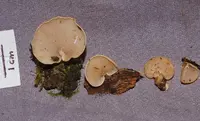
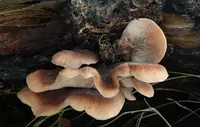
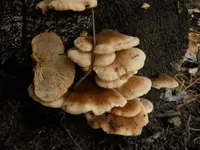
Panellus pusillus is a small saprophytic fungus that grows on decaying wood, especially on damp, fallen branches and logs. It forms tiny, shell-like caps that often cluster tightly together.
In nature it is found in temperate forests, usually in shaded, moist habitats where rotting wood is abundant. Its discreet size and thin texture make it more a subject of curiosity than a showy ornamental species.
Because it relies on decomposing wood and stable humidity, it can be challenging to maintain indoors for long periods. Those who want to learn how to care for Panellus pusillus should focus on providing constantly moist, shaded conditions and clean, untreated wood as a substrate.

Care Difficulty
Hard Care

Light Preference
Shade

Water Requirements
Keep Soil Moist

Temperature Preference
Cool Climate

Hardiness Zone
Unknown

Soil Texture
Organic-rich, Peaty

Soil pH
Acidic (5.5–6.5)

Soil Drainage
Waterlogged tolerant

Fertilization
Minimal (feed rarely)
Scan your plant to receive care tips personalized for your specific plant
Available on iOS and Android
This small wood-inhabiting fungus requires low light similar to a shaded forest floor.
Moisture management focuses on keeping the woody substrate consistently damp, not saturated.
Temperature control focuses on cool to mild conditions that favor steady fungal activity.
This wood-decay fungus prefers consistently moist, high-humidity conditions around its substrate.
This species grows on decaying wood rather than true soil, so focus on a wood-based, moisture-retentive but aerated substrate.
This fungus can be grown in containers if the setup allows stable moisture and air exchange around its woody substrate.
This small saprophytic fungus usually needs no fertilizer when grown on nutrient-rich wood or prepared substrates.
Pruning is not a standard practice for Panellus pusillus grown on logs or in culture.
This species is typically grown on wood or sterilized substrates rather than in conventional pots.
Panellus pusillus is propagated mainly through mycelium-based methods rather than by seeds or cuttings.
Outdoor colonies on logs are generally left to natural conditions and need minimal specific winter care.

Plant Health Check
Not sure what's wrong with your plant? Check your plant's health inside the app.
This species forms very small, bracket-like fruiting bodies, often only a few millimeters across, that appear as overlapping fans or shells tightly pressed against decaying wood.
It is strongly saprobic, meaning it feeds on dead organic matter, and is typically found on very decayed, waterlogged hardwood where structural wood fibers are already heavily broken down.
The fruiting bodies are short-lived and highly dependent on humidity, often appearing after wet periods and then shrinking or becoming inconspicuous as the substrate dries.
This wood-decaying fungus is best grown outdoors on moist, shaded logs or hardwood pieces. Indoors it is difficult to maintain stable humidity, fresh air exchange, and consistently cool conditions, so outdoor cultivation is usually more reliable.
Keep your plants happy and healthy with plant identification, disease detection, and easy care guidance.