rooted poppy Care (Papaver radicatum)

Also known as: Arctic poppy
rooted poppy

About rooted poppy

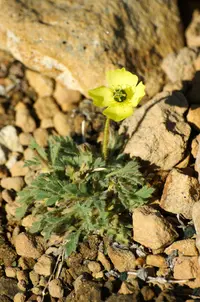
Rooted poppy, Papaver radicatum, is a compact perennial poppy adapted to harsh arctic and alpine environments. It forms low clumps with hairy leaves and bright yellow to orange flowers.

In nature it grows in cold, rocky sites with sharp drainage and a short growing season. This background makes it relatively challenging in typical gardens, especially in warm or humid climates.

It prefers cool conditions, full sun in cold regions, and gritty, well-drained soil that never stays waterlogged. Understanding its natural habitat is key to how to care for rooted poppy.

Main Plant Requirements

Care Difficulty

Hard Care

Light Preference

Full Sun

Water Requirements

Low Water

Temperature Preference

Cold Hardy

Hardiness Zone

1–6

Soil Texture

Sandy, Loamy, Rocky

Soil pH

Acidic (5.5–6.5), Slightly acidic (6.5–7.0)

Soil Drainage

Well-drained

Fertilization

Minimal (feed rarely)

Get Personalized Care Plan

Scan your plant to receive care tips personalized for your specific plant

Available on iOS and Android

How to Care for the rooted poppy

Papaver radicatum prefers bright, cool conditions that mimic open Arctic or alpine habitats.

  • Provide full sun for 6–8 hours daily, with exposure from early morning to mid-afternoon; light afternoon shade is helpful in warmer regions to reduce stress.
  • Choose an open site with no dense tree cover so the plant receives unfiltered light; in mild coastal climates it can handle full sun all day.
  • In hot summers, watch for leaf scorch or washed-out flower color as signs of excessive sun, and for weak, elongated growth as a sign of insufficient light.

This species prefers evenly moist but fast-draining soil and does not tolerate standing water.

  • Allow the top 2–3 cm of soil to dry between waterings; in cool climates this may mean long gaps, guided more by soil feel than by calendar schedules.
  • Use gritty, well-drained soil or a sandy loam so excess water runs off quickly, reducing root rot risk in Papaver radicatum.
  • In spring snowmelt or rainy periods, avoid extra watering, but in drier summer spells water deeply when foliage softens, curls, or the soil feels dry well below the surface.

This cold-adapted poppy thrives in cool conditions and tolerates significant frost.

  • Optimal growth occurs around 45–60°F (7–16°C), with flowering best in cool summers and cold, well-drained soils.
  • Mature plants often survive down to about -20°F (-29°C) under snow cover, but repeated freeze–thaw cycles in wet soil can damage roots.
  • Heat above 75°F (24°C), especially with warm nights, can shorten flowering; provide extra mulch and light shade in hot spells to keep roots cooler.

This alpine poppy prefers cool, dry air and usually does not need special humidity management indoors or outdoors.

This species needs very free-draining, lean, mineral soil to avoid root rot and mimic its rocky alpine habitat.

  • Use a gritty mix such as 50–60% coarse sand or fine gravel with 40–50% low-organic loam.
  • Ensure rapid drainage; water should pass through the substrate within seconds, not pool on the surface.
  • Keep pH slightly acidic to neutral (pH 6.0–7.2), avoiding strongly acidic or alkaline mixes.
  • Avoid heavy clay, peat-heavy potting mixes, or constantly wet spots, which restrict aeration and damage roots of Papaver radicatum.

This species can be grown in containers, but only in very sharply drained, cool conditions.

  • Choose a deep, narrow pot that allows a taproot to develop without circling at the base.
  • Select unglazed clay or another porous material so excess moisture evaporates quickly in wet weather.
  • Elevate the container and use a gritty topdressing to keep the crown dry and reduce water collecting around stems.

Papaver radicatum is adapted to nutrient-poor, rocky soils and needs only minimal fertilization in cultivation.

  • Use a light top-dressing of fine compost or leaf mold in early spring for rooted poppy growing in poor potting mixes or sandy beds.
  • If using a liquid balanced NPK fertilizer (such as 10-10-10), dilute to 1/4–1/2 strength and apply no more than once every 4–6 weeks in the growing season.
  • Avoid high-nitrogen products, which encourage soft, weak growth and may reduce flowering.
  • Stop feeding in late summer to fall so plants harden off and rest naturally over winter.

Papaver radicatum needs only light, corrective pruning to maintain health and flowering.

  • In late spring to early summer, remove spent flower stems at the base to tidy the plant and encourage a neater rosette.
  • Snip off dead, yellowing, or damaged leaves with clean, sharp scissors rather than tearing by hand.
  • Thin any crowded rosettes slightly to improve airflow and reduce rot risk, but avoid heavy cutting.
  • Disinfect tools before and after use to lower the chance of spreading fungal or bacterial problems.

This arctic poppy resents root disturbance, so transplant Papaver radicatum infrequently and with care.

  • Use deep starter pots or modules and transplant only when roots just reach the pot sides, before they circle heavily or growth stalls.
  • Plan moves for cool, stable weather in early spring or early fall, avoiding heat waves or hard frosts.
  • Lift the plant with a generous soil plug, handling by the root ball rather than stems, to keep the taproot as intact as possible.
  • Water gently after transplanting, then keep soil lightly moist and shaded for several days to reduce transplant shock.

Papaver radicatum is usually propagated from seed, as vegetative methods are unreliable for this taprooted species.

  • Sow fresh seed in late summer to fall in pots or trays left outdoors for natural winter chilling, which breaks dormancy.
  • Use a gritty, fast-draining mix, press seed lightly on the surface, and keep it just barely moist, not wet.
  • Provide bright light and cool conditions; germination often occurs in spring after a prolonged cold period.
  • Seedlings dislike disturbance, so transplant only once they form sturdy rosettes, keeping as much root and surrounding soil intact as possible.

This arctic species is very cold hardy in the ground and usually needs little winter care.

  • In climates with reliable snow cover, plants overwinter well without extra protection in sharply drained soil.
  • Where winters are cold but dry and bare, add a light gravel mulch around the crown to limit freeze-thaw heaving.
  • Container-grown plants are more vulnerable; move pots into an unheated garage or cold frame to avoid root freezing and waterlogging.

Care Tips

Cold Frame Hardening

If starting plants under protection, gradually expose them to colder outdoor conditions over 10–14 days in a cold frame or unheated porch to build frost and wind tolerance before planting out.

Sharp Drainage Mounding

On heavy or compacted sites, plant on low raised mounds or ridges 5–10 cm high so meltwater and rain run off quickly, reducing crown rot in this arctic species.

Snow Cover Management

In regions with intermittent snow, use loose evergreen boughs or horticultural fleece to provide a stable insulating layer over winter and early spring, preventing rapid freeze–thaw cycles that damage roots and crowns.

Minimal Disturbance Policy

Mark planting spots clearly and avoid loosening or reworking the soil around established plants, since this species resents root disturbance and often declines if the crown is buried or shifted.

Staggered Succession Sowing

For those growing rooted poppy from seed, make 2–3 small sowings spaced 7–10 days apart under cool conditions to ensure at least one batch experiences the temperature window that triggers reliable germination.

Common Pests and Diseases

Downy mildew

This disease often appears in cool, moist alpine conditions with pale yellow patches on upper leaf surfaces and greyish-purple fungal growth underneath. Symptoms include distorted, stunted foliage and gradual decline of affected rosettes.

Solution

Remove and discard affected leaves as soon as symptoms appear and avoid overhead watering to keep foliage as dry as possible. Improve airflow around plants, thin overcrowded clumps, and, if the problem persists, use a copper-based fungicide labeled for ornamental poppies, applying in cool, dry weather according to label directions.

Botrytis blight

This disease develops in prolonged damp or foggy weather, causing water-soaked spots on petals and leaves that quickly turn brown and fuzzy with grey mold. Symptoms include collapse of flower stalks and rotting of buds before they open.

Solution

Cut off and dispose of infected flowers, buds, and leaves promptly, and keep spent blooms from sitting on the foliage. Space plants so air can move freely, avoid wetting leaves and flowers, and in severe, recurring cases apply a registered botrytis fungicide early in the season when cool, wet weather is forecast.

Aphids

These insects cluster on young flower stems and the undersides of leaves, sucking sap and causing curling, yellowing, and general weakening of plants. This pest also excretes sticky honeydew that can lead to sooty mold on foliage and stems.

Solution

Dislodge colonies by spraying plants with a firm stream of water, and pinch off or cut heavily infested shoot tips. Encourage or introduce natural predators like lady beetles, and if populations stay high, use an insecticidal soap or light horticultural oil, coating stems and leaf undersides thoroughly.

Poppy downy leaf spot

This disease, caused by Peronospora-like pathogens specific to poppies, leads to angular yellow or tan lesions restricted by leaf veins, sometimes with a fine downy growth on the underside. Symptoms include patchy chlorosis and premature leaf drop in cool, wet periods.

Solution

Remove affected foliage and any fallen leaves around the plant to reduce inoculum, and water at the base early in the day so leaves dry quickly. In collections where the disease recurs, rotate plantings, avoid constant overhead irrigation, and consider a preventative downy mildew fungicide used according to label instructions for Papaver species.

Interesting Facts

True Arctic specialist

This species is naturally restricted to high Arctic and subarctic regions, where it grows on exposed, often rocky ground close to sea level and up into alpine zones. It tolerates short growing seasons, low nutrient availability, and persistent cold that would kill most other poppies.

Compact rosette habit

The plant forms a low, tight leaf rosette pressed close to the ground, which helps reduce heat loss and wind damage in open tundra habitats. This growth form also traps a thin layer of slightly warmer air around the foliage and developing flower stems.

Cold-adapted life cycle

Papaver radicatum completes its growth and flowering rapidly during the brief Arctic summer. Flowers and seeds develop in a compressed time window that tracks snowmelt and the short period of continuous or near-continuous daylight.

Botan icon

Did you know?

In parts of its range, Papaver radicatum can act as a small nurse plant, with its rosettes and root system slightly stabilizing gravelly or disturbed ground so that mosses and tiny seedlings of other tundra species can establish in the shelter it creates.

FAQs about rooted poppy

This species forms small clumps and short creeping roots, but it does not spread aggressively. It usually stays where planted, slowly enlarging over several seasons, and rarely becomes a nuisance in typical rock or alpine gardens.

Grow Healthy Plants with Botan Care

Keep your plants happy and healthy with plant identification, disease detection, and easy care guidance.

Botan plant care app — identify plants on mobile

Explore More Plants