Encourage Single Trunk
During the first 2–3 years, selectively remove low, competing stems in late winter to develop a strong single or double leader, which greatly improves wind resistance and long‑term structure.

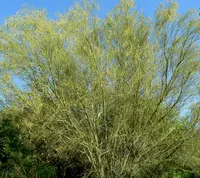
Yellow paloverde (Parkinsonia microphylla) is a small desert tree or large shrub known for its green bark, tiny leaves, and bright yellow spring flowers. It has an open, airy crown and fine branching that cast light shade rather than deep darkness.
This species is native to the Sonoran Desert of the southwestern United States and northwestern Mexico, where it thrives in rocky, well-drained, very dry sites. It is highly drought tolerant and slow growing, which makes it relatively low-maintenance once established but less forgiving of overwatering or poorly drained soil.
In cultivation, it suits arid and xeriscape gardens, and those learning how to care for yellow paloverde should focus on strong sun and minimal supplemental irrigation.

Care Difficulty
Easy Care

Light Preference
Full Sun

Water Requirements
Low Water

Temperature Preference
Warm Climate

Hardiness Zone
8–11

Soil Texture
Sandy, Loamy, Rocky

Soil pH
Slightly alkaline (7.0–7.5), Alkaline (7.5–8.5)

Soil Drainage
Well-drained

Fertilization
Minimal (feed rarely)
Scan your plant to receive care tips personalized for your specific plant
Available on iOS and Android
This desert tree needs intense, direct sun to stay compact and flower well.
This species evolved for extremely dry conditions and is highly drought-tolerant once established.
This desert tree handles heat very well but has limited frost tolerance when young.
This desert species thrives in very dry air and does not need elevated humidity.
This species prefers very well-drained, mineral, sandy soil that closely mimics desert conditions.
This species can be grown in containers mainly for young plants or in regions with cold winters.
This desert-adapted tree needs very modest feeding, especially when planted in native or well-drained soils.
Pruning helps maintain structure and safety while preserving the natural, airy canopy of Parkinsonia microphylla.
This tree is better suited to in-ground planting; container culture is temporary and mainly for young plants.
New plants are most reliably produced from seeds, which reflect this species’ natural regeneration strategy.
Mature trees are quite cold hardy in arid regions and usually need minimal winter care.

Plant Health Check
Not sure what's wrong with your plant? Check your plant's health inside the app.
The tiny leaflets of this species drop quickly during drought, leaving photosynthetic green stems that reduce water loss while still allowing limited energy production.
Its green bark and twigs contain chlorophyll and take over most photosynthesis for much of the year, an adaptation that helps it survive extreme heat and aridity in the Sonoran Desert.
The open, twiggy canopy casts very light shade that cools the soil without fully blocking sunlight, creating microhabitats for cacti and other desert understory plants.

This species is a keystone legume in parts of the Sonoran Desert, forming root nodules with nitrogen-fixing bacteria that enrich poor desert soils and support surrounding plant communities over long timescales.
Flowering decreases if this plant is irrigated too frequently, fertilized heavily, or pruned hard at the wrong time. Full sun, lean soil, and minimal summer watering usually restore normal bloom; avoid high-nitrogen fertilizers and severe late-winter pruning.
Keep your plants happy and healthy with plant identification, disease detection, and easy care guidance.