Parodia erinacea Care

Parodia erinacea

About Parodia erinacea

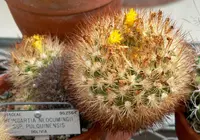
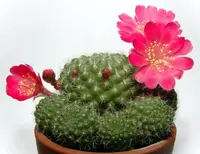
Parodia erinacea is a small, globular cactus valued for its compact size and dense covering of fine radial spines. It usually forms a single rounded stem that may slowly cluster with age. Yellow flowers often appear in a ring near the crown, adding seasonal interest in bright conditions.

This species is native to arid regions of South America, where it grows in rocky, well-drained habitats. Its drought tolerance and slow growth make it suitable for containers and windowsills. It stays relatively small, which helps indoor growers manage space easily.

Parodia erinacea prefers bright light, low to moderate watering, and gritty, fast-draining soil. Understanding these simple needs makes it easier to care for Parodia erinacea successfully over time.

Main Plant Requirements

Care Difficulty

Moderate Care

Light Preference

Full Sun

Water Requirements

Low Water

Temperature Preference

Warm Climate

Hardiness Zone

9–11

Soil Texture

Sandy, Loamy, Rocky

Soil pH

Slightly acidic (6.5–7.0), Neutral (7.0)

Soil Drainage

Well-drained

Fertilization

Minimal (feed rarely)

Get Personalized Care Plan

Scan your plant to receive care tips personalized for your specific plant

Available on iOS and Android

How to Care for the Parodia erinacea

This small desert cactus prefers bright light with some protection from harsh midday sun.

  • Provide 4–6 hours of direct morning sun plus bright, filtered light for the rest of the day, especially in hot, dry climates where Parodia erinacea naturally occurs.
  • Allow light afternoon sun in cooler coastal or northern areas, but give light shade during 11 a.m.–3 p.m. in summer to prevent bleaching or corking of the skin.
  • Move container plants gradually closer to stronger light over 1–2 weeks in spring, and shift slightly shadier in peak summer if stems turn pale yellow or reddish.

This species stores water in its stem and prefers drying cycles between thorough waterings.

  • Water only when the top 3–5 cm of soil are fully dry, then soak the root zone and let excess drain away without leaving the pot or bed waterlogged.
  • In spring and summer, expect roughly weekly to biweekly watering in fast-draining soil; in fall and winter, reduce to very light, occasional sips or keep almost dry if growth stops.
  • Watch for soft, dark, or translucent tissue as a sign of overwatering, and for shriveling ribs and very lightweight soil as cues that the cactus needs a deep drink.

This cactus prefers warm, dry conditions but can handle a moderate temperature range when kept frost free.

  • Aim for active growth temperatures of 70–85°F (21–29°C) by day and 55–70°F (13–21°C) by night, keeping air movement gentle but consistent.
  • Protect from frost; short exposures near 32°F (0°C) may scar tissue, and growth is safest above 40°F (4°C), especially in moist or humid conditions.
  • In hot spells above 95°F (35°C), increase shade and airflow, avoid wet soil at night, and never place the plant against heat-reflective walls or metal surfaces.

This cactus tolerates dry indoor air and usually does not need special humidity management.

  • Aim for 30–50% humidity, as higher levels increase rot risk for Parodia erinacea.
  • Corky brown patches or soft, pale tissue can signal damage from prolonged high humidity.
  • Increase air movement with a small fan rather than adding moisture to the air.

This species needs a very fast-draining, mineral-rich substrate to prevent root and stem rot.

  • Use a gritty mix such as 50–70% inorganic material (pumice, coarse sand, fine gravel) with the rest cactus potting mix.
  • Ensure a loose, open structure where water drains through in seconds and the top layer dries within 1–2 days.
  • Target slightly acidic to neutral pH around 6.0–7.0, avoiding strongly alkaline or salty media.
  • Avoid heavy peat, clay, or unamended universal potting mix, which compacts, holds water, and restricts aeration around the roots.

This cactus is well suited to container culture due to its compact root system and slow growth.

  • Choose a pot just 2–3 cm wider than the plant body so the mix dries evenly instead of staying wet at the edges.
  • Select unglazed terracotta if extra evaporation is needed in cool or low-light locations to reduce rot risk.
  • Place the pot in a stable, heavy cachepot or on gritty top-dressing to keep the rounded plant from tipping over.

This cactus grows in low‑nutrient habitats and only needs light, targeted feeding in pots.

  • Use a diluted balanced liquid fertilizer (around 10‑10‑10 or similar NPK) at 1⁄4–1⁄2 strength for Parodia erinacea in active growth.
  • Feed every 4–6 weeks from late spring to late summer only, on already moist soil.
  • Skip compost-rich mixes; choose a very lean, gritty, cactus substrate instead.
  • Stop feeding entirely in fall and winter to maintain a clear dry rest period.

Pruning needs are minimal and focus on hygiene rather than shaping this cactus.

  • Best timing is late spring or early summer, when the plant resumes active growth.
  • Remove only dead, diseased, or mushy tissue using small, sharp, disinfected tools.
  • Cut as little as possible; heavy removal can distort the rounded form and stress the plant.
  • After any cut, keep the area dry and well ventilated so the wound can callus.

Parodia erinacea grows slowly and prefers tight containers, so repotting is infrequent.

  • Plan to repot every 3–4 years, or when roots circle the pot or growth clearly slows.
  • Choose late spring as the safest time, when temperatures are stable and growth is starting.
  • Use a slightly larger pot with excellent drainage and a gritty cactus mix to limit rot risk.
  • Unpot gently, remove loose soil, let any damaged roots callus 1–2 days, then replant and keep nearly dry for 1–2 weeks.

This species is most reliably propagated from seed under controlled, warm conditions.

  • Sow fresh seeds in late spring in a shallow tray with sterile, fine, gritty cactus mix.
  • Maintain 70–80°F, bright indirect light, and consistently slight moisture until germination.
  • Cover lightly with sand or fine grit to anchor seeds without burying them deeply.
  • Once seedlings show several spines, increase light gradually and reduce watering intervals.

Parodia erinacea needs a cool, very dry winter rest and is not tolerant of extended hard frost.

  • Keep indoor plants around 45–55°F with maximum light and almost no water.
  • If frost below about 25°F is expected outdoors, move containers indoors or into a cold greenhouse.
  • Ensure soil stays dry; cold combined with moisture strongly increases rot risk.
  • Avoid drafts from freezing windows or doors that can chill tissue rapidly.

Care Tips

Gritty top dressing

Apply a 0.5–1 in layer of coarse grit or fine gravel on the soil surface to keep the stem base dry, reduce rot risk, and stabilize the plant when it produces offsets.

Deep pot selection

Use a slightly deeper clay pot than the plant appears to need, as this species forms a strong taproot that benefits from vertical space and good side ventilation through the pot walls.

Cool, bright winter

From late fall to early spring, provide maximum light and keep the plant in a cool, dry place around 45–55°F to encourage compact growth and reliable flowering the following season.

Safe handling technique

When repotting, wrap the body loosely in folded newspaper or use soft grill tongs to move the plant, avoiding direct contact with the dense spines that can break skin and are difficult to remove.

Flowering support cycle

After flowers fade, allow seed pods to dry on the plant, then remove them gently and brush off any remaining dried tissue so the crown stays open, clean, and less prone to fungal issues while growing Parodia erinacea.

Common Pests and Diseases

Spider mites

This pest feeds on cactus skin, causing pale stippling, dull patches, and fine webbing between ribs and spines, especially in warm, dry indoor air. Symptoms include slow decline in color and a dusty, sand-grain appearance on close inspection.

Solution

Rinse the plant thoroughly with a strong but controlled stream of lukewarm water, then allow it to dry in bright, airy conditions; repeat weekly until activity stops. For heavier infestations, apply a ready-to-use insecticidal soap or neem oil to the epidermis only, avoiding saturation of the soil, and slightly raise humidity while maintaining strong light to support recovery as part of general Parodia erinacea care instructions.

Mealybugs

These insects hide in cactus ribs, woolly areoles, and around the base, appearing as white cottony clusters that suck sap and promote sooty mold. Symptoms include stunted growth, yellowing patches, and sticky residue on or around the pot.

Solution

Isolate the plant and remove visible mealybugs with a cotton swab dipped in 70% isopropyl alcohol, repeating weekly until no new insects appear. For persistent populations, use an insecticidal soap or systemic insecticide labeled for cacti, and discard any heavily infested top dressing or debris where insects may hide.

Scale insects

These insects attach firmly to the stem as small, hard, brown or gray bumps that do not brush off easily and slowly drain plant vigor. Symptoms include patchy yellowing, reduced new growth, and sometimes a sticky film on the pot or nearby surfaces.

Solution

Gently scrape or lift individual scales off with a cotton swab or soft brush dipped in 70% isopropyl alcohol, taking care not to damage the epidermis. Follow up with 2–3 treatments of insecticidal soap or horticultural oil at 7–10 day intervals, and keep the cactus in bright, well-ventilated conditions to reduce reinfestation risk.

Corky scab lesions

This disease appears as rough, brown, corky patches on the lower stem where skin has been damaged by sun, cold, or repeated minor injury, then colonized by opportunistic fungi. Symptoms include hardened, bark-like tissues that do not spread rapidly but can disfigure the plant surface.

Solution

Improve cultural conditions by providing stable temperatures, bright but filtered light, and avoiding sudden exposure to intense midday sun to prevent further damage. Keep the stem dry, remove any loose, dead tissue with sterile tools only if necessary, and monitor for soft, spreading areas that would indicate secondary rot, which should be cut out promptly.

Basal stem rot

This disease starts at the soil line, where tissues become soft, discolored, and water-soaked, often following chronic overwatering or cold, wet substrates. Symptoms include a leaning or collapsing plant, sour odor, and dark or translucent tissue at the base.

Solution

At the first sign of softening, unpot the cactus, cut away all affected tissue with a sterile blade back to firm, green flesh, and dust the wound with a dry sulfur- or copper-based fungicidal powder. Allow the cut surface to callus in a dry, shaded place for several days, then re-root in a fresh, fast-draining cactus mix and water very sparingly until new roots have formed.

Interesting Facts

Southern Brazilian native

This species occurs naturally in rocky grasslands and open campos of southern Brazil, especially in Rio Grande do Sul, where it grows in shallow, mineral-rich soils among grasses and low shrubs.

Woolly spine clusters

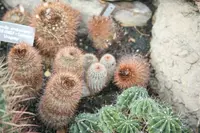
The areoles of this cactus form dense, whitish to yellowish woolly cushions, from which numerous fine radial spines emerge, giving mature plants a subtly fuzzy appearance compared with many other Parodia species.

Distinct rib and tubercle pattern

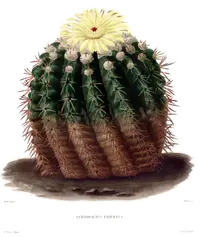
The stem shows well-defined ribs broken into small, rounded tubercles, which helps channel limited rainfall toward the root zone in its native habitat and gives the plant a characteristic beaded surface texture.

Botan icon

Did you know?

Some populations of this species grow in areas that can experience brief light frosts, and healthy, well-established plants in very free-draining substrates have been documented tolerating short temperature dips close to freezing without permanent damage.

FAQs about Parodia erinacea

Lack of flowers usually comes from insufficient light, a pot that is too large, or winter temperatures that are consistently warm. This species needs a cool, dry rest period and strong light to set buds reliably.

Grow Healthy Plants with Botan Care

Keep your plants happy and healthy with plant identification, disease detection, and easy care guidance.

Botan plant care app — identify plants on mobile

Explore More Plants