Rocky substrate edge
Install a shallow border of angular gravel or small rocks around the planting area so stems can root lightly between stones, which stabilizes the mat and mimics the plant’s natural alpine habitat.

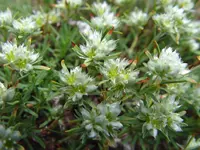
Silvery nailwort (Paronychia argyrocoma) is a low, mat-forming perennial often used as a groundcover in rock gardens and between paving stones. It has tiny, narrow leaves tipped with silvery hairs that give the foliage a pale, reflective look. Small white, papery bracts surround the flowers and add to its delicate, textured appearance.
This species is native to rocky, well-drained slopes in parts of eastern North America, especially in mountainous areas. It is generally considered easy to grow if kept in lean, gritty soil with good drainage and full sun to light shade. Once established, it shows good drought tolerance, which makes it easier to care for silvery nailwort in dry or low-maintenance plantings.

Care Difficulty
Easy Care

Light Preference
Full Sun

Water Requirements
Low Water

Temperature Preference
Cold Hardy

Hardiness Zone
3–8

Soil Texture
Sandy, Rocky, Loamy

Soil pH
Slightly acidic (6.5–7.0), Neutral (7.0)

Soil Drainage
Well-drained

Fertilization
Minimal (feed rarely)
Scan your plant to receive care tips personalized for your specific plant
Available on iOS and Android
Paronychia argyrocoma thrives in bright, open conditions that mimic its rocky, high-light native habitats.
Paronychia argyrocoma prefers dry, fast-draining conditions and is highly sensitive to excess moisture around the roots.
This species is a cold-hardy alpine-type plant that handles cool to cold conditions better than sustained heat.
This species tolerates a wide humidity range and typically needs no special humidity management.
This alpine species prefers very lean, sharply drained, mineral-based soil that mimics rocky slopes.
This species can be grown successfully in containers if the setup keeps the root zone dry and well aerated.
Paronychia argyrocoma is adapted to lean, rocky soils and usually needs little to no fertilizer, especially in the ground.
Paronychia argyrocoma benefits from light, periodic pruning to keep the mat dense and tidy.
In cultivation, silvery nailwort is moved infrequently, since it dislikes root disturbance and prefers a stable site.
New plants of Paronychia argyrocoma are usually raised by seed or by carefully dividing established clumps.
This species is generally cold hardy in rock gardens but container plants benefit from simple winter precautions.

Plant Health Check
Not sure what's wrong with your plant? Check your plant's health inside the app.
This species is naturally restricted to exposed granite outcrops and rocky ridges in New England and adjacent eastern Canada, where it forms low, dense mats that can survive in very shallow, nutrient-poor soils.
The distinctive silvery look comes not from the tiny green flowers but from the dry, papery, reflective bracts that surround them, which help protect reproductive structures from intense sun and desiccating winds.
Its compact cushion or mat-forming habit reduces wind exposure and traps small pockets of warmer air near the rock surface, allowing the plant to tolerate harsh alpine and subalpine winters.
This species forms low, slowly spreading mats through short stems rather than long runners. It can widen over time in suitable rock garden or scree settings but is generally easy to contain with occasional edging or division.
Keep your plants happy and healthy with plant identification, disease detection, and easy care guidance.