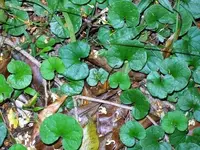
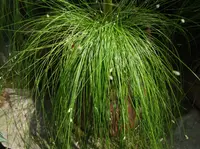
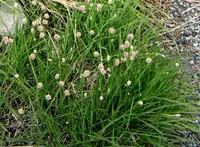
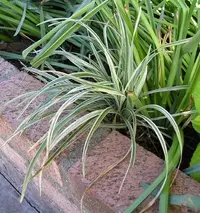
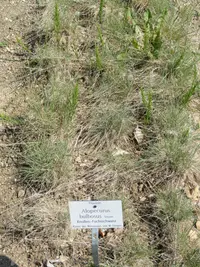
black-fruit mountain-ricegrass Care (Patis racemosa)

black-fruit mountain-ricegrass

About black-fruit mountain-ricegrass

Black-fruit mountain-ricegrass (Patis racemosa) is a cool-season perennial bunchgrass native to rocky slopes, open woods, and dry hillsides in parts of North America. It forms loose clumps with upright, arching stems and narrow leaves, topped by open, branched flower clusters that mature into dark, almost black seeds. This gives the plant a fine, airy texture in naturalistic plantings and restoration projects. Patis racemosa tends to be fairly adaptable, tolerating poor, well-drained soils and moderate drought once established, which can make it easier to manage than many ornamental grasses. Gardeners who want to learn how to care for black-fruit mountain-ricegrass should note its preference for sun to light shade and soils that do not stay wet for long periods.

Main Plant Requirements

Care Difficulty

Easy Care

Light Preference

Full Sun

Water Requirements

Low Water

Temperature Preference

Cold Hardy

Hardiness Zone

3–8

Soil Texture

Sandy, Loamy, Rocky

Soil pH

Slightly acidic (6.5–7.0), Neutral (7.0)

Soil Drainage

Well-drained

Fertilization

Minimal (feed rarely)

Get Personalized Care Plan

Scan your plant to receive care tips personalized for your specific plant

Available on iOS and Android

How to Care for the black-fruit mountain-ricegrass

Patis racemosa performs best in open, sunny sites typical of prairie and dry meadow habitats.

  • Provide 6–8 hours of direct sun daily; light morning sun plus some light afternoon shade helps in hotter regions to reduce stress on foliage.
  • The plant tolerates light partial shade (around 3–4 hours direct sun) but flowering and seed production of black-fruit mountain-ricegrass decrease as shade increases.
  • In summer, monitor for leaf scorching or bleaching on south- and west-facing slopes; in autumn and winter, surrounding vegetation or low sun angle can slightly reduce light without harm.

Patis racemosa is adapted to dry, well-drained soils and prefers infrequent, deeper watering once established.

  • Allow the top 5–8 cm of soil to dry before watering; in most field conditions this means waiting until the soil feels dry and loose, not cool and moist to the touch.
  • Increase watering slightly during the first growing season and during extended droughts, aiming for a thorough soak that drains freely rather than frequent light splashes.
  • Watch for underwatering signs such as rolling or browning leaf tips; overwatering shows as limp, yellowing foliage and soggy soil that stays wet longer than 2–3 days.

This grass is cold-hardy and handles a wide range of outdoor temperatures in temperate climates.

  • Optimal growth occurs around 65–80°F (18–27°C) during the active growing season, with good vigor and steady tiller production in these conditions.
  • Mature plants tolerate winter lows near -20°F (-29°C) when soil is well drained; repeated freeze–thaw in waterlogged ground is more damaging than cold alone.
  • In hot spells above 90°F (32°C), growth may slow and foliage can dry at the tips, so combine full sun with good soil moisture balance and avoid heat-reflecting hard surfaces.

This grass tolerates a wide humidity range and usually does not need special humidity management outdoors.

  • Performs well at 30–60% humidity, typical of outdoor temperate and semi-arid sites.
  • Handles dry air with minimal stress if soil moisture is appropriate and roots are not compacted.
  • Leaves of black-fruit mountain-ricegrass may show tip browning or rolled blades under extreme dry heat; wind protection reduces this stress.

This species prefers mineral, well-drained soils similar to open prairie or dry meadow conditions.

  • Use a sandy or sandy-loam mix with 20–40% coarse sand or grit to keep the root zone dry and aerated.
  • Ensure sharp drainage; mix in small gravel or perlite and avoid heavy clay that stays wet after rain.
  • Aim for slightly acidic to slightly alkaline soil (pH 6.0–7.8), as Patis racemosa is tolerant across this range.
  • For containers, combine 60% lean potting mix with 40% mineral material (sand, grit, perlite) to prevent compaction and root rot.

This species can be grown in containers if the pot is managed to mimic dry, freely draining ground.

  • Choose a deep, wide, heavy container to anchor the clumping root system and resist wind tipping of tall flowering stems.
  • Select unglazed terracotta or other porous materials so the root zone dries quickly between waterings.
  • Raise the pot on feet or bricks to enhance drainage through the holes and prevent water from pooling under the container.

This native grass usually grows well in lean soils, so caring for black-fruit mountain-ricegrass involves only light, optional feeding.

  • If growth is weak, use a balanced slow-release fertilizer (for example 10-10-10) once in early spring.
  • Apply at half the label rate to avoid lush, floppy foliage and lodging in wind or rain.
  • On poor soils, top-dress with a thin layer of compost instead of repeated granular feeds.
  • Do not fertilize in late fall or winter, as the plant is entering or in dormancy.

Patis racemosa needs only light pruning to maintain a clean, upright clump.

  • Cut back dead or winter-burned stems in late winter to early spring before new growth emerges.
  • Remove damaged or lodging stems at the base during the growing season to maintain form and airflow.
  • Thin out the oldest, most crowded culms every 2–3 years to support fresh, vigorous shoots.
  • Use clean, sharp hand pruners or shears and make cuts close to the base without tearing tissue.

This species is usually grown in the ground, so focus on careful transplanting rather than frequent repotting.

  • Transplant in early spring or early fall when temperatures are mild and soil is workable.
  • Look for signs such as congested clumps, declining vigor, or roots circling a nursery container before moving plants.
  • Divide large clumps every 3–5 years, replanting sections at the same depth in well-drained soil.
  • Water thoroughly before and after transplanting, then shade lightly for a few days to reduce root stress and transplant shock.

Patis racemosa is most often propagated from seed or by division of established clumps.

  • Sow fresh seed in fall or early spring in a free-draining seed mix, barely covering the seeds.
  • Keep the seedbed evenly moist and cool to moderate (around 60–68°F) until germination.
  • Divide mature clumps in early spring, ensuring each division has healthy roots and several shoots.
  • Replant divisions promptly at original depth, firm soil around roots, and water well to settle.

This grass is cold hardy across much of its native range and usually needs minimal winter care.

  • Established in-ground plants tolerate typical winter frost in USDA zones where they are native.
  • Leave dried foliage over winter to provide crown insulation and habitat, then cut back in late winter.
  • In very exposed sites, apply a light 5–7 cm mulch around, but not on top of, the crown.
  • Move container-grown plants into a sheltered, unheated area to reduce freeze-thaw stress on roots.

Care Tips

Early clump division

Divide mature clumps every 3–5 years in early spring before active growth to maintain vigor, prevent center die-out, and quickly increase planting stock for larger drifts.


Seed ripening management

Allow seed heads to fully ripen and dry on the plant before collecting, then store in a cool, dry place and sow in late fall or early spring to maintain local-adapted lines when growing black-fruit mountain-ricegrass from seed.

Targeted grass competition

Keep aggressive sod-forming grasses at least 20–30 cm away from young plants by shallow hoeing or using narrow mulch bands so Patis racemosa can establish without root competition.

Erosion-control planting

On slopes, plant in staggered rows and slightly on contour, spacing 30–45 cm apart, to form a fibrous root network that stabilizes soil and reduces surface runoff over time.

Winter structure management

Leave foliage and seed stalks standing through winter to protect crowns and provide habitat, then cut back to 5–8 cm above soil level in late winter before new shoots appear to keep the stand tidy and healthy.

Common Pests and Diseases

Rust

This disease causes small orange-brown pustules on leaves and stems, sometimes leading to premature leaf drop in dense, moist plantings.

Solution

Remove and destroy affected foliage, avoid overhead watering, and improve spacing to increase air movement; in persistent cases, apply a labeled grass-safe fungicide at the first signs of pustules and rotate mowing or cutting tools to reduce spread.

Leaf spot

This disease produces tan to dark-brown spots on foliage that may merge into larger dead areas, especially where plants stay wet for long periods.

Solution

Cut and discard heavily spotted leaves or clumps, water at soil level in the morning so foliage dries quickly, reduce thatch buildup, and use a registered foliar fungicide for ornamental grasses if spots expand rapidly over several weeks.

Grass aphids

These insects cluster on tender stems and leaf bases, sucking sap and sometimes causing leaf curling, yellowing, and sticky honeydew deposits that attract sooty mold.

Solution

Rinse colonies off with a firm stream of water, encourage natural predators such as lady beetles, and if populations remain high, use insecticidal soap or a light horticultural oil, making sure to cover both sides of the leaves on cool, overcast days.

Grasshoppers

These insects chew irregular holes and edges in leaves and seed stalks, which can thin stands and reduce ornamental value during outbreak years.

Solution

Hand-remove grasshoppers where practical, keep nearby weeds and tall unmanaged vegetation mowed to reduce shelter, and if damage is severe, use bait or targeted grasshopper control products labeled for use in grass areas, applying them early in the season when nymphs are small.

Interesting Facts

Cold-tolerant grassland species

Patis racemosa, also called black-fruit mountain-ricegrass, is native to cool, often high-elevation habitats in western North America and shows strong tolerance to cold, dry conditions compared with many other bunchgrasses.

Distinctive black caryopses

Its fruits (caryopses, the typical grain of grasses) mature to a dark brown to black color, which gives rise to the common name black-fruit mountain-ricegrass and helps distinguish it from closely related grass species.

Mountain slope stabilizer

As a perennial bunchgrass with a fibrous root system, it helps stabilize thin, rocky soils on slopes and ridges, reducing erosion in montane and subalpine plant communities.

FAQs about black-fruit mountain-ricegrass

This bunch-forming grass spreads slowly by short rhizomes and seed, not by long running stolons. It usually forms clumps that stay where planted, so it is not considered aggressive in typical garden situations.

Grow Healthy Plants with Botan Care

Keep your plants happy and healthy with plant identification, disease detection, and easy care guidance.

Botan plant care app — identify plants on mobile

Explore More Plants