Thickbark Storksbill Care (Pelargonium crithmifolium)

Also known as: Samphire Storksbill, Kana Storksbill, samphire-leaved pelargonium
Thickbark Storksbill

About Thickbark Storksbill

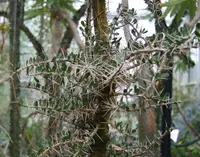
Pelargonium crithmifolium, commonly called thickbark storksbill, is a small, shrubby succulent geranium from the dry regions of South Africa. It forms a woody, swollen base with short, branching stems and finely divided, often grey-green leaves.

This plant is adapted to arid conditions and stores water in its thick bark and roots. It grows slowly and usually stays compact, which makes it suitable for containers and bright indoor spots.

Because it is drought tolerant and not demanding about humidity, it can be easier to manage than many leafy houseplants. Understanding how to care for Thickbark Storksbill mainly involves giving strong light, very well-drained soil, and careful, infrequent watering.

Main Plant Requirements

Care Difficulty

Moderate Care

Light Preference

Full Sun

Water Requirements

Low Water

Temperature Preference

Tropical / Frost Sensitive

Hardiness Zone

10–11

Soil Texture

Sandy, Rocky, Loamy

Soil pH

Slightly acidic (6.5–7.0), Slightly alkaline (7.0–7.5)

Soil Drainage

Well-drained

Fertilization

Minimal (feed rarely)

Get Personalized Care Plan

Scan your plant to receive care tips personalized for your specific plant

Available on iOS and Android

How to Care for the Thickbark Storksbill

Pelargonium crithmifolium needs bright, mostly direct sun to stay compact and flower well.

  • Provide 6–8 hours of direct sun daily; morning and late-afternoon sun are ideal, with light midday shade in very hot climates.
  • Outdoors, place Thickbark Storksbill in an open, unshaded spot; in bright but cool coastal areas it can handle full sun all day.
  • Watch for pale, stretched stems as a sign of too little light, and scorched, crispy leaf edges as a sign of excessive, intense midday sun.

This species is a drought-tolerant succulent geranium that prefers thorough but infrequent watering.

  • Allow the top 3–5 cm of soil to dry completely before watering, then soak the root zone and let excess drain away quickly.
  • Reduce watering markedly in cool seasons or during dormancy, keeping the soil almost dry but not bone-dry for many months.
  • Yellowing, soft leaves and a rotting base indicate overwatering, while wrinkled, limp leaves and very light soil suggest it is time to water Pelargonium crithmifolium.

This plant prefers warm, dry conditions with cool but frost-free winters.

  • Aim for 65–80°F (18–27°C) during active growth, with good air movement to prevent fungal problems.
  • Protect from frost; growth slows below 45°F (7°C) and tissue damage occurs around 32°F (0°C) or during hard freezes.
  • In hot spells above 90°F (32°C), provide some afternoon shade and avoid hot, enclosed spots to reduce heat stress and leaf scorch risk.

This succulent pelargonium prefers dry indoor air and does not need extra humidity.

  • Keep humidity around 30–50% to mimic its native arid conditions.
  • Plant tolerates dry air well; problems usually come from excess moisture, not low humidity.
  • If air exceeds 60% and foliage stays damp, increase air movement with a small fan to prevent rot in Thickbark Storksbill.

This species needs a very fast-draining, mineral-lean mix that mimics rocky, sandy habitats.

  • Use a cactus mix amended 30–50% with coarse pumice, perlite, or grit for sharp drainage and strong aeration.
  • Aim for slightly acidic to neutral pH, roughly 6.0–7.0, avoiding strongly acidic or alkaline extremes.
  • Limit organic matter to about 20–30% (fine bark or leaf mold) so Pelargonium crithmifolium does not stay wet for long periods.
  • Avoid dense peat-heavy, clay, or water-retentive mixes that lead to root rot and swollen, splitting tuberous roots.

This species is well suited to container growing, especially in dry, bright locations.

  • Choose a pot that is only slightly wider than the tuber to keep the root zone from holding excess moisture.
  • Use an unglazed terracotta container to allow moisture to evaporate faster from the mix in cool or humid climates.
  • Select a squat, stable pot shape so the heavy tuber and branching stems do not tip the container in strong light or wind.

This drought-adapted succulent shrub needs modest feeding, but responds well to light nutrition during active growth for healthy Thickbark Storksbill foliage and flowering.

  • Apply a balanced liquid fertilizer (around 10-10-10) at 1/4–1/2 strength every 4–6 weeks in spring and early summer.
  • Use a low-salt, fast-draining medium; avoid heavy compost that holds excessive moisture around the tuberous roots.
  • Skip feeding in late summer as Pelargonium crithmifolium approaches dormancy, and do not fertilize during winter rest.
  • Flush the pot with plain water occasionally during the growing season to reduce fertilizer salt buildup.

Pelargonium crithmifolium benefits from light, targeted pruning to maintain a compact, healthy framework.

  • Prune at the end of winter or very early spring, just before strong new growth starts.
  • Remove dead, damaged, or crossing stems first, then thin congested interior growth to improve light and air flow.
  • Shorten overly long shoots to shape the plant and encourage branching rather than tall, leggy growth.
  • Use clean, sharp scissors or pruners, making cuts just above a node, and allow wounds to dry in good air circulation.

This species prefers to stay slightly root-bound and only needs infrequent repotting or transplanting to protect its caudex-type root system.

  • Look for roots circling the pot, emerging from drainage holes, or noticeably slowed growth as signs it needs a larger container.
  • Plan repotting for late winter to early spring, just before the main growing period begins.
  • Repot every 3–4 years at most, moving to a pot only 2–3 cm wider with very free-draining, gritty soil.
  • Handle the thickened roots gently, keep them at the same depth, water lightly after repotting, and keep in bright shade for 7–10 days to limit stress.

Pelargonium crithmifolium is most often propagated by semi-ripe stem cuttings, with seeds used less often by home growers.

  • Take 5–8 cm tip or side shoot cuttings in late spring to summer, selecting firm but not woody stems.
  • Allow cut ends to air-dry and callus for 1–2 days, then insert into a very gritty, barely moist mix.
  • Maintain bright, indirect light, warm temperatures around 68–75°F, and low to moderate humidity to reduce rot.
  • Sow seeds in spring on a well-drained mix, keep just slightly moist, and provide steady warmth for even germination.

This succulent pelargonium is not frost hardy and needs careful winter management, especially in cool or wet climates.

  • Keep outdoor plants only in climates with mild winters; avoid exposure below about 32°F.
  • Move container plants indoors or into a bright, cool greenhouse before the first hard frost is forecast.
  • Maintain a cool, dry rest period in winter, watering sparingly to prevent root rot while the plant is semi-dormant.
  • Ensure excellent air circulation and avoid cold, damp soil around the tuberous roots to minimize fungal problems.

Care Tips

Deep pot choice

Use a deep, heavy terracotta pot so the long taproot can develop fully and the plant stays stable as the woody base enlarges over time.

Seasonal rest period

In late summer to early fall, gradually reduce watering and keep the plant on the dry side for several weeks to support a natural dormancy and extend its long-term lifespan.

Rotating for symmetry

Rotate the container 90° every 2–3 weeks during active growth so the rosette and stems develop evenly and do not lean permanently toward the light source.

Targeted pest checks

Inspect the woody stem base, leaf joints, and undersides with a hand lens every few weeks so mealybugs or scale are found early and can be removed with cotton swabs dipped in isopropyl alcohol.

Controlled branching

Once stems are slightly woody, tip-prune selected shoots in late winter to encourage compact, branched growth while leaving some stems untouched to preserve the plant’s natural character when growing Thickbark Storksbill.

Common Pests and Diseases

Mealybugs

This pest feeds on sap and often hides in stem joints and along the swollen caudex, leaving white cottony clusters and sticky honeydew. Symptoms include distorted new growth, yellowing, and sooty mold developing on the honeydew in dry indoor setups.

Solution

Isolate the plant, then remove visible insects with a cotton swab dipped in 70% isopropyl alcohol, paying special attention to leaf bases and the wrinkled stem surface. For persistent infestations, use a systemic insecticide labeled for ornamental succulents or apply repeated sprays of insecticidal soap, and keep the plant in a bright, airy spot to discourage reinfestation as part of Pelargonium crithmifolium care instructions.

Aphids

These insects cluster on soft new shoots and flower stalks, sucking sap and causing curling, sticky leaves and deformed growth. Symptoms include shiny honeydew deposits and possible sooty mold on affected areas.

Solution

Rinse the plant thoroughly with a strong but controlled stream of water to dislodge colonies, then follow with an application of insecticidal soap or a neem-based spray, coating undersides of leaves and young stems. Repeat treatments every 5–7 days until no new aphids appear, and avoid excess nitrogen fertilizer that promotes very soft, aphid-prone growth.

Botrytis blight

This disease appears in cool, humid conditions as soft brown lesions on leaves, stems, or old flower stalks that develop a gray, dusty mold. Symptoms include rapid collapse of affected tissue, especially on shaded or overcrowded plants.

Solution

Remove and discard all infected leaves, stems, and flower remains, then improve air circulation and reduce overhead watering so foliage dries quickly. If conditions stay humid, apply a fungicide labeled for gray mold on ornamentals and keep the plant in a brighter, drier, well-ventilated location.

Bacterial leaf spot

This disease causes small, water-soaked spots on leaves that turn dark brown to black, sometimes with a yellow halo, and can lead to premature leaf drop. Symptoms include rapid spread across lower, older leaves when splashing water moves bacteria between plants.

Solution

Promptly remove and discard affected leaves and avoid wetting foliage when watering, directing water only to the soil surface. Improve spacing and air movement, and if spread continues, discard heavily affected plants and sterilize pots and tools with a disinfectant before reuse.

Interesting Facts

Tuber-like water storage

This species develops a swollen underground stem base (tuber) that stores water, allowing it to survive long dry periods in its native arid habitats of the Western and Northern Cape in South Africa.

Finely dissected foliage

Its narrow, deeply divided leaves resemble those of coastal plant genera such as Crithmum, which inspired the species name crithmifolium, meaning leaves like Crithmum.

Night-opening flowers

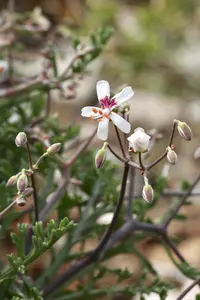
The pale, often white to pinkish flowers tend to open more fully in the late afternoon and evening in habitat, aligning with the activity patterns of certain nocturnal or crepuscular pollinators in its dry winter-rainfall environment.

Botan icon

Did you know?

Among shrubby and succulent pelargoniums, this species is noted in specialist collections for its particularly thick, corky bark that becomes deeply fissured with age, giving mature plants a miniature tree-like appearance despite their relatively small size.

FAQs about Thickbark Storksbill

Leaf edges usually brown from underwatering, hot sun through glass, or very low humidity. Entire leaves browning from the base often indicate root rot from soggy soil. Check roots, adjust watering, and remove dead tissue.

Grow Healthy Plants with Botan Care

Keep your plants happy and healthy with plant identification, disease detection, and easy care guidance.

Botan plant care app — identify plants on mobile

Explore More Plants