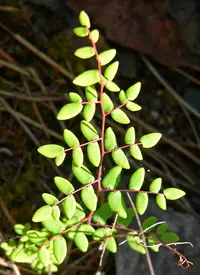
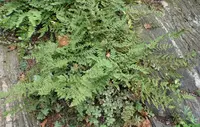
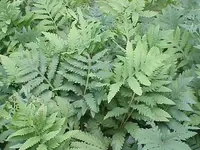
hot rock fern Care (Pellaea calidirupia)

hot rock fern

About hot rock fern

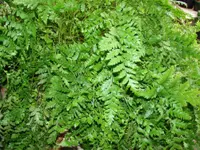
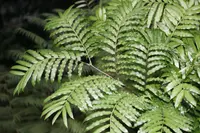
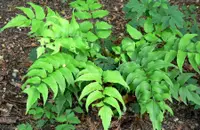
Hot rock fern, Pellaea calidirupia, is a small to medium evergreen fern valued for its arching fronds and neat, bead-like leaf segments. It typically forms compact clumps that suit pots, rocky crevices, or the edges of garden beds in mild climates.

This species is native to rocky outcrops and cliffs in parts of New Zealand and nearby regions, where it anchors into well-drained, gritty substrates. It prefers bright, indirect light, moderate moisture, and sharply draining soil, which mirrors its natural habitat.

Once its need for good drainage and avoidance of constant wetness is understood, it can be moderately easy to care for hot rock fern, especially in controlled indoor or sheltered outdoor conditions.

Main Plant Requirements

Care Difficulty

Moderate Care

Light Preference

Partial Shade

Water Requirements

Moderate Water

Temperature Preference

Warm Climate

Hardiness Zone

9–11

Soil Texture

Sandy, Loamy, Rocky

Soil pH

Acidic (5.5–6.5), Slightly acidic (6.5–7.0)

Soil Drainage

Well-drained

Fertilization

Minimal (feed rarely)

Get Personalized Care Plan

Scan your plant to receive care tips personalized for your specific plant

Available on iOS and Android

How to Care for the hot rock fern

This species prefers bright, indirect light that mimics the dappled sun of rocky outcrops.

  • Provide 3–5 hours of soft morning sun with light shade or filtered light through most of the day, avoiding harsh afternoon sun that can scorch fronds.
  • Allow partial shade, especially in hotter regions, but monitor for stretched, sparse fronds as a sign of insufficient light for hot rock fern.
  • In summer, use shade cloth or position near taller plants for protection; in winter, shift to a slightly brighter spot to compensate for weaker light.

Pellaea calidirupia prefers evenly moist but never waterlogged conditions.

  • Water when the top 2–3 cm of soil feel dry, using thorough soaking that drains freely, then let excess water run off completely.
  • In spring and summer, expect to water more often during active growth; in cooler months, extend the dry interval while still preventing the root zone from fully drying out.
  • Watch for yellowing, soft fronds as a sign of overwatering and brown, crisp tips or fronds curling inward as signs of underwatering, and adjust frequency accordingly.

This fern performs best in mild, frost-free conditions with moderate temperature swings.

  • Aim for 60–75°F (16–24°C) during active growth, which supports steady frond production without stress.
  • Protect from cold; growth slows below 50°F (10°C), and prolonged exposure below 40°F (4°C) can damage fronds and rhizomes, especially in exposed sites.
  • Tolerate brief heat up to about 85–90°F (29–32°C) if humidity and soil moisture are maintained, but provide shade and airflow during hot, dry spells to limit stress.

This fern accepts typical indoor humidity but benefits from slightly elevated moisture in the air.

  • Aim for 40–60% humidity, which matches the dry‑tolerant nature of hot rock fern compared with many other ferns.
  • Tolerates short spells of drier air, but prolonged humidity below 35% can cause crisping tips and dull, papery fronds.
  • Increase humidity with a nearby open‑top water tray or grouped plants rather than misting, which adds only brief surface moisture.

Soil for Pellaea calidirupia should mimic a rocky, fast‑draining habitat while still holding some moisture around the roots.

  • Use a loose, gritty mix such as 40% all‑purpose potting mix, 30% fine bark, 20% perlite, and 10% coarse sand for structure and drainage.
  • Aim for slightly acidic to neutral pH, roughly 6.0–7.0, which supports nutrient availability without risking lime‑induced deficiencies.
  • Ensure the mix never compacts; coarse particles like bark and perlite maintain aeration so rhizomes and fine roots get enough oxygen.
  • Avoid dense, peat‑heavy or clay‑like substrates that stay wet, since waterlogged conditions quickly cause root and rhizome rot.

This species is well suited to container growing when drainage and stability are managed carefully.

  • Choose a shallow, wide pot to match its creeping rhizomes and allow lateral spread rather than forcing deep, unused root space.
  • Select a pot with extra drainage holes so the gritty mix can shed water quickly after each thorough watering.
  • Use a heavier terracotta or ceramic container if the plant becomes wider than tall, to prevent tipping as fronds arch outward.

Pellaea calidirupia is a light feeder that benefits from modest, controlled nutrition during active growth.

  • Use a balanced liquid fertilizer (e.g., 10-10-10 or 20-20-20) diluted to 25–50% strength for hot rock fern indoor care.
  • Feed every 4–6 weeks in spring and summer only, skipping applications if growth is weak or light is low.
  • Avoid fertilizing in fall and winter when growth slows, to prevent salt buildup and root stress.
  • Flush the pot with plain water every 2–3 months to remove excess fertilizer salts from the mix.

Pellaea calidirupia needs only light pruning to keep fronds healthy and tidy.

  • Carry out pruning in late winter or early spring before new fronds emerge strongly.
  • Remove dead, yellowing, or damaged fronds at the base with clean, sharp scissors or small pruners.
  • Thin out crowded interior fronds sparingly to improve air movement and maintain an open, arching habit.
  • Avoid cutting healthy fronds back halfway, as this can reduce photosynthesis and weaken the plant.

This fern prefers slightly tight pots and infrequent disturbance, so repot only when necessary.

  • Check for roots circling the pot, emerging from drainage holes, or noticeably slowed growth as signs it needs more space.
  • Plan repotting in spring every 2–3 years, moving up only 2–3 cm in pot diameter to avoid waterlogged soil.
  • Gently loosen the root ball, remove a small amount of exhausted mix, and keep divisions or roots intact to limit stress.
  • Water thoroughly after repotting, then keep in bright, indirect light with stable moisture until growth resumes.

Division is the most practical way to increase Pellaea calidirupia plants for home growers.

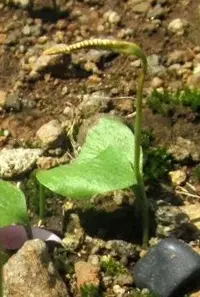
  • Divide mature clumps in spring when new croziers (unfurling fronds) first appear and the plant is actively growing.
  • Lift the plant from its pot, then separate the root mass into 2–4 sections, each with several healthy fronds and rhizomes.
  • Replant divisions into small pots with a free-draining, slightly gritty fern mix, firming gently around the roots.
  • Maintain high humidity, bright indirect light, and evenly moist media until new fronds show steady growth.

This fern dislikes hard frost and benefits from mild winter protection in cooler climates.

  • In regions with frost, grow in containers and move indoors before temperatures drop below 40°F.
  • Provide bright, indirect light indoors and keep temperatures around 55–70°F for stable winter growth.
  • Reduce watering slightly in winter, allowing the top of the mix to dry just a little between waterings.
  • Outdoors in mild zones, use a light mulch around the root zone, avoiding direct contact with the crown.

Care Tips

Use mineral mulch

Top-dress the pot with a thin layer of small gravel or coarse grit instead of bark or coco chips to mimic rocky habitats, keep the rhizomes slightly drier at the surface, and reduce fungus gnat activity.

Controlled repotting

When roots fill the pot, shift to the next size up only and keep the plant slightly root-bound, tucking the wiry rhizomes horizontally near the surface to encourage a wider, denser clump instead of forcing soft, lush growth.

Targeted frond grooming

Remove only fully browned or collapsing fronds by cutting them at the base with clean scissors, leaving slightly marked but still green fronds to continue photosynthesis and maintain the plant’s energy reserves.

Cool-season adjustment

In winter, especially below 60°F or under lower indoor light, extend the interval between waterings slightly and avoid heavy feeding so the plant can rest without root stress or salt buildup.

Prevent salt buildup

Every 4–6 weeks, rinse the pot thoroughly by watering until excess drains freely for 30–60 seconds to flush out accumulated fertilizer salts, which helps avoid brown leaflet tips when caring for hot rock fern.

Common Pests and Diseases

Scale insects

This pest attaches firmly to the wiry fronds and stems, appearing as small brown or gray bumps that cause yellowing and weakened growth over time.

Solution

Isolate the plant, then gently scrape or wipe off visible scale with a cotton swab dipped in isopropyl alcohol and rinse the fronds with lukewarm water; for heavier infestations, use several applications of a light horticultural oil or insecticidal soap, ensuring good coverage of stems and the underside of leaflets while keeping the soil surface protected from excess runoff.

Mealybugs

These insects hide in leaflet joints and along the rhachis, leaving white cottony clusters and sticky honeydew that can stunt new fronds.

Solution

Remove affected fronds if heavily infested, dab visible clusters with isopropyl alcohol on a cotton swab, then shower the plant with lukewarm water; follow up with repeated insecticidal soap or neem oil sprays every 7–10 days until no new mealybugs appear, taking care not to over-wet the soil.

Spider mites

This pest thrives in warm, dry indoor air, causing fine speckling, dull fronds, and faint webbing between the small leaflets.

Solution

Increase humidity around the plant, then thoroughly rinse both sides of the fronds under a gentle shower to dislodge mites; repeat rinsing every few days and, if needed, apply insecticidal soap or a miticidal horticultural oil, ensuring good ventilation so the fronds dry quickly.

Bacterial leaf spot

This disease produces small, water-soaked, translucent spots that may turn dark and irregular, often along the leaflet margins or tips.

Solution

Promptly remove and discard affected fronds, avoid overhead watering, and keep foliage dry by watering at the soil level; improve air circulation around the plant and, if spread continues, use a labeled copper-based bactericide according to directions, monitoring new fronds for clean growth.

Fungal leaf spot

Symptoms include scattered brown or black spots with defined edges on the leaflets, sometimes with a yellow halo and premature frond drop under persistently damp conditions.

Solution

Trim out the most affected fronds, reduce humidity directly on the foliage by spacing plants and using bottom watering, and ensure the fern dries quickly after any splashing; in persistent cases, apply a low-toxicity fungicide labeled for ferns and alternate products if repeated treatments are needed to protect new growth when growing hot rock fern indoors.

Interesting Facts

Naturally rock-dwelling fern

This species is lithophytic, meaning it grows directly on rocks or in very shallow rock crevices rather than typical forest soil, often rooting into pockets of accumulated grit and organic debris.

Adapted to warmer cliffs

In its native range, this fern often occupies warm, north-facing rock faces and cliff ledges, tolerating higher temperatures and brighter, more exposed sites than many woodland ferns.

Distinct bead-like fronds

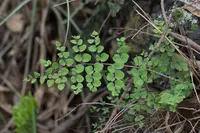
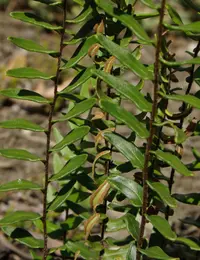
Its fronds carry small, rounded to oval pinnae that give a beaded appearance, and the dark, wiry stalks contrast strongly with the bluish-green leaf segments, making it visually distinct from related Pellaea species.

FAQs about hot rock fern

Brown tips or fronds usually come from low humidity, chronic underwatering, or a buildup of salts from fertilizer or hard water. Trim damaged fronds, flush the pot occasionally, and maintain steadier moisture and moderate room humidity.

Grow Healthy Plants with Botan Care

Keep your plants happy and healthy with plant identification, disease detection, and easy care guidance.

Botan plant care app — identify plants on mobile

Explore More Plants